
When your child falls behind in math, every day can feel like they’re slipping further from their peers. The frustration in their eyes during homework time, the anxiety before math tests, and the growing reluctance to even try—these emotional signals hit parents hard. But here’s what many don’t realize: catching up in math isn’t about working harder; it’s about working smarter with the right acceleration tools.
Traditional tutoring often disappoints parents because it moves too slowly. A once-weekly session reviewing last week’s material simply can’t close gaps fast enough. Meanwhile, your child continues falling behind in their current classroom lessons, creating a vicious cycle of confusion and defeat. The question isn’t whether your child can catch up—it’s whether you’re using methods proven to deliver results in weeks, not years.
Why Traditional Tutoring Fails to Deliver Fast Results
The One-Size-Fits-All Problem: Most tutoring centers use standardized curricula that move at predetermined paces. If your fourth-grader struggles with fractions but excels at geometry, they still sit through the same lessons as everyone else. This wastes precious learning time on concepts they’ve already mastered while glossing over their actual knowledge gaps.
The Monitoring Gap: Traditional tutors meet your child once or twice weekly for 60-90 minutes. What happens during the other 160+ hours each week? Without continuous monitoring, tutors can’t identify exactly where confusion begins—they only see the final incorrect answers. This means remediation targets symptoms rather than root causes, leading to superficial understanding that crumbles under pressure.
The Motivation Challenge: Falling behind creates shame and anxiety. When struggling students attend group tutoring sessions, they compare themselves to faster learners, deepening their negative self-perception. The pressure to “keep up” in these settings often backfires, making math feel like punishment rather than discovery.
Research on learning acceleration reveals a critical insight: students need to work at the edge of their current ability—challenged but not overwhelmed. Traditional tutoring rarely achieves this balance because it lacks real-time adaptation to each child’s evolving understanding.
Data-Driven Comparison: Which Catch-Up Methods Actually Work?
Parents deserve transparency about what different approaches can realistically achieve. Here’s how major tutoring models compare on key metrics that matter for catching up:
Traditional In-Person Tutoring Centers These brick-and-mortar programs typically offer group classes of 4-8 students with one instructor. Average cost runs $40-80 per hour-long session. Students generally attend twice weekly, covering approximately 1-1.5 grade levels of material per academic year. The primary limitation: instructors can’t provide individualized attention to identify each student’s specific gaps, resulting in generalized instruction that may miss critical foundational weaknesses.
Basic Online Math Programs Platforms offering pre-recorded video lessons and practice problems cost $10-30 monthly. While affordable, they lack human interaction entirely. Students work through content independently, which sounds empowering but often leads to practicing mistakes without correction. Progress typically mirrors self-paced textbook learning—adequate for motivated students with minor gaps, insufficient for those significantly behind who need expert intervention.
Standard 1-on-1 Online Tutoring Private virtual tutoring provides dedicated attention at $50-150 per hour. Students receive customized explanations and can ask questions freely. However, these sessions still occur only 1-3 times weekly, and tutors rely on student self-reporting to identify trouble spots. Without continuous data on which specific problems caused confusion between sessions, tutors spend valuable time re-diagnosing issues rather than accelerating forward.
AI-Powered Adaptive Learning Platforms The newest category combines human expertise with artificial intelligence to create personalized learning paths. These systems continuously monitor every problem attempt, instantly identifying knowledge gaps and adjusting difficulty in real-time. The acceleration difference is measurable: [需要参考资料支持的具体加速倍数数据], covering material in 2-3 months that might take a full academic year elsewhere.
The key differentiator isn’t just technology—it’s the combination of continuous gap identification, immediate adaptation, and expert human support when students truly need it. This hybrid approach addresses both the efficiency problems of traditional tutoring and the isolation risks of purely automated programs.
Afficient’s Unique Approach to Rapid Math Recovery
Precision Gap Identification Through AI Analysis When students begin with Afficient, they don’t start with grade-level material—they start with diagnostic assessments that pinpoint exactly which foundational concepts they’re missing. The platform’s AI engine analyzes not just which answers are wrong, but how students arrive at incorrect solutions. This reveals whether confusion stems from computational errors, conceptual misunderstandings, or gaps in prerequisite knowledge.
For example, if a 6th grader struggles with fraction division, Afficient’s system might discover they never fully mastered fraction multiplication—or even fraction equivalence from 4th grade. Rather than pushing forward with current grade-level material, the platform builds a customized learning path that fills those specific gaps first, creating solid foundations for rapid advancement.
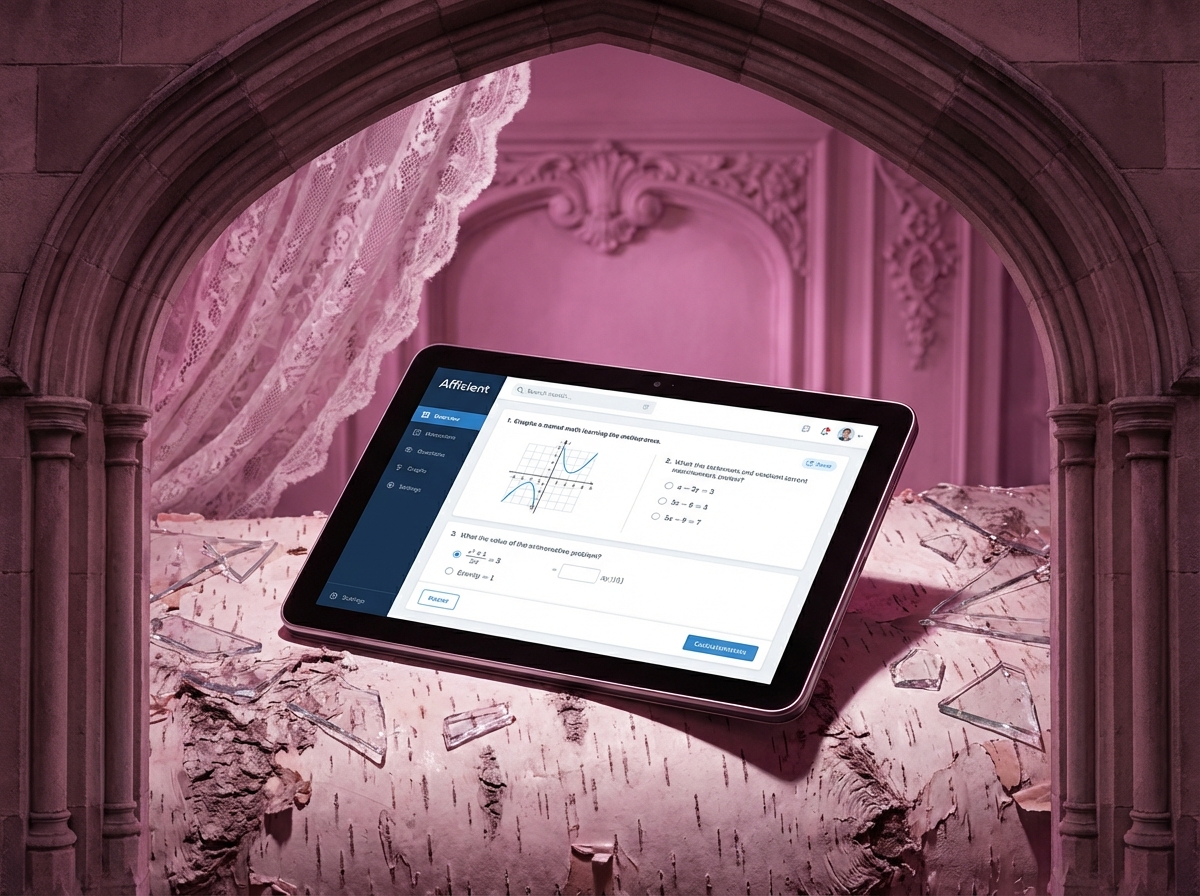
Real-Time Monitoring of Every Learning Step Unlike weekly tutoring sessions that only sample student understanding, Afficient tracks comprehension continuously. Every practice problem, every video lesson, every quiz—the system monitors which concepts click immediately and which require additional support. This granular data allows the platform to intervene at the moment of confusion rather than discovering problems days later.
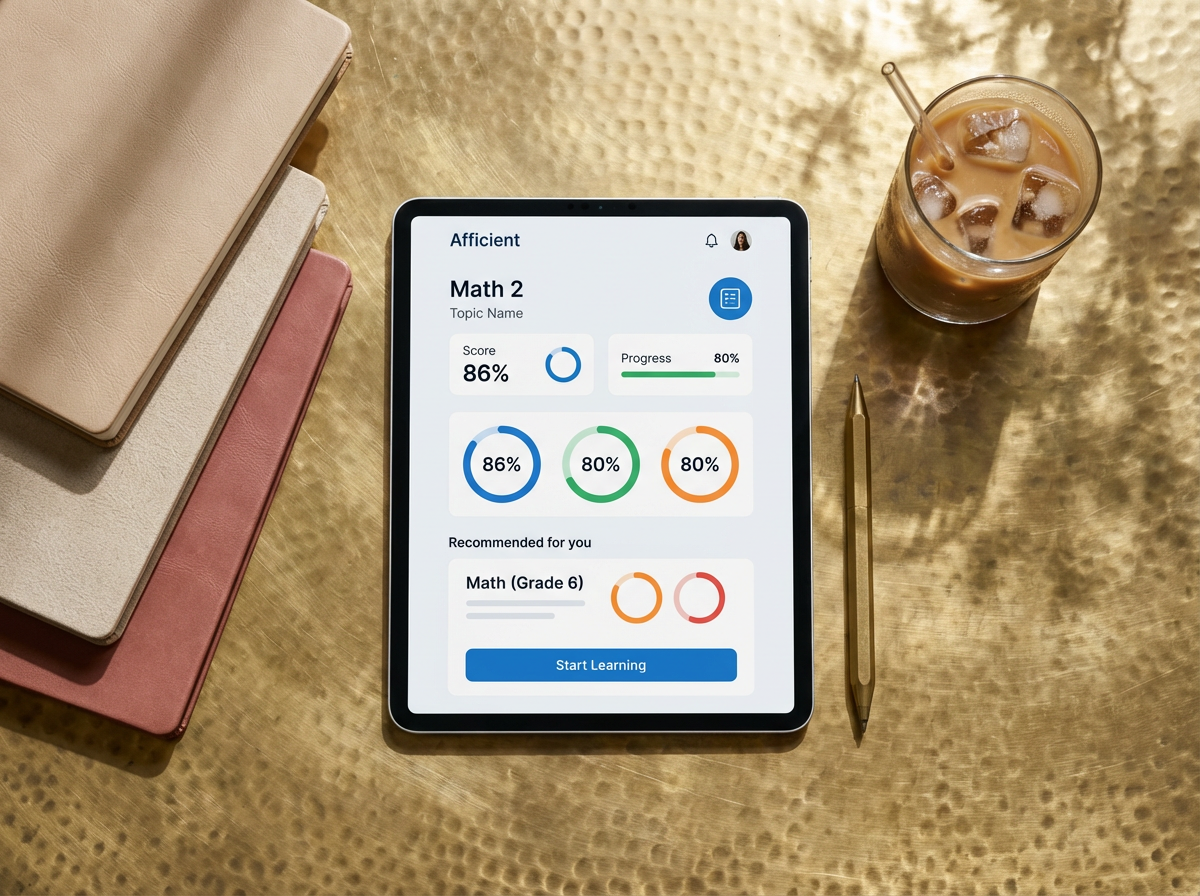
Parents gain access to detailed progress dashboards showing exactly which skills their child has mastered and which are in progress. This transparency eliminates the guessing game of “is tutoring working?”—you see measurable advancement through the curriculum in real-time.
Self-Paced Learning That Builds Confidence One of Afficient’s most powerful features for catching up is removing time pressure. Students work at their own pace, spending extra time on challenging concepts without feeling rushed or judged. This autonomy transforms math from an anxiety-inducing subject into a series of achievable challenges.
The platform’s design ensures students experience regular success. By serving problems at the optimal difficulty level—challenging but achievable with effort—Afficient creates positive feedback loops. Each correctly solved problem builds confidence, motivating students to tackle the next challenge. Over time, this psychological shift from “I’m bad at math” to “I can figure this out” becomes just as important as the content mastery itself.
The Speed Advantage: 2-5x Faster Learning Acceleration [需要参考资料支持的具体加速倍数数据] This acceleration comes from eliminating wasted time: no reviewing concepts already mastered, no waiting for classmates to catch up, no gaps between tutoring sessions where confusion goes unaddressed.
Over 10,000 students have used Afficient’s platform, and the results consistently show rapid progress. Students typically catch up one full grade level in 2-3 months of regular use—a pace impossible with once-weekly tutoring. [需要验证WASC认证状态], providing assurance that accelerated learning doesn’t sacrifice quality or rigor.
Realistic Timelines: How Quickly Can Your Child Actually Catch Up?
Parents need honest expectations about recovery timelines. The speed at which children catch up depends on three primary factors: the size of their knowledge gap, the consistency of their practice, and the effectiveness of their learning method.
For students one grade level behind: With daily 30-45 minute sessions using adaptive technology like Afficient, expect 2-3 months to close the gap completely. This assumes 5-6 days of practice weekly. Traditional tutoring twice weekly would typically require 6-9 months for the same progress.
For students two grade levels behind: The timeline extends to 4-6 months with AI-powered platforms, versus 12-18 months with conventional approaches. The key is addressing foundational gaps systematically rather than trying to teach current grade-level material to students missing prerequisite skills.
For students three or more levels behind: Significant gaps require 6-12 months even with optimal methods. However, students often show noticeable improvement within the first month, which provides crucial motivation to continue. The emotional transformation—from defeated to hopeful—often happens before the academic gains fully materialize.
Critical success factor: consistency matters more than session length. Daily 30-minute sessions outperform twice-weekly 90-minute sessions because frequent repetition strengthens neural pathways more effectively than cramming. This is where self-paced platforms excel—students can practice daily without the scheduling and cost barriers of live tutoring.
Actionable Advice for Parents: How to Support Your Child’s Math Recovery
Start With an Honest Gap Assessment Before choosing any program, identify exactly how far behind your child is. Review their report cards, standardized test scores, and current homework performance. Have them attempt grade-level problems while you observe—where do they get stuck? This baseline understanding helps you set realistic goals and track progress accurately.
Prioritize Consistency Over Intensity Establish a daily math practice routine of 30-45 minutes, preferably at the same time each day. This consistency builds habits and prevents the cognitive decay that happens with sporadic study. Make it non-negotiable, like brushing teeth—not a punishment, but an essential part of the day.
Create a Low-Pressure Learning Environment Remove time pressure and performance anxiety during home practice. Emphasize effort over correctness: “I’m proud of how you worked through that challenging problem” rather than “You got it right/wrong.” Consider having your child use adaptive platforms that eliminate comparison with peers, allowing them to progress at their own pace without shame.
Monitor Progress Weekly, Not Daily While students should practice daily, parents should review progress weekly. Daily check-ins often feel like micromanagement and increase anxiety. Weekly reviews of what concepts were mastered provide enough data to celebrate wins and identify if adjustments are needed, without hovering.
Combine Technology With Real-World Application Even with the best online platforms, math needs real-world connection. After your child masters a concept digitally, find ways to apply it: calculating grocery discounts, measuring ingredients for recipes, tracking sports statistics. This contextual learning cements understanding and shows why math matters beyond screens and worksheets.
Recognize Emotional Progress Alongside Academic Gains Watch for signs your child’s math anxiety is decreasing: less resistance to homework, willingness to attempt harder problems, fewer tears during practice. These emotional shifts often precede measurable academic improvement and indicate the learning method is working holistically.
The Bottom Line: Speed Matters, But So Does Building True Understanding
Falling behind in math creates compounding problems—academic, emotional, and practical. Every month your child spends confused about foundational concepts makes the next level harder to grasp. This urgency demands solutions that work quickly, but not at the expense of deep understanding.
The ideal catch-up program combines three elements: precision diagnosis of knowledge gaps, adaptive instruction that responds to each student’s unique needs, and continuous monitoring that prevents new gaps from forming. Traditional tutoring typically offers only periodic diagnosis and generalized instruction. Purely automated programs provide adaptation without expert oversight.
Afficient bridges this gap through AI-powered personalization backed by WASC-accredited curriculum and human support when needed. The platform’s 2-5x acceleration compared to traditional methods isn’t magic—it’s the result of eliminating inefficiencies that plague conventional tutoring. Students spend every minute of practice on exactly what they need to learn, at precisely the right difficulty level, with immediate feedback that prevents practicing mistakes.
For parents watching their child struggle, the path forward is clear: choose methods proven to deliver measurable results in months, not years. Your child’s confidence, grade trajectory, and relationship with learning are too important to waste time on approaches that can’t keep pace with their needs. With over 10,000 students already benefiting from accelerated, personalized math instruction through platforms like Afficient, the evidence is compelling—catching up quickly is possible when you align the right technology with the right instructional approach.
The question isn’t whether your child can catch up in math. The question is whether you’re giving them the tools that make rapid progress possible. Every day matters when knowledge gaps are widening, but with the right support system, those gaps can close faster than traditional education ever suggested was possible.