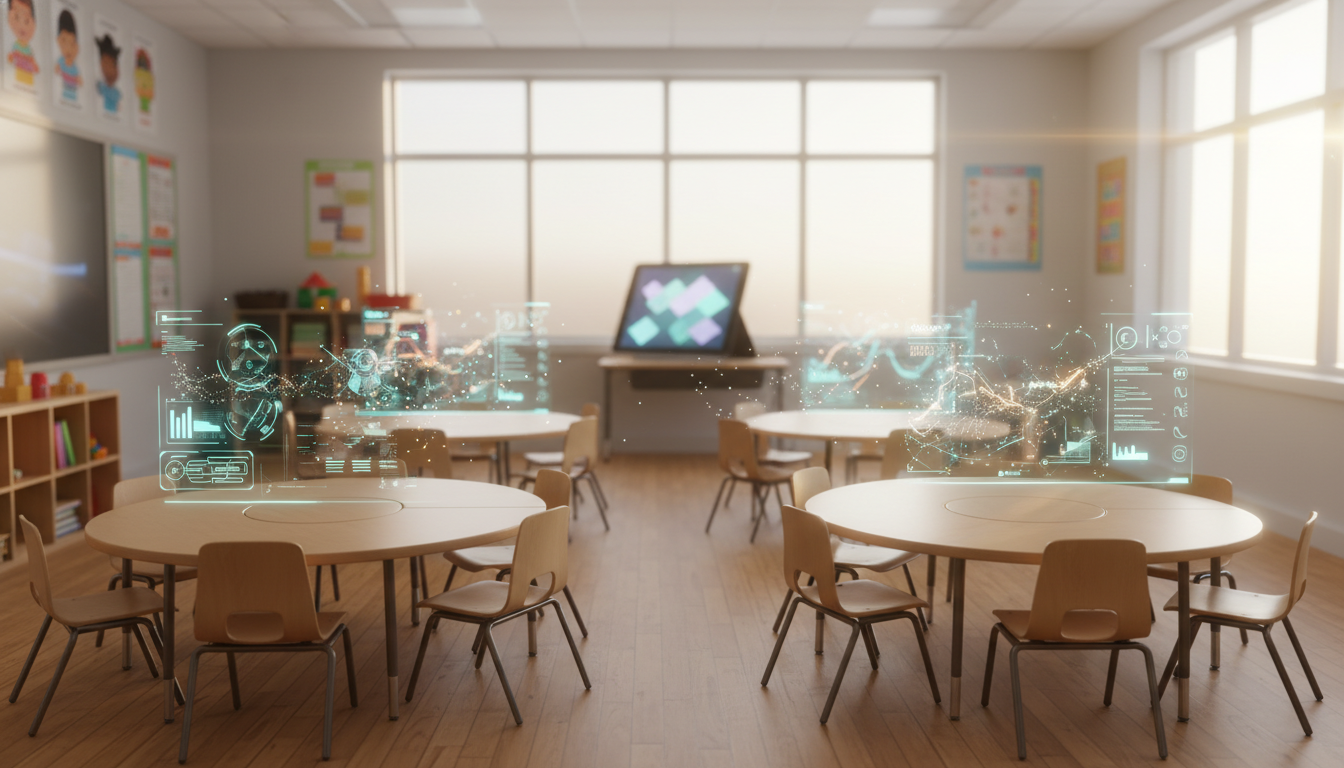
Understanding AI-powered education has become essential for parents seeking effective learning solutions for their children. As artificial intelligence transforms elementary education, many parents wonder how these systems actually function and whether they deliver real results. This guide explains the mechanics of AI learning platforms and demonstrates their practical impact on young learners.
The Core Mechanics of AI Learning Systems
AI learning platforms operate through sophisticated algorithms that continuously analyze student performance. These systems track every interaction—correct answers, mistakes, hesitation patterns, and time spent on problems—to build a comprehensive understanding of each child’s learning profile.
The technology identifies specific knowledge gaps by examining error patterns across multiple problem types. When a student struggles with fraction division, for example, the AI doesn’t simply mark it wrong. Instead, it analyzes whether the difficulty stems from conceptual misunderstanding, procedural errors, or gaps in prerequisite skills like multiplication.
Adaptive pathways adjust in real-time based on student responses. If a child demonstrates mastery of basic addition, the system immediately advances to more challenging concepts. Conversely, when struggles emerge, the AI provides targeted remediation before moving forward. This dynamic adjustment ensures students neither waste time on mastered material nor advance before they’re ready.
Personalized Learning Paths: Beyond One-Size-Fits-All
Traditional classroom instruction follows a fixed curriculum pace, often leaving some students behind while others wait for peers to catch up. AI learning systems eliminate this constraint through individualized progression.
Each student receives a customized learning sequence based on their current knowledge level, learning speed, and comprehension patterns. The system generates practice problems specifically designed to address individual weaknesses while reinforcing strengths.
Diagnostic assessments form the foundation of personalized learning. These evaluations measure not just what students know, but how they think through problems. By analyzing problem-solving approaches, AI systems identify the most effective instructional strategies for each learner.
Afficient’s patented AI algorithms demonstrate this principle in action. The platform identifies learning gaps through comprehensive diagnostic testing, then creates targeted intervention plans. Data shows students achieve 2-5x faster progress compared to traditional methods.
Parents can assess their child’s current level through diagnostic testing to understand exactly where their child stands and what specific areas need attention.
Real-Time Feedback and Immediate Correction
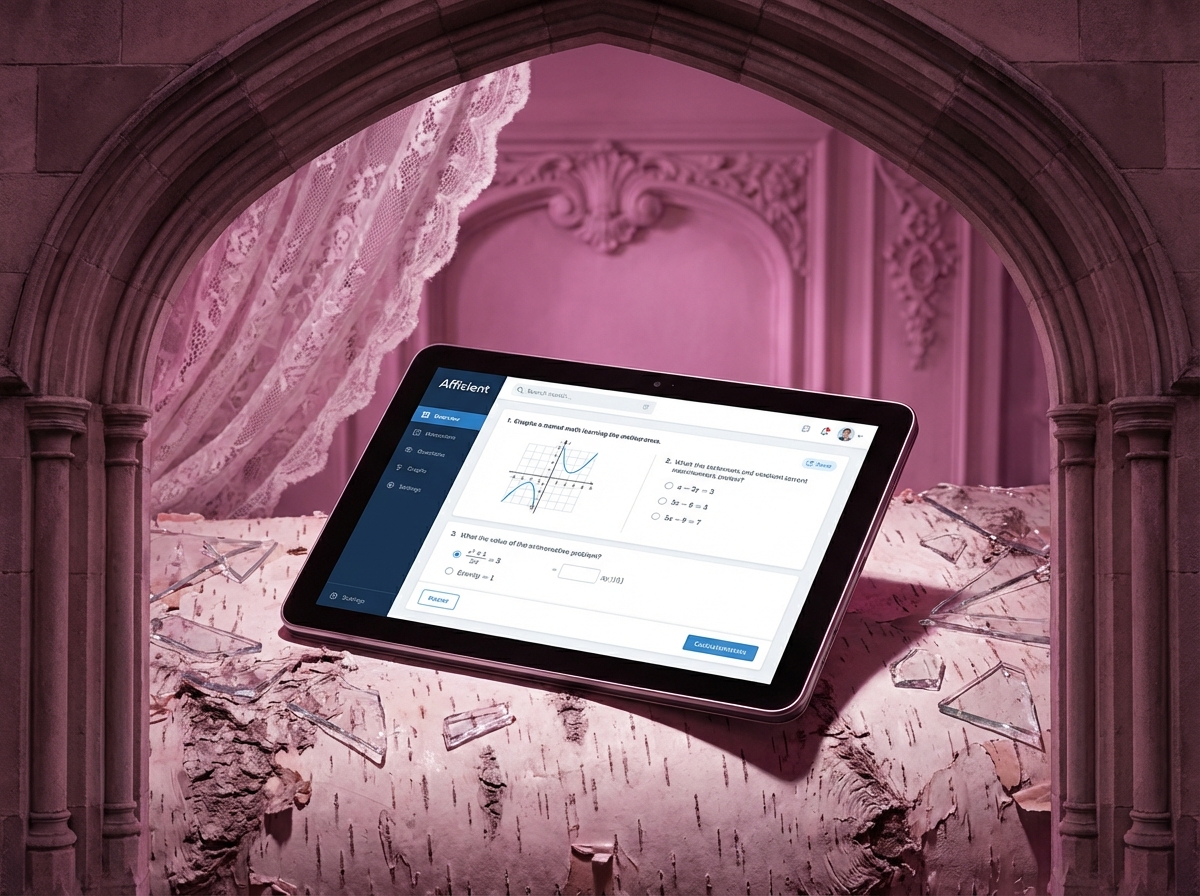
One of AI learning’s most powerful features is instantaneous feedback. Unlike homework that gets graded days later, AI systems provide immediate correction and explanation.
When students make mistakes, the technology doesn’t just show the right answer. It explains why the error occurred and guides students through the correct reasoning process. This immediate intervention prevents misconceptions from becoming ingrained habits.
The feedback loop operates continuously throughout each learning session. Students receive encouragement for correct answers, gentle redirection for mistakes, and hints when they’re stuck. This constant support maintains engagement while building confidence.
The system also tracks emotional indicators like frustration or boredom. If a student repeatedly struggles with similar problems, the AI adjusts difficulty or switches to a different concept to maintain motivation.
Data-Driven Progress Monitoring
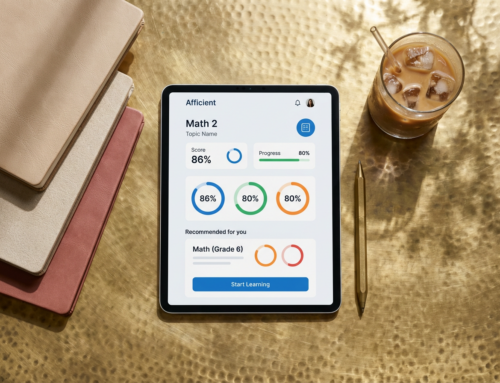
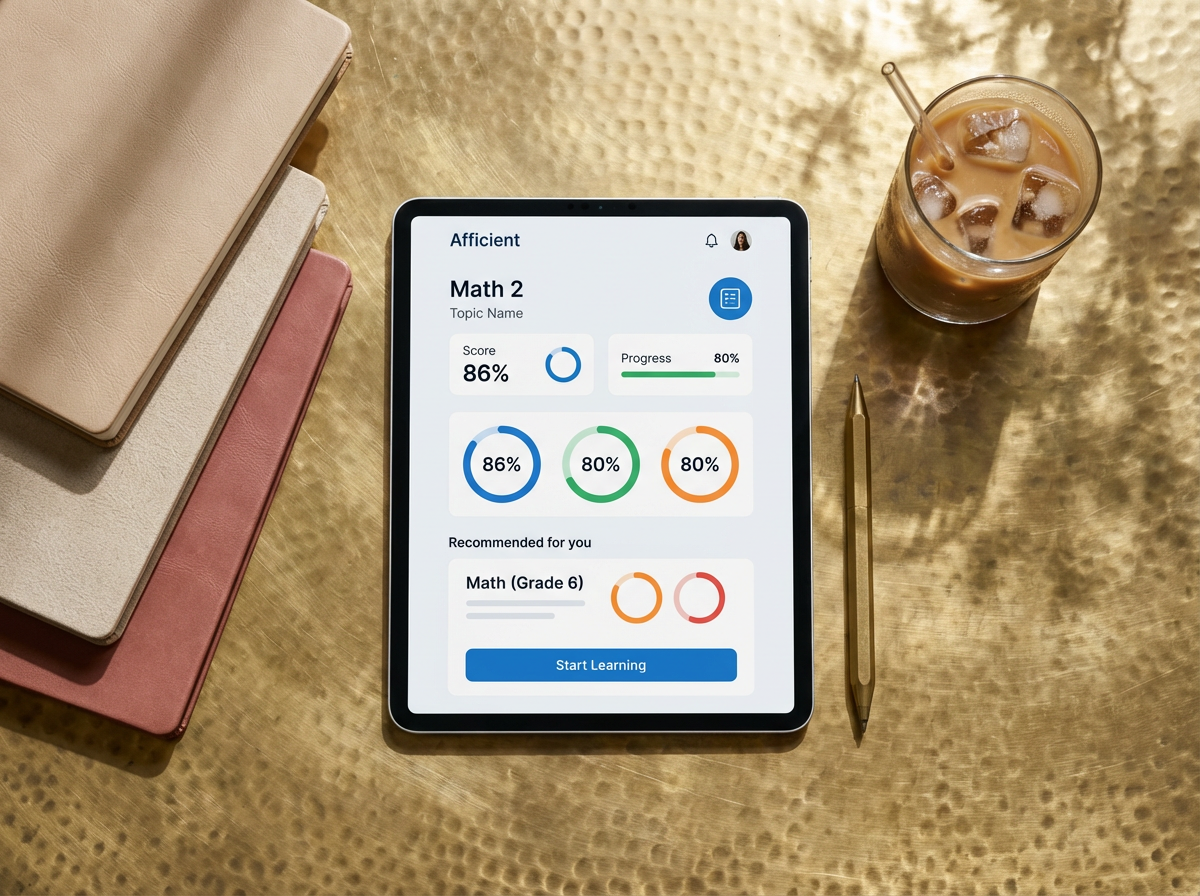
AI learning platforms generate detailed analytics that give parents unprecedented visibility into their child’s education. These systems track dozens of metrics beyond simple test scores.
Key performance indicators include: – Concept mastery levels across specific skills – Time spent on different problem types – Error patterns and common misconceptions – Learning velocity and acceleration rates – Engagement levels and session completion rates
Parents receive regular reports showing exactly which concepts their child has mastered and which need additional practice. This transparency enables informed conversations with teachers and targeted support at home.
Afficient’s data-driven approach has been validated through its effectiveness with students. The platform’s comprehensive analytics help parents understand not just whether their child is learning, but how they learn best.
Building Foundational Skills Through Mastery-Based Progression
AI learning systems emphasize true mastery rather than superficial coverage. Students cannot advance until they demonstrate consistent competency with current material.
This mastery-based approach ensures solid foundations. A student learning multiplication, for instance, must show proficiency across various problem types and contexts before moving to division. The AI verifies understanding through diverse question formats, preventing students from memorizing patterns without grasping underlying concepts.
The technology identifies prerequisite skill gaps that traditional assessments miss. If a student struggles with algebraic equations, the AI might discover the root cause is weak fraction skills from earlier grades. The system then addresses these foundational gaps before returning to grade-level content.
This thorough approach takes time initially but accelerates long-term progress. Students build confidence through genuine understanding rather than advancing with shaky foundations.
Practical Implementation: What Parents Should Know
Effective AI learning requires appropriate setup and parental involvement. While the technology handles instruction, parents play crucial roles in maintaining consistency and motivation.
Successful implementation involves: – Establishing regular learning schedules – Creating distraction-free learning environments – Reviewing progress reports with children – Celebrating achievements and discussing challenges – Communicating with teachers about AI-supplemented learning
Most platforms recommend 20-30 minute daily sessions for elementary students. This duration maintains focus while building consistent habits. The AI adjusts session length based on individual attention spans and engagement levels.
Parents should view AI learning as a supplement to, not replacement for, traditional instruction. The technology excels at personalized practice and skill reinforcement but works best alongside teacher guidance and peer interaction.
To identify specific learning gaps and create an effective learning plan, free diagnostic assessments provide valuable insights into your child’s current abilities and optimal learning path.
Measuring Success: What Results Look Like
Effective AI learning produces measurable improvements across multiple dimensions. Parents should look beyond test scores to evaluate true progress.
Indicators of successful AI learning include: – Increased confidence when approaching new problems – Faster problem-solving speed with maintained accuracy – Ability to explain reasoning behind answers – Reduced frustration with challenging concepts – Growing independence in learning
Students using AI learning platforms can show 2-5x faster progress in developing mathematical proficiency. This acceleration stems from the system’s ability to provide precisely targeted instruction at each student’s optimal challenge level.
The technology also develops metacognitive skills—students learn how to learn. They become better at identifying their own knowledge gaps, seeking appropriate resources, and monitoring their understanding.
Getting Started with AI Learning
Parents considering AI learning platforms should begin with thorough evaluation of their child’s current abilities and learning needs. Understanding baseline skills helps set realistic expectations and measure progress effectively.
Key steps for beginning AI learning: – Complete comprehensive diagnostic assessment – Review detailed results with education specialists – Establish clear learning goals and timelines – Create consistent practice schedules – Monitor progress through regular check-ins
Learn more about your child’s learning profile with a complimentary evaluation that identifies specific strengths and areas for growth.
The most successful AI learning experiences combine sophisticated technology with engaged parental support. When families understand how these systems work and commit to consistent use, elementary students develop strong foundational skills that accelerate future academic success. The data-driven, personalized approach addresses individual learning needs in ways traditional methods cannot match, making AI learning an increasingly valuable tool for modern elementary education.