
Every parent of a struggling math student asks the same urgent question: “How long will it take for my child to catch up?” The answer isn’t simple, but it’s more hopeful than you might think. With the right approach and modern learning technology, students can accelerate their progress dramatically—often catching up 1-2 grade levels within a single academic year.
Understanding What “Behind” Really Means
When educators say a student is “behind in math,” they’re typically referring to performance below grade-level standards. A fifth-grader working at a third-grade math level is considered two years behind. This gap creates a cascade of challenges: frustration in current coursework, declining confidence, and widening achievement gaps as new concepts build on unmastered foundations.
The traditional trajectory is sobering. Without intervention, research shows that students who fall behind tend to stay behind or fall further back. The gap doesn’t close on its own—it requires targeted, consistent effort with proven methods.
The Realistic Timeline: What Research Actually Shows
Educational research provides clear benchmarks for catch-up timelines, though individual results vary based on several critical factors.
For students one year behind: With focused intervention involving 4-5 hours of targeted practice weekly, students can make significant progress toward closing achievement gaps. This assumes consistent effort and proper identification of skill gaps.
For students two years behind: The timeline extends to 10-15 months of dedicated work. However, this isn’t simply double the time—the learning process accelerates as foundational skills solidify and confidence builds.
The key variable isn’t just time—it’s the quality and targeting of instruction. Students using adaptive, AI-powered platforms like Afficient often progress 2-5 times faster than those relying solely on traditional tutoring methods. This acceleration comes from precise gap identification and elimination of time wasted reviewing already-mastered concepts.
Why Traditional Tutoring Often Falls Short
Many parents invest thousands of dollars in conventional tutoring with disappointing results. The fundamental problem: most tutoring lacks the diagnostic precision needed for efficient catch-up.
Traditional tutors often start from the current grade level and work backward when students struggle, burning valuable time on trial-and-error diagnosis. They may spend weeks identifying gaps that AI-powered platforms pinpoint in minutes through adaptive assessment.
The frequency challenge is equally significant. Research consistently shows that short, frequent sessions (30-45 minutes, 4-5 times weekly) outperform longer, less frequent sessions. Yet traditional tutoring economics favor weekly 60-90 minute sessions, which don’t align with optimal learning patterns for remediation.
Generic workbooks and grade-level tutoring also fail to address the specific constellation of gaps each student carries. A student might have mastered 80% of fourth-grade standards but have critical gaps in fraction concepts and place value understanding. Without precise targeting, too much time gets spent on unnecessary review.
The Science of Accelerated Catch-Up
Modern educational neuroscience reveals why some approaches work dramatically faster than others. Three principles stand out:
Immediate feedback loops accelerate learning. When students receive instant correction and explanation, they avoid practicing errors and build correct mental models faster. Afficient provides this real-time feedback on every problem, ensuring students never reinforce misconceptions.
Spaced repetition optimizes retention. Rather than cramming concepts in long sessions, distributing practice over multiple short sessions with strategic review intervals builds durable understanding. AI platforms automatically schedule this optimal spacing based on each student’s retention patterns.
Personalized pacing eliminates pressure. Students behind in math often carry significant anxiety about their abilities. Self-paced platforms allow them to master concepts thoroughly before advancing, rebuilding confidence while simultaneously accelerating through already-understood material.
The Afficient Advantage: Data-Driven Acceleration
Afficient has helped over 15,000 students catch up in math by combining adaptive AI technology with evidence-based learning science. The platform’s approach addresses every factor that influences catch-up speed.
Gap identification takes minutes, not weeks. Upon enrollment, Afficient’s adaptive assessment precisely maps each student’s knowledge, identifying specific skill gaps down to individual concept level. This diagnostic precision means learning time focuses exclusively on unmastered content.
Learning pathways adjust in real-time. As students work through material, the AI continuously refines its understanding of their knowledge, automatically adjusting difficulty and pacing. Students who grasp concepts quickly accelerate forward; those needing more practice receive targeted reinforcement before advancing.
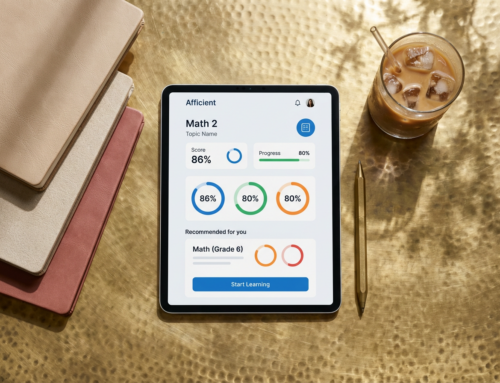
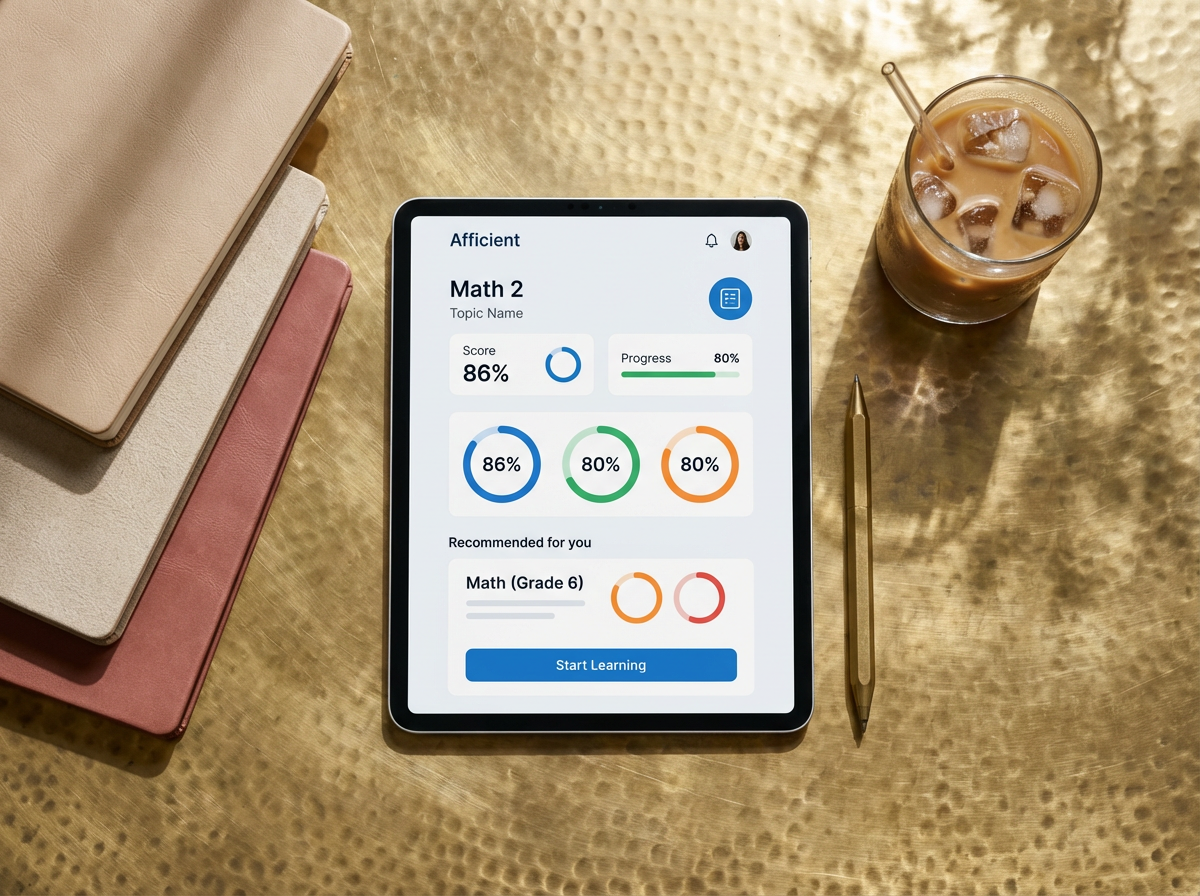
Progress monitoring provides constant visibility. Parents and students can track improvement at every step, seeing exactly which skills have been mastered and which need more work. This transparency builds confidence and allows for course corrections when needed.
The platform is WASC accredited, ensuring academic rigor meets the highest educational standards. Students aren’t just catching up—they’re building genuine mathematical understanding that supports future learning.
Real-World Catch-Up Scenarios
Consider different starting points and what realistic catch-up looks like:
Scenario 1: The Recently Struggling Student A seventh-grader performing at mid-sixth-grade level (6-8 months behind) who commits to Afficient’s recommended schedule of 45 minutes daily, five days per week. With focused practice on identified gaps, this student typically catches up to grade level within 2-3 months—well before the school year ends.
Scenario 2: The Significantly Behind Learner A fifth-grader working at third-grade level (nearly two years behind) needs approximately 10-12 months of consistent work. However, using Afficient’s accelerated learning approach, this student can make accelerated progress using personalized learning approaches, potentially catching up by the end of sixth grade rather than seventh or eighth.
Scenario 3: The Foundation-Builder A ninth-grader with significant gaps in arithmetic and early algebra fundamentals may need 12-15 months to build a solid foundation for high school math. The advantage of platforms like Afficient is that learning can accelerate as foundational skills solidify—students often progress through later material faster than earlier material as their mathematical maturity develops.
Critical Success Factors Beyond the Platform
While technology enables faster catch-up, several non-technical factors significantly influence outcomes:
Consistency trumps intensity. Five 30-minute sessions weekly outperform two 90-minute sessions, even though total time is similar. Daily practice builds automaticity and prevents forgetting between sessions.
Emotional support matters enormously. Students behind in math often feel defeated or anxious. Parents who celebrate incremental progress and maintain positive expectations see better results than those who express frustration or disappointment.
Integration with school learning helps. While catch-up work necessarily focuses on below-grade-level material, connecting it to current classroom topics when possible helps students see immediate relevance and application.
Avoiding summer slide accelerates progress. Students who continue practice over summer breaks maintain momentum and often make significant gains when school pressure is reduced. Those who take summers completely off often lose 2-3 months of progress.
Managing Expectations: The Honest Picture
It’s crucial to approach catch-up work with realistic optimism. No platform or tutor can magically eliminate years of gaps in weeks. Parents should be wary of promises that sound too good to be true.
However, with the right approach—precise gap identification, adaptive learning technology, consistent practice, and emotional support—students can absolutely catch up faster than traditional timelines suggest. The 2-5x acceleration that Afficient provides over conventional methods represents genuine, measurable progress documented across thousands of students.
The most important factor is starting now. Every month of delay means the gap widens as grade-level expectations advance. But every month of focused, intelligent practice closes that gap and rebuilds the confidence needed for mathematical success.
Taking Action: The Path Forward
If your child is behind in math, the time to act is today. Begin with accurate assessment—whether through Afficient’s diagnostic tools or school-based testing—to understand exactly where gaps exist. Avoid generic “grade-level review” approaches that waste time on already-mastered content.
Commit to a realistic, consistent schedule that your family can maintain. Remember that 30 minutes daily beats sporadic longer sessions. Use technology that provides real-time feedback and adapts to your child’s specific needs rather than one-size-fits-all curricula.
Most importantly, maintain perspective. Your child isn’t “bad at math”—they simply need targeted support to fill specific gaps. With modern tools like Afficient, the catch-up process is faster and more manageable than ever before. Thousands of students who once struggled with math are now thriving, and yours can too.
The journey from behind to caught up isn’t instantaneous, but with the right resources and commitment, it’s absolutely achievable within a single school year for most students. The question isn’t whether your child can catch up—it’s whether you’re ready to start that journey today.