

I hear you. It’s incredibly frustrating when your child can ace a math test on Friday, then by Monday it’s like they never learned it at all. You’ve watched them study, you’ve helped with homework, they got a good grade—and now it’s just… gone. You’re not imagining it, and you’re definitely not alone.
This isn’t about your child being “bad at math” or not trying hard enough. What’s happening is actually a predictable pattern that affects most students, and understanding why it happens is the first step to fixing it.
The Real Reason Kids Forget Math So Quickly
When your child “learns” math just to pass a test, they’re often storing information in what cognitive scientists call short-term memory. Think of it like writing notes on a whiteboard—it’s there temporarily, but it wipes clean pretty fast. Here’s what’s really going on:
They’re memorizing procedures, not understanding concepts. Your child might know that to solve 3x + 5 = 14, they need to “subtract 5 from both sides, then divide by 3.” But if you ask them why they’re doing those steps, or what it actually means, they might freeze. They’ve memorized the recipe without understanding the cooking.
The forgetting curve is working against them. Research shows that without reinforcement, we forget about 50% of new information within 24 hours, and up to 90% within a week. That test on Friday? By the following Friday, most of what they crammed is already fading.
They’re not actually using the knowledge. Math isn’t like riding a bike—you can’t just learn it once and have it forever. When students move on to the next chapter immediately after a test, those neural pathways they just built start to weaken. It’s like building muscle at the gym, then never going back.
Test anxiety creates a memory block. Some kids can perform under test pressure, but the stress actually interferes with how memories form. They might get through the test on adrenaline and short-term recall, but that stressed state doesn’t create lasting learning.
They’re learning in isolation. When math concepts are taught as separate, disconnected topics, kids don’t build the web of understanding that makes information stick. They learn fractions in one unit, decimals in another, and never connect that they’re actually the same thing expressed differently.
Why Traditional Studying Doesn’t Solve This
You might be thinking, “But we do review! We go over old material!” Here’s the problem: most review happens the wrong way.
Cramming the night before doesn’t build long-term memory—it builds test-passing memory. Your child might recognize problems they’ve seen before, but put the same concept in a slightly different context, and they’re lost.
Passive review (re-reading notes, watching someone else solve problems) feels like studying, but it’s not creating the deep neural connections needed for retention. Your brain tricks you into thinking you know it because it looks familiar, but familiarity isn’t the same as understanding.
What Actually Works: Building Deep Understanding That Lasts
The good news? There are proven strategies that help kids truly learn math in a way that sticks. These aren’t quick fixes, but they create real, lasting change.
Focus on the “why,” not just the “how.” When your child learns a new concept, make sure they can explain it in their own words. If they’re learning about fractions, they should be able to tell you what 3/4 actually represents, not just how to add fractions. Ask questions like “Why does that work?” and “Can you show me another way to solve this?”
At home, try this: When your child solves a problem, ask them to teach it to you as if you’ve never seen it before. If they can explain it clearly, they understand it. If they can’t, that’s your signal that they’re memorizing, not learning.
Use spaced repetition—the science-backed memory technique. Instead of studying a topic intensively for a week then never seeing it again, your child needs to revisit concepts at increasing intervals. Learn it today, review it tomorrow, then three days later, then a week later, then two weeks later.
This might sound like it takes longer, but here’s the thing: students who use spaced repetition actually learn 2-5x faster overall because they’re not constantly re-learning what they forgot. The system brings back old topics before they’re completely forgotten, strengthening those neural pathways each time.
Require mastery before moving forward. This is where most traditional education fails. Your child gets 70% on a test, which is “passing,” so they move to the next topic. But that means they’re building new learning on a foundation that’s 30% missing.
Real mastery means your child can’t advance until they’ve truly got it—typically 80-90% accuracy consistently, not just once. This isn’t about being harsh; it’s about making sure they have the solid foundation they need. When students truly master each concept before moving on, they don’t waste time re-learning basics later.
Practice active recall, not passive review. Instead of re-reading notes, your child should be testing themselves. Close the book and try to solve problems from memory. Get it wrong? That’s actually good—the struggle of trying to remember and then correcting yourself creates stronger memories than just reading the right answer.
Want to see if your child truly understands or just memorizes? Get a free diagnostic assessment that shows exactly where the gaps are.
Mix up problem types—don’t practice in blocks. If your child practices 20 addition problems, then 20 subtraction problems, they’re not really learning when to use each operation—they’re just following the pattern of the page. Mix different types of problems together so they have to think about which strategy to use.
Address the emotional side. If test anxiety is part of the problem, work on stress-reduction techniques. Practice problems in low-stakes settings. Remind your child that mistakes are part of learning, not signs of failure. Sometimes the fear of forgetting becomes a self-fulfilling prophecy.
How Afficient Makes This Actually Happen
Here’s what makes Afficient different from traditional tutoring or homework help: it’s built around these exact principles of how memory and deep learning actually work.
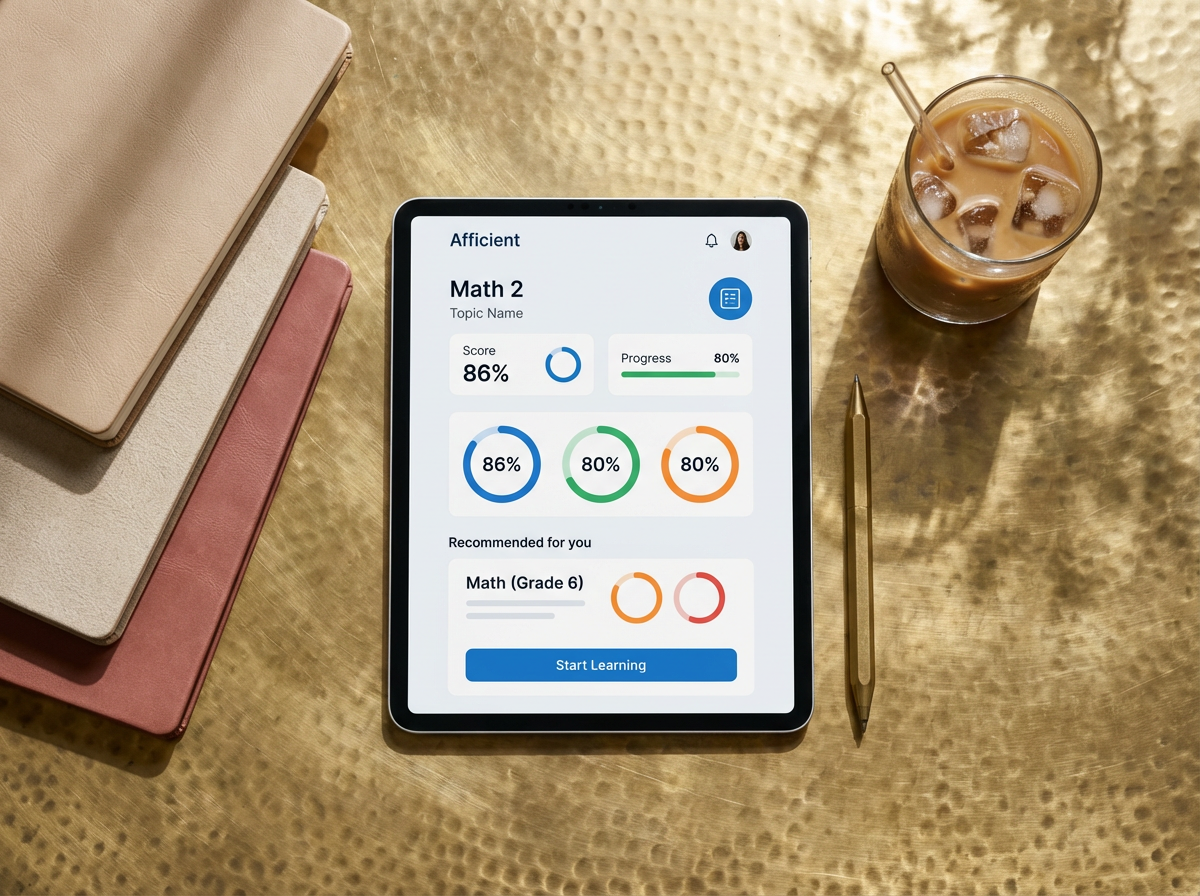
Mastery-based progression means no faking it. Students can’t move forward until they hit that 80-90% accuracy threshold consistently. The system won’t let them advance with gaps in understanding. It sounds strict, but parents tell us this is actually a relief—they finally know their child truly understands, not just got lucky on a test.
Spaced repetition is built into every lesson. The AI automatically brings back concepts at the optimal intervals for memory retention. Your child isn’t just learning fractions once in third grade—they’re seeing them again and again in different contexts until they’re truly internalized.
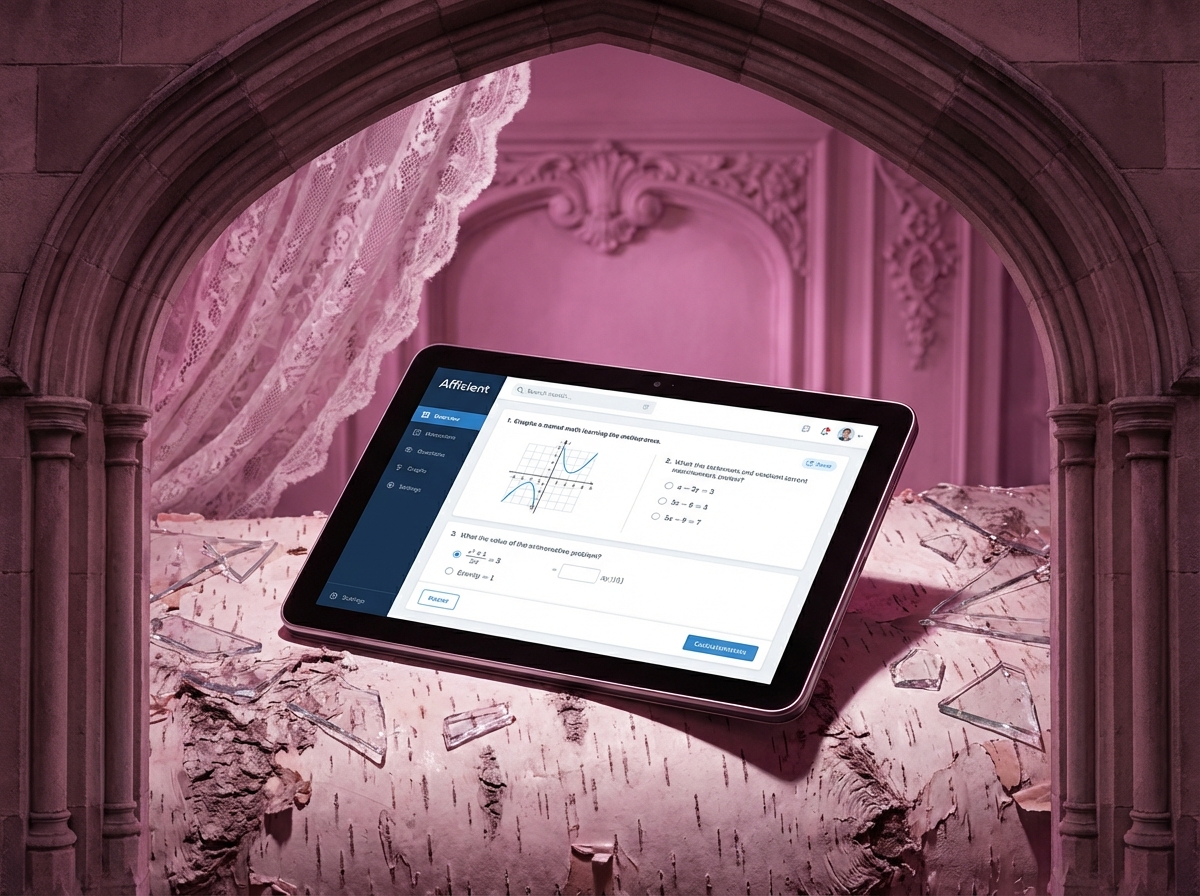
Error analysis identifies the real problem. When your child gets something wrong, the system doesn’t just mark it incorrect and move on. It analyzes why they got it wrong. Are they making calculation errors? Do they not understand the concept? Are they misreading the question? Then it provides targeted help for that specific issue.
Multiple explanations for different learning styles. If one way of explaining doesn’t click, the AI tries another approach. Some kids need visual representations, others need real-world examples, others need to see the abstract math. The system adapts to what works for your child.
Discover where your child’s conceptual gaps are with a free evaluation that shows exactly what they understand versus what they’ve just memorized.
Real results that prove deep understanding. Afficient students achieve strong academic results because they genuinely understand the material. And because they truly understand, they learn more efficiently than traditional methods. They’re not wasting time re-learning what they forgot.
What You Can Do Starting Today
You don’t have to wait for a perfect system to start helping your child build better math understanding. Here are some things you can try at home:
After your child finishes homework, ask them to explain one problem to you. Not just show you the answer, but walk you through their thinking. If they can’t explain it, that’s valuable information.
Create a “review rotation” schedule. Pick one old topic per week to revisit. Spend just 10-15 minutes on it. This keeps old knowledge fresh without overwhelming your child.
Celebrate understanding, not just correct answers. When your child gets something wrong but can explain what they tried and why, that’s progress. When they get something right but can’t explain it, dig deeper.
Look for connections between topics. Help your child see how fractions, decimals, and percentages are related. How multiplication is repeated addition. How algebra is just arithmetic with letters. These connections make everything stick better.
The Bottom Line
Your child forgetting math after tests isn’t a character flaw or a learning disability (though if forgetting is severe and persistent, it’s worth checking with a professional). It’s a predictable result of how most math is taught—focused on short-term test performance rather than long-term understanding.
The good news is that with the right approach, this is completely fixable. Deep understanding doesn’t have to take longer—in fact, when kids truly understand, they learn faster because they’re not constantly backtracking to re-learn forgotten material.
You might think building deep understanding takes longer, but Afficient students actually learn more efficiently than traditional methods. Because they truly understand each concept, they don’t waste time re-learning basics or getting stuck on advanced topics because their foundation is shaky.
The key is shifting from memorization to mastery, from cramming to spaced practice, from passive review to active problem-solving. It’s about building a foundation that lasts, not just getting through the next test.
Take the free diagnostic test to see exactly what your child understands versus what they’ve just memorized. You’ll get a clear picture of where the gaps are and a personalized plan to fill them.
Your child isn’t bad at math. They just need a better way to learn it—one that works with how memory actually functions, not against it. And once they experience what it feels like to truly understand something, to have it stick, to build on solid ground? That’s when math stops being a source of frustration and starts being something they can actually master.


Leave A Comment