
When parents search for effective online learning solutions, they face a critical question: will their child receive truly personalized instruction, or just another one-size-fits-all curriculum delivered through a screen? The difference between adaptive learning platforms and conventional online programs lies not in technology alone, but in how that technology responds to each student’s unique learning journey.
Understanding the Fundamental Difference
Traditional online programs operate on a fixed curriculum model. Students progress through predetermined lessons in a set sequence, regardless of whether they’ve mastered prerequisite concepts or need additional support. This approach mirrors the limitations of physical classrooms—content delivery remains standardized, and personalization exists only at surface level.
Adaptive learning systems function differently. These platforms use artificial intelligence to continuously analyze student performance, adjusting content difficulty and focus areas in real-time. Every answer a student provides generates data that shapes their next learning experience. This creates a dynamic educational environment where the curriculum molds itself around the learner, rather than forcing the learner to conform to a rigid structure.
The Power of Intelligent Diagnostics
Precision in identifying knowledge gaps separates effective learning from time-wasting repetition. Adaptive platforms like Afficient Academy begin with comprehensive AI-powered diagnostic assessments that pinpoint exactly where a student stands across multiple skill areas. This initial mapping creates a detailed profile of strengths and weaknesses, establishing a customized starting point for each learner.
Traditional online programs typically use broad placement tests or age-based assumptions to determine starting levels. This approach frequently misses critical gaps in foundational knowledge while simultaneously forcing students to review concepts they’ve already mastered. The result: frustration from both under-challenge and over-challenge, often within the same course.
Real-Time Adjustment vs. Static Progression
The most significant advantage of adaptive learning emerges during active instruction. As students work through material, AI algorithms continuously evaluate performance patterns. When a student struggles with a particular concept, the system immediately generates additional practice problems targeting that specific skill. When mastery is demonstrated, the platform reduces repetitive exercises and advances to more challenging material.
This responsive approach contrasts sharply with traditional online courses, where lesson sequences remain fixed regardless of individual performance. Students who grasp concepts quickly must still complete all assigned exercises, while those who need extra support receive only the predetermined amount of practice—often insufficient for true mastery.
Feedback Mechanisms That Accelerate Learning
Immediate, actionable feedback transforms mistakes into learning opportunities. Adaptive platforms provide instant correction and explanation when students make errors, allowing them to understand and correct misconceptions before they become ingrained. This self-correction capability enables students to learn from mistakes independently, building both knowledge and confidence.
Traditional online programs frequently delay feedback until assignments are submitted and graded, creating a gap between error and correction. During this delay, students may practice incorrect methods repeatedly, reinforcing misunderstandings that later require significant effort to unlearn.
Measurable Outcomes and Accelerated Progress
The effectiveness of adaptive learning shows clearly in student outcomes. Afficient Academy reports that over 90% of students advance one full grade level within 2 to 5 months and achieve A or A+ grades. This acceleration stems from the platform’s ability to eliminate wasted time on already-mastered content while providing intensive support exactly where needed.
Such results reflect the efficiency of truly personalized instruction. When learning paths adapt continuously to student needs, progress accelerates naturally. Students spend their study time addressing actual knowledge gaps rather than following a predetermined curriculum that may or may not align with their specific needs.
Structured Flexibility for Sustainable Learning
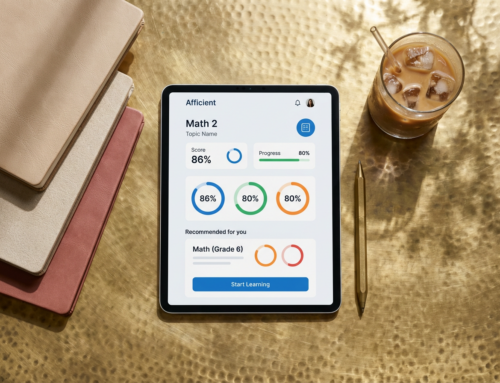
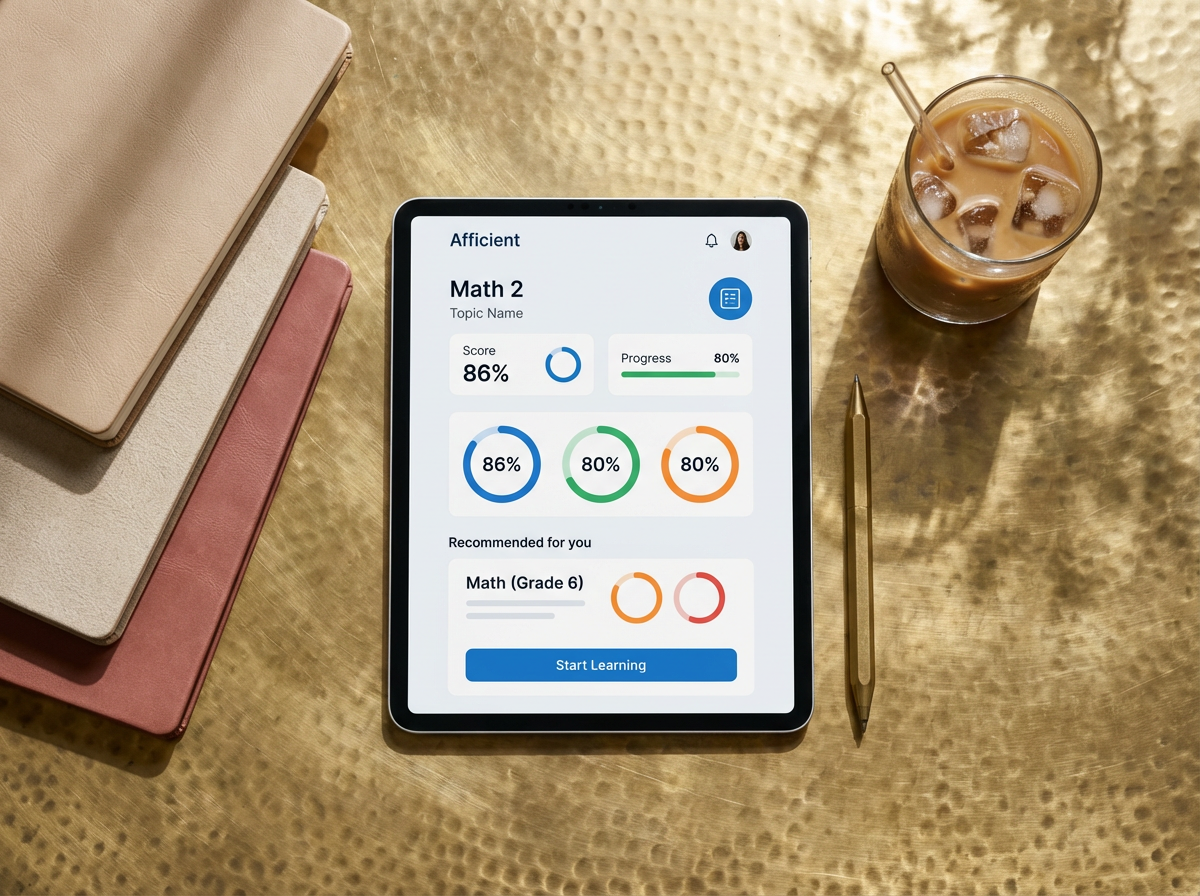
Adaptive learning platforms balance personalization with structure. While students can progress at their own pace, systems like Afficient maintain accountability through weekly assignments and progress dashboards. This combination prevents the common pitfall of self-paced programs where students either rush through material without adequate mastery or lose momentum entirely.
Traditional online programs often struggle with this balance. Rigid schedules may not accommodate individual learning speeds, while completely self-paced options frequently lack the structure necessary to maintain consistent progress.
The Role of Human Support in Adaptive Systems
Technology enhances but doesn’t replace human instruction. Quality adaptive platforms integrate teacher support for conceptual guidance and problem-solving assistance. This hybrid model leverages AI for continuous assessment and content adjustment while preserving human expertise for complex explanations and motivational support.
Many traditional online programs offer limited teacher interaction, typically through scheduled sessions or delayed email responses. This separation between content delivery and human support creates gaps in the learning experience, particularly when students encounter challenging concepts that require immediate clarification.
Addressing Individual Learning Patterns
Every student learns differently—some grasp concepts through visual examples, others through repeated practice, still others through verbal explanation. Adaptive systems identify these patterns through ongoing performance analysis, adjusting presentation methods and practice types accordingly.
Traditional online courses present material in a uniform format, assuming all students will respond similarly to the same instructional approach. This assumption ignores the reality of diverse learning styles and cognitive preferences, limiting effectiveness for students whose needs don’t align with the chosen presentation method.
Getting Started with Adaptive Learning
Parents seeking to understand whether adaptive learning suits their child can begin with diagnostic assessment. Platforms like Afficient Academy offer free diagnostic testing and consultation to evaluate current skill levels and identify specific learning needs. This assessment provides concrete data about knowledge gaps and learning patterns, enabling informed decisions about educational approaches.
The diagnostic process itself demonstrates adaptive learning principles—comprehensive evaluation followed by customized recommendations based on individual results. This contrasts with traditional programs that often require enrollment before revealing whether the curriculum matches student needs.
Long-Term Benefits Beyond Immediate Grades
Adaptive learning cultivates skills that extend beyond subject mastery. Students develop self-awareness about their learning processes, learning to identify when they need additional practice versus when they’re ready to advance. This metacognitive development proves valuable throughout academic careers and professional life.
The immediate feedback and self-correction features of adaptive platforms also build independence and problem-solving skills. Students learn to analyze their mistakes, understand underlying concepts, and apply corrections—capabilities that traditional programs, with their delayed feedback cycles, develop less effectively.
Making the Choice for Your Child
When evaluating online learning options, consider whether the program adapts to your child or expects your child to adapt to it. Does the system identify and address specific knowledge gaps, or does it follow a predetermined path regardless of individual needs? Can your child progress at their own pace while maintaining structure and accountability?
For parents ready to explore how adaptive learning might benefit their child, comprehensive evaluation tools provide insight into current skill levels and potential growth trajectories. Understanding where your child stands today enables better decisions about which learning approach will serve them most effectively.
The difference between adaptive and traditional online learning ultimately comes down to responsiveness. Adaptive systems respond to each student continuously, creating truly personalized educational experiences. Traditional programs respond to curriculum designers’ assumptions about what average students need. For children who deserve more than average results, that distinction matters profoundly.