
It breaks your heart to see your child cry over math homework. You watch them stare at problems they once attempted with hope, now frozen in fear. The words “I’m just bad at math” echo through your home, and you feel helpless—desperate to help but unsure where to start. If this sounds familiar, you’re not alone. Math anxiety affects millions of students, but here’s the truth that might surprise you: your child isn’t bad at math—they just need the right environment to rebuild their confidence.
Understanding the Confidence-Performance Cycle
Math confidence doesn’t exist in isolation. It’s intimately connected to performance in what psychologists call the “confidence-performance cycle.” When students experience repeated failures or struggle publicly in class, their confidence erodes. This diminished confidence then affects their willingness to try, their ability to focus, and ultimately their performance—creating a vicious cycle that spirals downward.
Math anxiety is real, common, and not your child’s fault. Research shows that math anxiety activates the same brain regions associated with physical pain. When your child says math “hurts,” they’re describing a genuine neurological response. The fear of making mistakes, being judged by peers, or disappointing parents creates a psychological barrier that makes learning nearly impossible.
But here’s the encouraging news: this cycle can be reversed. Just as confidence affects performance, improved performance rebuilds confidence. The key is creating the right conditions for that turnaround to begin.
The Science of Rebuilding Mathematical Confidence
Educational psychology has identified several critical factors in confidence restoration:
Small wins matter more than big breakthroughs. Students who experience consistent small successes rebuild confidence faster than those who occasionally achieve major victories. The brain needs repeated evidence that “I can do this” before it rewrites the narrative of “I’m bad at math.”
Safe environments eliminate the fear factor. When students learn in spaces where mistakes aren’t publicly visible and judgment is absent, their cognitive resources can focus on learning rather than self-protection. The absence of peer comparison removes a major source of anxiety.
Immediate positive feedback accelerates growth. The brain responds powerfully to instant recognition of success. When students receive immediate confirmation that they’ve solved a problem correctly, it creates positive associations with mathematical thinking.
Mastery experiences build lasting confidence. Confidence rooted in actual competence is sustainable. Students need to genuinely understand concepts and experience the satisfaction of independent problem-solving, not just memorize procedures.
How Afficient Creates the Perfect Confidence-Building Environment
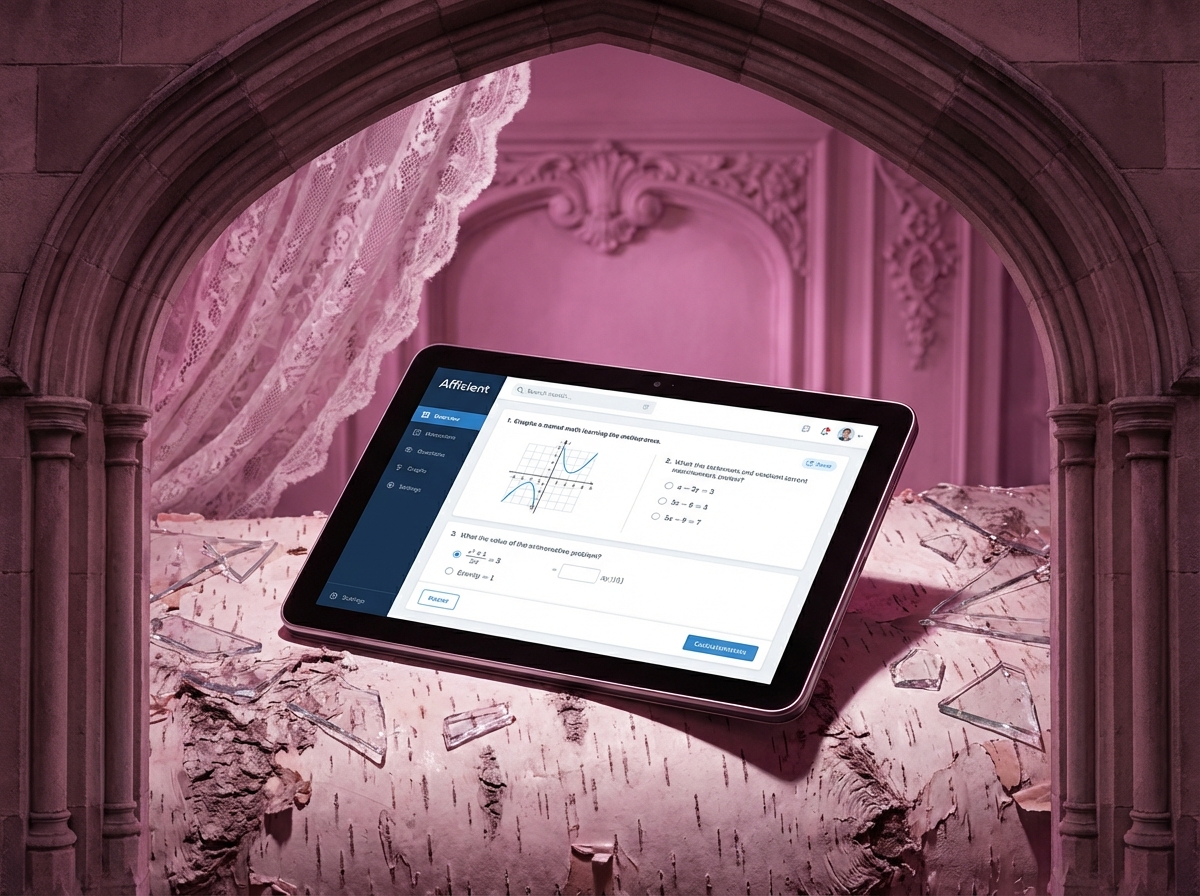
Traditional classroom settings, despite teachers’ best efforts, often inadvertently perpetuate math anxiety. Public mistakes, timed tests, peer comparison, and one-size-fits-all pacing can devastate vulnerable students. This is where Afficient’s AI-powered approach fundamentally changes the game.
Private learning eliminates public failure. With Afficient, there’s no raising hands in front of classmates, no being called to the board, no visible struggle while others finish quickly. Students work in a completely private environment where mistakes are learning opportunities, not sources of embarrassment.
Guaranteed success rate builds momentum. Afficient’s adaptive AI helps students maintain a high accuracy rate—high enough to build confidence through success, but challenging enough to promote genuine learning. This isn’t about making math easier; it’s about sequencing learning so students experience consistent wins while steadily advancing.
Gamified rewards celebrate every step forward. The platform tracks milestones and celebrates achievements, creating positive associations with mathematical progress. Students see their growth visualized, transforming abstract improvement into concrete evidence of capability.
Personalized encouragement adapts to emotional state. Unlike static programs, Afficient’s AI recognizes when students are struggling emotionally and adjusts its approach—offering encouragement, breaking problems into smaller steps, or revisiting foundational concepts. It’s like having a patient tutor who never gets frustrated.
Self-paced learning removes pressure. Students control their learning speed. No one is pushing them to keep up with faster learners or holding them back when they’re ready to advance. This autonomy is psychologically powerful—it returns control to students who’ve felt helpless.
The results speak to the effectiveness of this approach. Many Afficient students show significant grade improvement—proof that with the right support, students who once believed they were “bad at math” can excel. More importantly, parents report transformations like “From tears to ‘Can I do more math?’”—evidence that confidence and enjoyment can be restored.
Give your child a fresh start—take the free diagnostic test in a safe, judgment-free environment.
Addressing Your Deepest Concerns as a Parent
“Will this really work after so much failure?” Yes, because Afficient doesn’t just address the academic gaps—it heals the emotional wounds. The private environment means your child can start fresh without the baggage of past public failures. The guaranteed success rate ensures they experience winning again, which is often all it takes to crack open the door to possibility.
“How long until I see my child smile about math again?” Many parents report noticeable attitude shifts over time. The first time your child voluntarily does “extra” math problems or asks to continue a session, you’ll know the transformation has begun. Confidence rebuilds faster than you might expect when the environment is right.
“What if they’re too damaged by previous experiences?” There’s no such thing as “too damaged” when it comes to math confidence. Students who’ve experienced years of struggle have successfully rebuilt their relationship with mathematics through Afficient. The key is that the AI meets them exactly where they are—no judgment, no assumptions, just patient, personalized support.
See how Afficient can rebuild your child’s confidence with our free evaluation.
Supporting Your Child’s Confidence Journey at Home
While Afficient provides the learning environment, your role as a parent remains crucial:
What to say: Focus on effort and strategy rather than innate ability. Instead of “You’re so smart,” try “I love how you kept trying different approaches.” Replace “This is hard” with “This is hard right now—you’re building new skills.”
What not to say: Avoid phrases like “I was bad at math too” (which suggests math ability is inherited) or “Just try harder” (which implies effort alone solves everything). Never compare siblings or peers.
Celebrate small wins authentically. Notice specific progress: “You solved that type of problem faster today” or “You figured that out without help.” Genuine recognition of concrete improvements is more powerful than generic praise.
Create a pressure-free home environment. Let your child know that grades matter less than understanding, and that mistakes are how learning happens. Your anxiety about their math performance can transfer to them, so manage your own stress.
Trust the process. Confidence rebuilding isn’t linear. There will be setbacks and frustrating days. Consistency matters more than perfection.
Real Transformation: From Fear to Confidence
Consider the typical trajectory of an Afficient student who starts with severe math anxiety:
Week 1-2: Initial hesitation gives way to curiosity as the private environment feels safe. First small wins begin to chip away at the “I can’t” narrative.
Week 3-4: Visible attitude shift. Students start sessions with less resistance. Parents notice reduced homework battles.
Week 5-8: Confidence becomes evident. Students attempt harder problems, show persistence, and occasionally express enjoyment.
Week 9-12: Transformation solidifies. Math becomes a neutral or even positive subject. Grades improve significantly. Students advocate for themselves in school math classes.
This isn’t a miracle—it’s what happens when the confidence-performance cycle reverses direction. Small wins accumulate, competence grows, and confidence follows naturally.
Taking the First Step Toward Mathematical Healing
If you’re reading this with tears in your eyes, remembering your child’s last math meltdown, know that change is possible. Your child’s current relationship with math doesn’t have to be permanent. With the right support system—one that prioritizes emotional safety alongside academic growth—students who once feared math can genuinely enjoy it.
Afficient’s approach recognizes a fundamental truth: confidence and competence grow together. You can’t force confidence through willpower, and you can’t build lasting competence on a foundation of fear. But when you create an environment where students feel safe, experience consistent success, and see tangible progress, both confidence and competence flourish naturally.
Your child is not broken. They’re not “just bad at math.” They’re a capable learner who needs the right conditions to thrive. Those conditions exist, and they’re more accessible than you might think.
Your child can love math again. Start the healing journey today with our free diagnostic test.
The path from “I hate math” to “Can I do more?” is shorter than it seems when you have the right guide. Afficient doesn’t just teach mathematics—it rebuilds the confidence that makes mathematical learning possible. And that might be the most important equation of all: confidence plus the right support equals transformation.