
It breaks your heart to see your child cry over math homework. You watch them stare at problems they once tried to solve, now frozen with fear. The words “I’m just bad at math” echo through the house, and you feel helpless. You’re not alone—and more importantly, your child’s struggle isn’t permanent.
Math anxiety is real, common, and completely reversible. Research shows that negative math experiences create a vicious cycle: struggle leads to anxiety, anxiety impairs performance, poor performance destroys confidence, and low confidence guarantees more struggle. But here’s the crucial truth every parent needs to hear: your child isn’t bad at math. They’re trapped in a cycle that can be broken with the right support and environment.
Understanding the Confidence-Performance Connection
The relationship between confidence and math ability works both ways. When children repeatedly fail at math, their brain begins associating the subject with stress and inadequacy. This isn’t weakness—it’s a natural psychological response. Studies in educational psychology demonstrate that math anxiety activates the same brain regions as physical pain, explaining why some children literally feel sick before math class.
The devastating part? Once this cycle starts, traditional classroom environments often make it worse. Public mistakes, timed tests, and peer comparison amplify the fear. Your child may understand the concepts but freeze during assessments. They may avoid raising their hand even when they know the answer, terrified of being wrong in front of others.
But confidence can be rebuilt systematically. Research on growth mindset and mastery learning shows that small, consistent wins rewire the brain’s response to math. When children experience success in a safe environment—where mistakes are private and progress is visible—the anxiety-performance cycle reverses. Success builds confidence, confidence improves performance, and improved performance generates more success.
Why Traditional Approaches Often Fall Short
Many well-meaning parents hire tutors or enroll children in group classes, hoping extra instruction will help. Sometimes it works. Often, it doesn’t address the core issue: your child doesn’t need more math—they need a different emotional experience with math.
Traditional tutoring maintains the same pressure dynamics that created the problem. The tutor watches, the child performs, mistakes happen publicly (even if it’s just one-on-one), and the anxiety persists. Group classes add peer comparison back into the equation. Your child may learn techniques, but the fear remains.
What struggling students need most is a judgment-free environment where they can fail privately, succeed frequently, and see tangible proof of their improvement. This requires three elements rarely found together: personalized pacing, guaranteed success experiences, and complete privacy during the learning process.
The Science of Rebuilding Math Confidence
Educational research identifies specific conditions that reverse math anxiety and rebuild confidence:
Mastery-based progression ensures students don’t move forward until they’ve truly understood current concepts. Rushing ahead to keep pace with a curriculum leaves gaps that compound into bigger problems. When students master each skill before advancing, they build a solid foundation and experience competence at every level.
Immediate positive feedback is crucial. The brain needs to associate math with success, not delayed judgment. When students receive instant confirmation that they’re on the right track, it creates positive reinforcement loops. Over time, this rewires their emotional response to mathematical challenges.
Safe failure environments allow students to make mistakes without social consequences. Research shows that fear of judgment—not actual difficulty—is often the biggest barrier to learning. When children can attempt problems, get them wrong, and try again without anyone watching, they develop resilience and problem-solving persistence.
Visible progress tracking provides concrete evidence of improvement. Struggling students often can’t see their own growth, which perpetuates the “I’m bad at math” narrative. When they can track their advancement through grade levels and skill mastery, it challenges their negative self-perception with objective data.
How AI-Powered Learning Creates the Ideal Confidence-Building Environment
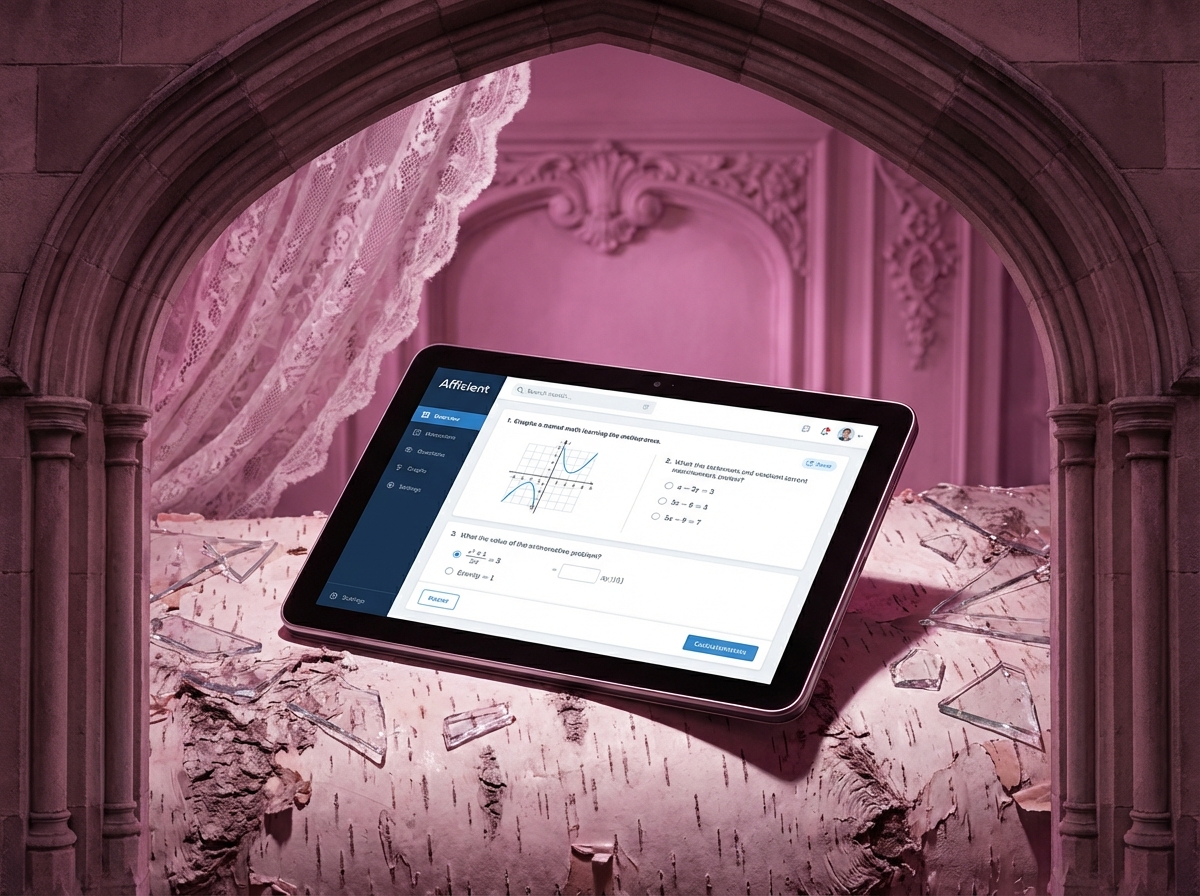
Afficient Academy has developed an approach specifically designed to break the anxiety-performance cycle. Their AI-driven platform creates the exact conditions research identifies as essential for rebuilding math confidence, addressing the emotional barriers that traditional methods often overlook.
The system begins with a comprehensive diagnostic test that identifies your child’s true starting point—not where they “should” be based on age, but where they actually are in their mathematical understanding. This eliminates the pressure of grade-level expectations and allows learning to begin at a comfortable, confidence-building level.
The private, self-paced environment is transformative for anxious learners. Your child works independently with the AI system, which means every mistake happens privately. There’s no tutor watching, no classmates comparing, no one to disappoint. This privacy is crucial—it removes the social anxiety component that often overwhelms the actual math challenge.
Afficient’s algorithm ensures an 80-90% success rate during practice sessions. This isn’t about making math easier—it’s about strategic sequencing. The AI presents problems at the edge of your child’s ability, challenging enough to build skills but achievable enough to generate frequent wins. This success rate is carefully calibrated based on research showing that consistent positive experiences are essential for confidence rebuilding.
The gamified reward system and milestone tracking provide the visible progress struggling students desperately need. Your child can see themselves advancing through grade levels, mastering specific skills, and earning achievements. This tangible evidence directly counters the “I’m bad at math” narrative with objective proof of capability.
The results speak to the emotional transformation, not just academic improvement. Over 90% of students using Afficient improve by one grade level and achieve A or A+ grades within 2-5 months, but the more profound change is attitudinal. Parents report children who once cried over homework now asking, “Can I do more math?” This shift—from avoidance to voluntary engagement—signals genuine confidence rebuilding.
One parent, Alien Ack, shared how their child used Afficient Math during summer break to address learning gaps. The result wasn’t just improved grades but restored confidence and enthusiasm for learning. Another parent, Renee Li, emphasized how the personalized approach adapted to her child’s unique learning style and pace, creating a supportive environment that traditional methods hadn’t provided.
Practical Steps for Parents: Supporting Confidence at Home
While the right learning platform provides the foundation, parents play a crucial role in emotional recovery. Here’s how to support your child’s confidence rebuilding:
Reframe math ability as learnable, not fixed. When your child says “I’m bad at math,” respond with “You haven’t mastered this yet, but you’re working on it.” This simple shift from fixed to growth mindset is powerful. Emphasize effort and strategy over innate talent.
Celebrate small wins enthusiastically. When your child completes a lesson or masters a concept, make it a big deal. Their brain needs to associate math with positive emotions and parental pride. These celebrations rewire the emotional response to mathematical achievement.
Never express your own math anxiety. Comments like “I was never good at math either” or “Math is hard” validate and perpetuate your child’s negative beliefs. Instead, model curiosity and persistence: “This is challenging, but we can figure it out together.”
Focus on progress, not perfection. Avoid asking “Did you get 100%?” Instead ask “What did you learn today?” or “What was challenging but doable?” This shifts attention from performance anxiety to growth and learning.
Provide a pressure-free practice environment. Let your child work on math when they’re relaxed, not rushed. Remove time pressure and performance expectations. The goal is rebuilding positive associations, which requires a calm, supportive atmosphere.
Addressing Common Parent Concerns
“Will this really work after so much failure?” Yes, because the approach addresses the root cause—anxiety and negative associations—rather than just adding more instruction. When the emotional barriers are removed, learning accelerates rapidly. The 90% success rate among Afficient users demonstrates that even deeply discouraged students can transform their relationship with math.
“How long until I see my child smile about math again?” Most parents report attitudinal shifts within 2-4 weeks of consistent practice in a supportive environment. The first sign is usually reduced resistance to math time. Within 2-3 months, many children show genuine enthusiasm. Academic improvement follows emotional recovery.
“What if they’re too damaged by previous experiences?” Math anxiety can be overcome at any stage. The brain’s neuroplasticity means negative associations can be replaced with positive ones through consistent, successful experiences. Students who’ve struggled for years can rebuild confidence when given the right environment and support.
The Path Forward: From Fear to Confidence
Your child is not bad at math—they’re experiencing a common, treatable condition that responds to specific interventions. The combination of a safe learning environment, guaranteed success experiences, immediate feedback, and visible progress creates the conditions for rapid confidence rebuilding.
The transformation from “I hate math” to “Can I do more?” isn’t magic—it’s the result of removing anxiety triggers while systematically building competence and self-efficacy. When children experience math in an environment designed for confidence building rather than performance evaluation, their natural learning ability emerges.
Afficient Academy’s AI-powered platform creates this ideal environment systematically. The technology handles the complex task of personalizing instruction, maintaining optimal challenge levels, and tracking progress, while the private, self-paced format removes social anxiety. Parents receive real-time progress reports showing grade-level advancement and skill mastery, providing objective evidence of their child’s growing capability.
The platform’s WASC accreditation and patented AI technology ensure educational rigor, while the 90% rate of students improving by one grade level and achieving A/A+ grades demonstrates effectiveness. But perhaps most importantly, the approach recognizes that confidence and competence grow together—you can’t sustainably improve one without addressing the other.
Take the First Step Toward Healing
If you’re watching your child suffer with math, know that transformation is possible. The first step is understanding where they truly are in their mathematical journey, without the pressure of grade-level expectations or performance anxiety.
Give your child a fresh start with Afficient’s free diagnostic test in a completely judgment-free environment. This assessment identifies specific strengths and gaps, creating a personalized starting point for confidence rebuilding. There’s no risk, no pressure—just clarity about the path forward.
Thousands of families have watched their children rediscover their mathematical ability and self-confidence through this approach. The tears can stop. The anxiety can fade. Your child can not only succeed at math but genuinely enjoy it.
Your child CAN love math again. Start the healing journey today with a free diagnostic test and consultation. Because every child deserves to experience the joy of understanding, the pride of mastery, and the confidence that comes from knowing they’re capable of far more than they believed possible.