
Every parent knows that sinking feeling. You walk into your child’s room to find them staring at their math homework, tears streaming down their face. “I can’t do this,” they whisper. “I’m just bad at math.” In that moment, your heart breaks a little. You want to help, but you’re not sure how. You’ve tried encouragement, tutors, even sitting with them for hours—but nothing seems to work. The fear remains, and with each passing day, you watch your bright, capable child become more convinced they’ll never understand math.
You’re not alone, and more importantly, your child is not broken. Math anxiety is one of the most common learning challenges affecting students today, and the good news is that it can be overcome. Understanding how to turn around math anxiety and build genuine confidence requires addressing both the emotional and academic dimensions of the problem.
Understanding the Confidence-Performance Cycle
Math anxiety creates a vicious cycle that traps students in a pattern of failure. When a child struggles with math, they begin to doubt their abilities. This self-doubt triggers anxiety during tests and homework, which impairs their performance. Poor performance then reinforces their belief that they’re “bad at math,” creating even more anxiety the next time they face a math problem.
This cycle is not your child’s fault. Research shows that math anxiety is a real psychological condition that affects working memory and cognitive processing. When students are anxious, their brains literally have less capacity available for problem-solving because anxiety consumes mental resources. It’s like trying to run a computer program while dozens of other applications are draining the processor—everything slows down.
The devastating part is watching this unfold. Your child, who once approached learning with curiosity, now approaches math with dread. They may develop physical symptoms—stomachaches before math class, trouble sleeping the night before a test, or even refusing to go to school on days when they have math. As a parent, you feel helpless, wondering if this damage is permanent.
The Science of Rebuilding Confidence
Here’s the truth that every parent of a math-anxious child needs to hear: confidence can be rebuilt, and it happens faster than you might think. The key lies in understanding how confidence develops in the first place.
Confidence in math doesn’t come from being told “you’re smart” or “you can do it.” It comes from experiencing success—repeatedly and consistently. Psychologists call these “mastery experiences,” and they’re the most powerful way to build self-efficacy. When students successfully solve problems, especially problems they initially thought were too difficult, their brains begin to rewire their beliefs about their mathematical abilities.
The challenge is creating an environment where these mastery experiences can happen. Traditional classroom settings often work against confidence building. Public failure—getting an answer wrong in front of peers—can be devastating for an anxious student. Time pressure during tests amplifies anxiety. And when students fall behind, the pace of classroom instruction doesn’t slow down to let them catch up, creating a widening gap that feels impossible to close.
What anxious students need is a fundamentally different learning environment—one designed specifically to break the anxiety cycle and rebuild confidence from the ground up.
Creating a Safe Space for Mathematical Healing
The first step in turning around math anxiety is eliminating the fear of judgment. Your child needs a private learning environment where mistakes are not just tolerated but expected as part of the learning process. When students know that no one will see them struggle, no peers will judge them, and no teacher will show disappointment, they can finally relax enough to actually learn.
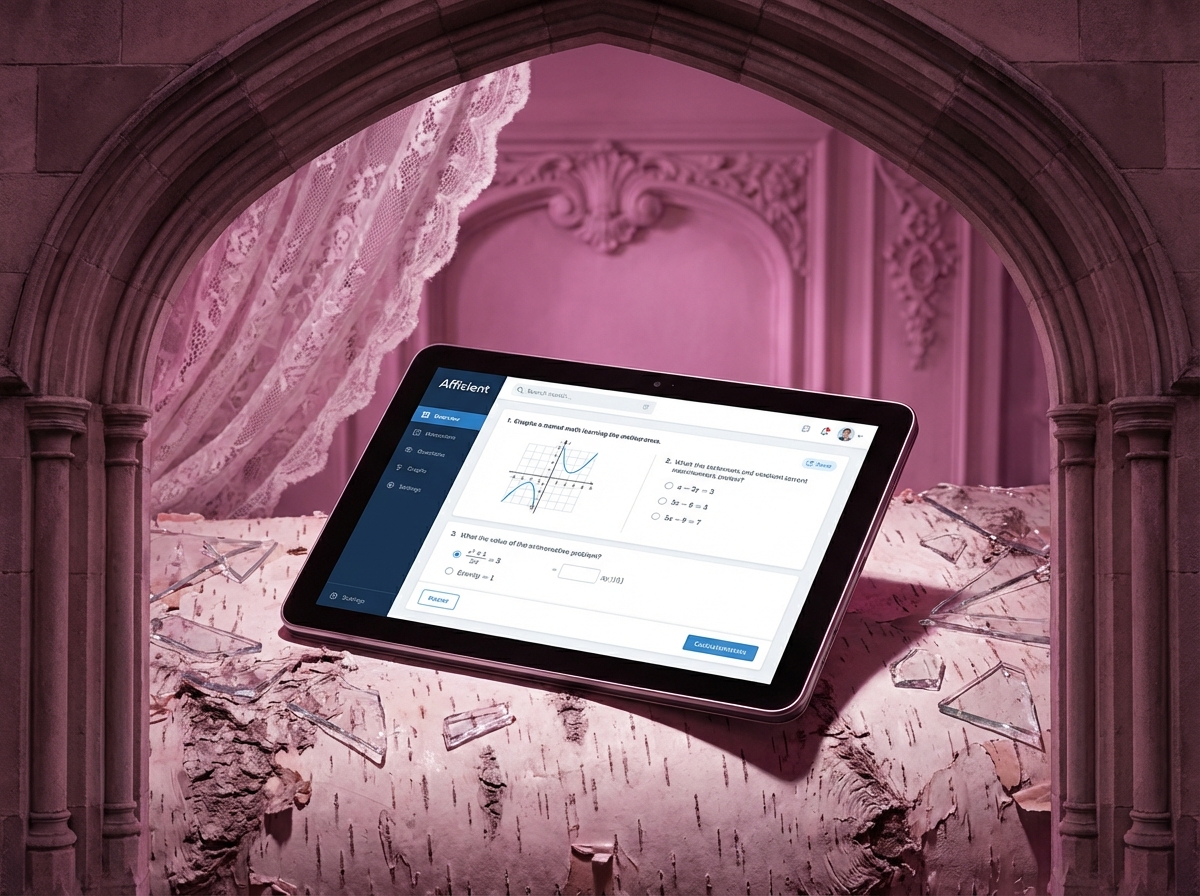
This is where platforms like Afficient have revolutionized the approach to math anxiety. By providing completely private, one-on-one learning experiences, students can work through problems without the social pressure that amplifies their anxiety. There’s no risk of public embarrassment, no comparison to classmates who seem to “get it” faster, and no pressure to perform before they’re ready.
But privacy alone isn’t enough. The learning experience itself must be structured to guarantee success. Afficient’s AI-powered system ensures that students maintain an 80-90% accuracy rate as they work through problems. This isn’t about making math easier—it’s about carefully calibrating the difficulty level so students are always working at the edge of their abilities without being overwhelmed. They’re challenged enough to grow, but successful enough to build confidence.
Think about what this means for your child. Instead of facing a homework assignment where they might get half the problems wrong (reinforcing their belief that they’re bad at math), they complete sessions where they get most problems right. Each correct answer becomes a small win. These small wins accumulate, and gradually, your child’s internal narrative begins to shift from “I can’t do math” to “I’m getting better at math.”
The Power of Immediate Positive Feedback
Traditional math instruction often involves a painful delay between effort and feedback. Students complete homework, turn it in, and wait days to get it back—often covered in red marks highlighting everything they did wrong. By the time they see their mistakes, they’ve forgotten their thought process, and the feedback feels like punishment rather than learning.
Immediate positive feedback changes everything. When students receive instant confirmation that they’ve solved a problem correctly, their brains release dopamine—the same neurotransmitter associated with reward and motivation. This creates a positive association with math, gradually replacing the anxiety response with anticipation and even enjoyment.
Afficient’s approach celebrates every correct answer immediately. The system doesn’t just mark answers right or wrong—it provides encouraging feedback that acknowledges the student’s effort and progress. For a child who has experienced repeated failure, this consistent positive reinforcement is transformative. They begin to associate math with success rather than frustration.
Moreover, when students do make mistakes, the feedback is constructive and supportive rather than judgmental. The AI adapts its explanations to the student’s emotional state, providing gentle guidance that helps them understand their error without triggering shame or anxiety. This creates what psychologists call a “growth mindset”—the belief that abilities can be developed through effort and learning.
Visible Progress: Seeing the Transformation
One of the most demoralizing aspects of math anxiety is the feeling that no matter how hard students try, they’re not getting anywhere. They study, they practice, but their grades don’t improve, and they still feel lost in class. This invisible progress—or lack thereof—reinforces their belief that they’re simply incapable of learning math.
Making progress visible is crucial for rebuilding confidence. Students need to see concrete evidence that they’re improving. Afficient provides detailed progress tracking that shows students exactly how far they’ve come. They can see their accuracy rates improving, watch their problem-solving speed increase, and track their mastery of specific concepts. This tangible evidence of growth is incredibly powerful for anxious students who have stopped believing in their own potential.
The platform’s teaching approach helps maintain student motivation through positive reinforcement and recognition of progress. These external markers of success help sustain motivation during the challenging early stages of confidence rebuilding, when internal motivation may still be fragile.
Parents report remarkable transformations. Children who once cried over math homework start asking, “Can I do more math problems?” Students who avoided math at all costs begin voluntarily spending time on the platform. The shift happens because they’re finally experiencing what success in math feels like—and it feels good.
Addressing Your Deepest Concerns
As a parent watching your child struggle, you probably have questions and fears about whether recovery is really possible.
“Will this really work after so much failure?” Yes. The brain’s neuroplasticity means that negative patterns can be rewired. Students who have experienced years of math anxiety can and do recover. The key is consistency and the right environment. With Afficient’s structured approach, 90% of students achieve A or A+ grades, proving that past failure doesn’t determine future potential.
“How long until I see my child smile about math again?” Every child is different, but many parents report seeing changes within weeks. The first sign is often reduced resistance—your child stops fighting you about math homework. Then you might notice them working more independently. Eventually, you’ll see genuine engagement and even enthusiasm. The timeline varies, but the trajectory is consistent when the right support is in place.
“What if they’re too damaged?” This fear is understandable but unfounded. Math anxiety is not permanent damage—it’s a learned response that can be unlearned. Even students with severe anxiety, who have panic attacks at the mention of math, can recover. The severity of the anxiety doesn’t predict the potential for recovery; it just means the rebuilding process needs to be especially gentle and gradual.
Supporting Your Child’s Journey at Home
While professional support like Afficient provides the structured learning environment your child needs, your role as a parent remains crucial. Here’s how you can support their confidence rebuilding at home:
Watch your language carefully. Avoid saying things like “I was never good at math either” or “Math is hard.” These statements, though well-intentioned, reinforce the idea that math ability is fixed. Instead, emphasize effort and growth: “You’re working really hard on this” or “I can see you’re getting better at this.”
Celebrate small wins enthusiastically. When your child successfully completes a math session or improves their accuracy, make a big deal of it. These small victories are building blocks of confidence, and your recognition amplifies their impact.
Never pressure or push. Anxiety thrives on pressure. Let your child work at their own pace. Afficient’s self-paced structure allows students to progress when they’re ready, and your job is to support that timeline, not accelerate it.
Share the progress you see. Point out specific improvements: “You finished that problem set so much faster than last week” or “I noticed you didn’t need help with fractions today.” Making progress visible helps your child recognize their own growth.
Real Stories of Transformation
The most powerful evidence that math anxiety can be overcome comes from students who have lived through the transformation. Parents describe children who went from refusing to open their math textbooks to voluntarily spending time practicing problems. Teachers report students who were failing math suddenly earning top grades. Most importantly, students themselves describe feeling free from the fear that once controlled their relationship with learning.
One parent shared: “My daughter used to have panic attacks before math tests. Now she actually looks forward to math class. I never thought I’d see the day.” Another described their son’s transformation: “He went from saying ‘I hate math’ every single day to asking if he could do extra problems. It’s like watching a different child.”
These transformations aren’t miracles—they’re the natural result of providing the right environment, support, and structure for confidence to grow. When students experience consistent success in a safe, judgment-free space, their brains literally rewire their beliefs about their mathematical abilities.
A Path Forward: From Tears to Triumph
If you’re reading this article, you’re probably at a breaking point. You’ve watched your child suffer for too long, and you’re desperate for a solution. The good news is that a solution exists, and it’s more accessible than you might think.
Your child is not bad at math—they just need the right support. Math anxiety can be overcome with the right environment, and confidence can be rebuilt faster than you think. The combination of private learning, guaranteed success rates, immediate positive feedback, and visible progress creates the perfect conditions for mathematical healing.
Give your child a fresh start with a free diagnostic test in a safe, judgment-free environment. This assessment will show you exactly where your child stands and create a personalized path forward—one that prioritizes emotional healing alongside academic progress.
The journey from math anxiety to math confidence isn’t always quick, but it is possible. With Afficient’s proven approach, students don’t just improve their grades—they transform their entire relationship with learning. They discover that they are capable, that math can make sense, and that success is within their reach.
Your child can love math again. The tears can stop. The anxiety can fade. The confidence can grow. Start the healing journey today with a free diagnostic test and consultation. Because every child deserves to experience the joy of understanding, the pride of solving a difficult problem, and the confidence that comes from knowing they can succeed.
The transformation begins with a single step—and that step is believing that change is possible. Your child has been waiting for someone to show them they can do this. Afficient provides the structure, support, and success experiences they need. You provide the belief and encouragement. Together, you can turn math anxiety into math confidence, tears into triumph, and fear into genuine love of learning.