
It breaks your heart to see your child cry over math homework. You watch them stare at the page, tears streaming down their face, whispering “I can’t do this” or worse—“I’m just bad at math.” Every morning before school, there’s that knot in their stomach. Every afternoon, there’s dread about homework time. And you feel helpless, watching someone you love suffer through something that should be a normal part of learning.
If this sounds familiar, you’re not alone. And more importantly: your child is not broken, and this can be turned around.
Understanding the Confidence-Performance Cycle
When a child experiences repeated failures in math, something devastating happens beyond just missing problems. Each wrong answer chips away at their belief in themselves. They start to internalize the idea that they’re “not a math person.” This belief then affects their performance—they approach new problems already defeated, their anxiety making it harder to think clearly. It becomes a vicious cycle: failure destroys confidence, low confidence leads to more failure.
Math anxiety is real, it’s common, and it’s not your child’s fault. Research shows that approximately 20-25% of students experience significant math anxiety. This isn’t about intelligence or capability—it’s about how repeated negative experiences have conditioned their brain to associate math with fear and failure.
The good news? This cycle can be broken. Just as confidence was lost through repeated negative experiences, it can be rebuilt through carefully structured positive ones.
Why Traditional Approaches Often Fall Short
Many well-meaning parents try harder practice, more tutoring sessions, or stricter homework routines. But here’s what often gets missed: a child who’s afraid doesn’t need more pressure—they need a safe space to rebuild.
Traditional classroom settings, even with excellent teachers, can inadvertently reinforce anxiety. When your child gets a problem wrong in front of peers, when they’re called on and freeze, when they see others finishing faster—each moment adds to their fear. The public nature of failure in traditional settings makes recovery harder.
Similarly, traditional tutoring can help with content gaps but may not address the emotional damage. If a child is still experiencing that same fear response, even one-on-one instruction can feel threatening.
The Science of Rebuilding Mathematical Confidence
Educational psychology research points to several critical elements for overcoming math anxiety and rebuilding confidence:
Small, guaranteed wins matter more than big challenges. When children experience success—even on simple problems—their brain starts to rewire its association with math. The key is ensuring a high success rate (80-90%) while gradually increasing difficulty.
Immediate positive feedback accelerates recovery. When children get instant confirmation that they’re on the right track, it interrupts the anxiety spiral before it starts. This is vastly different from waiting days for graded homework or tests.
Private learning eliminates fear of judgment. Without peers watching, without the pressure of timed tests, children can make mistakes safely. This psychological safety is essential for risk-taking and genuine learning.
Visible progress creates momentum. When children can see themselves improving—through clear metrics, milestone tracking, and achievement recognition—they begin to believe change is possible.
How Afficient Creates a Confidence-First Learning Environment
Understanding that emotional healing must accompany academic progress, Afficient has designed an approach specifically for children who’ve developed math fear:
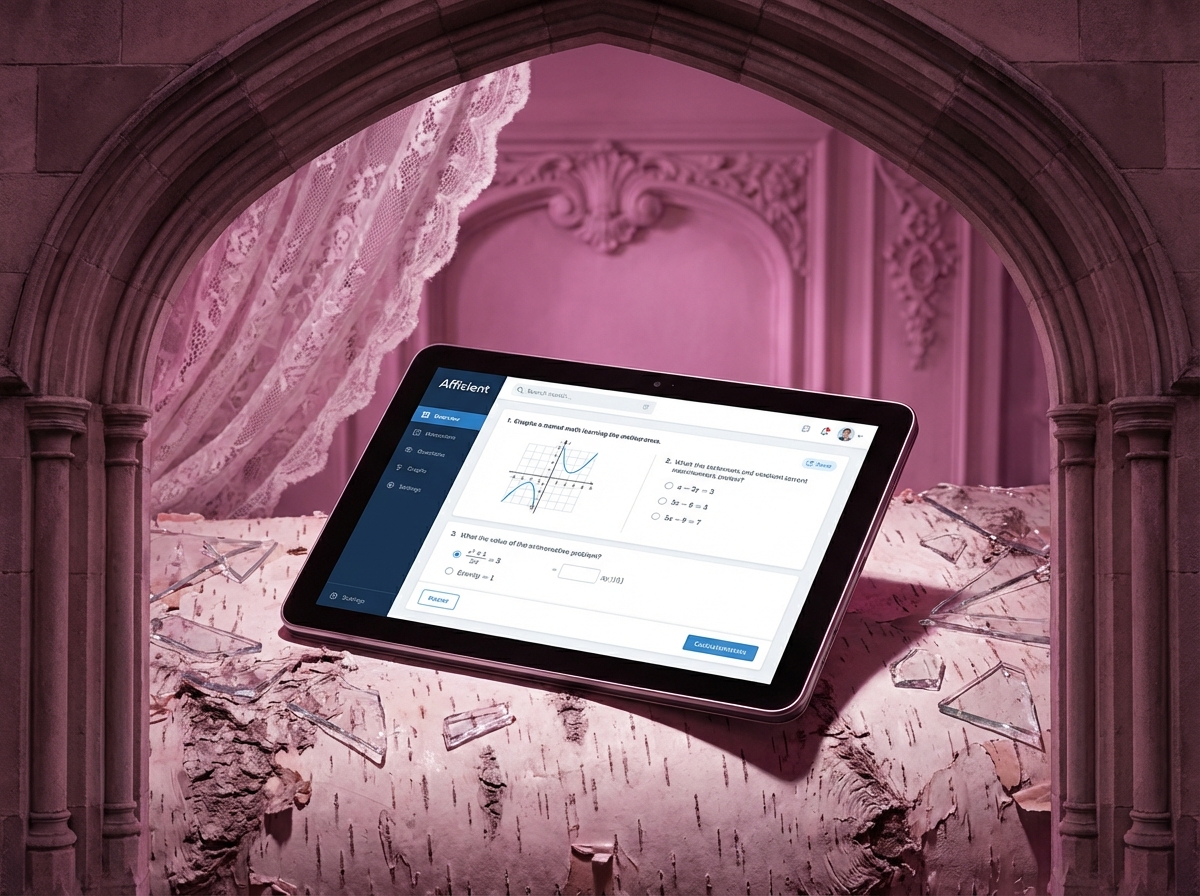
A judgment-free zone where mistakes are safe. The platform provides completely private learning—no classmates watching, no public failure, no comparison with others. Your child can work at their own pace, make mistakes freely, and learn without the social anxiety that often accompanies math class.
Guaranteed success experiences rebuild belief. Afficient’s AI adapts difficulty in real-time to help students achieve optimal learning outcomes. This isn’t about making things too easy—it’s about ensuring enough success to rebuild confidence while still providing appropriate challenge. When your child consistently experiences “I can do this,” their self-concept begins to shift.
Immediate encouragement celebrates every step forward. The platform provides instant positive feedback for correct answers, celebrating progress in ways that feel genuine and motivating. For children who’ve associated math with criticism and red marks, this consistent positive reinforcement is transformative.
Personalized learning paths address root causes. Rather than pushing forward with grade-level content when foundations are shaky, Afficient identifies exactly where understanding broke down and rebuilds from there. The AI adapts to your child’s emotional state and learning needs, ensuring they’re never overwhelmed or bored.
Gamification makes practice feel like play. Through rewards, milestone tracking, and achievement systems, the platform transforms math practice from something to dread into something to look forward to. Many parents report their children asking “Can I do more math?”—words they never thought they’d hear.
Real Transformation: From Tears to Triumph
The results speak to the power of this confidence-first approach. Students using Afficient don’t just improve their grades—they transform their relationship with math. Students using Afficient show significant grade improvements, but more importantly, they rediscover their capability and potential.
Parents describe watching their children go from crying over homework to voluntarily practicing. Teachers notice students raising their hands in class again, willing to try. The fear that once dominated math time gradually gives way to curiosity, then engagement, then genuine enjoyment.
One parent shared: “My daughter used to have meltdowns every night during math homework. Now she actually looks forward to her Afficient sessions. Seeing her smile about math again—I didn’t think that was possible.”
Addressing Your Concerns as a Parent
“Will this really work after so much failure?” Yes. The brain’s neuroplasticity means that negative associations can be overwritten with positive ones. It takes time and consistency, but children who’ve experienced severe math anxiety can and do recover. The key is the right environment and approach.
“How long until I see my child smile about math again?” Parents often notice emotional shifts over time—less resistance to practice, fewer tears, and occasional moments of pride as confidence gradually builds with consistent practice. Remember: the fear didn’t develop overnight, and healing takes time.
“What if they’re too damaged?” No child is too damaged to recover. Math anxiety, no matter how severe, is a learned response—and learned responses can be unlearned. With the right support, even children with years of negative experiences can rebuild their confidence and capability.
Supporting Your Child’s Recovery at Home
While Afficient provides the structured learning environment, your role as a parent remains crucial:
Celebrate effort over outcomes. Instead of “Did you get them all right?” try “I’m proud of you for practicing today.” This shifts focus from performance to growth.
Never say “I was bad at math too.” While meant to be comforting, this actually reinforces the idea that math ability is fixed. Instead: “Math can be challenging, but you’re getting stronger at it every day.”
Create a pressure-free homework environment. Let your child know that mistakes during practice are expected and valuable. The goal is learning, not perfection.
Notice and name small improvements. “You finished that section faster today” or “You seemed more confident with fractions this week.” Help them see their own progress.
A Path Forward: Hope and Healing
If you’re reading this with a heavy heart, worried about your child’s relationship with math, know this: change is possible, healing is real, and your child can love learning again.
The fear and tears you’re witnessing now don’t have to be permanent. With the right support—an environment that prioritizes emotional safety alongside academic growth—children can move from “I can’t” to “I can” to “I want to try more.”
Afficient offers a free diagnostic test and consultation that can help you understand exactly where your child needs support and how confidence-building can begin. This assessment happens in a completely safe, private environment—no pressure, no judgment, just clarity about the path forward.
Your child deserves to experience the joy of understanding, the pride of improvement, and the confidence that comes from overcoming challenges. Math class doesn’t have to be a nightmare. With patience, the right tools, and a focus on rebuilding confidence alongside skills, your child can rediscover their capability and potential.
Start the healing journey today with a free diagnostic test. Give your child the gift of a fresh start—one where mistakes are safe, progress is visible, and confidence grows with every small success.
Because every child who says “I’m bad at math” is really saying “I need help believing in myself again.” And that belief can be rebuilt, one positive experience at a time.