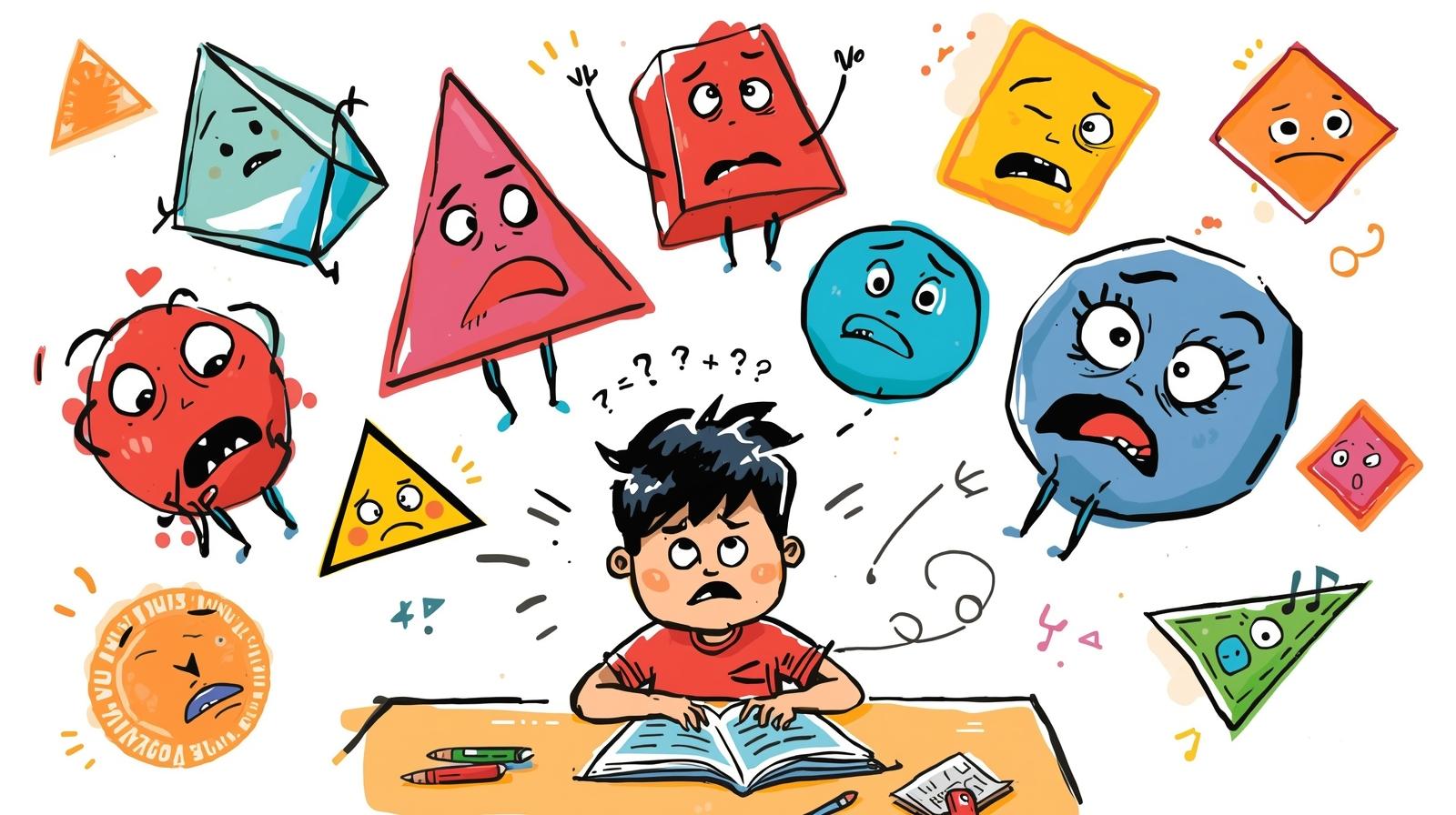
Every parent knows that sinking feeling when their child comes home frustrated, textbook in hand, saying “I just don’t get geometry.” While your student might have sailed through algebra with confidence, geometry introduces an entirely different challenge—one that requires a fundamentally different way of thinking. If your child is lost in geometry class right now, you’re not alone, and more importantly, there’s a clear path forward.
Why Geometry Hits Different: Understanding the Real Challenge
Geometry demands spatial reasoning, not just number crunching. Unlike algebra where students manipulate equations and follow procedural steps, geometry requires visualizing shapes, understanding spatial relationships, and constructing logical proofs. This shift catches many students off guard, even those who previously excelled in math.
The struggle is real and widespread. Research shows that geometry represents one of the most significant bottlenecks in middle and high school mathematics. Students who breezed through pre-algebra suddenly find themselves staring at diagrams that don’t make sense, theorems that seem arbitrary, and proofs that feel like learning a foreign language.
Three core challenges make geometry uniquely difficult:
- Visual-spatial thinking requirements: Students must mentally rotate shapes, understand three-dimensional objects from two-dimensional drawings, and see relationships that aren’t immediately obvious
- Abstract logical reasoning: Proofs demand a level of formal logic that students haven’t encountered in previous math courses
- Multiple representation integration: Success requires connecting diagrams, equations, written explanations, and logical statements simultaneously
When your child says they’re lost in geometry, they’re experiencing a genuine cognitive shift, not a lack of mathematical ability.
The Hidden Gaps That Keep Students Stuck
Most geometry struggles stem from specific, identifiable gaps rather than general math weakness. Understanding where your child is actually stuck is the first step toward effective help.
Common geometry bottlenecks include:
Proof construction paralysis: Students understand individual theorems but can’t connect them into logical arguments. They know the pieces but can’t build the puzzle.
Diagram interpretation difficulties: The ability to extract mathematical information from geometric figures doesn’t come naturally to everyone. Students might see shapes but miss the relationships.
Theorem application confusion: Knowing a theorem exists is different from recognizing when and how to apply it. Students often memorize theorems without understanding their practical use.
Spatial visualization barriers: Some students struggle to mentally manipulate shapes or understand how two-dimensional drawings represent three-dimensional objects.
Traditional tutoring often misses these specific gaps because it treats geometry like any other math subject—focusing on procedures rather than the unique spatial and logical reasoning skills geometry demands.
What Actually Works: Evidence-Based Geometry Learning Strategies
Effective geometry learning requires multiple approaches working together. Research in mathematics education consistently shows that students master geometry when they can see concepts from different angles—literally and figuratively.
Visual learning with multiple representations forms the foundation. Students need to see the same concept expressed through diagrams, coordinate systems, and algebraic equations. A triangle isn’t just a shape—it’s a set of points, a collection of angles, and a system of relationships.
Step-by-step proof scaffolding breaks down the intimidating process of logical reasoning. Instead of facing a blank page and a “prove this” instruction, students need guided frameworks that show how mathematicians actually think through proofs.
Error pattern analysis reveals why students make specific mistakes. A wrong answer in geometry often indicates a conceptual misunderstanding, not a calculation error. Identifying these patterns allows for targeted intervention.
Real-world connections make abstract concepts concrete. When students see how geometric principles apply to architecture, art, engineering, and nature, the subject transforms from arbitrary rules to practical tools.
How Modern AI Technology Addresses Geometry’s Unique Challenges
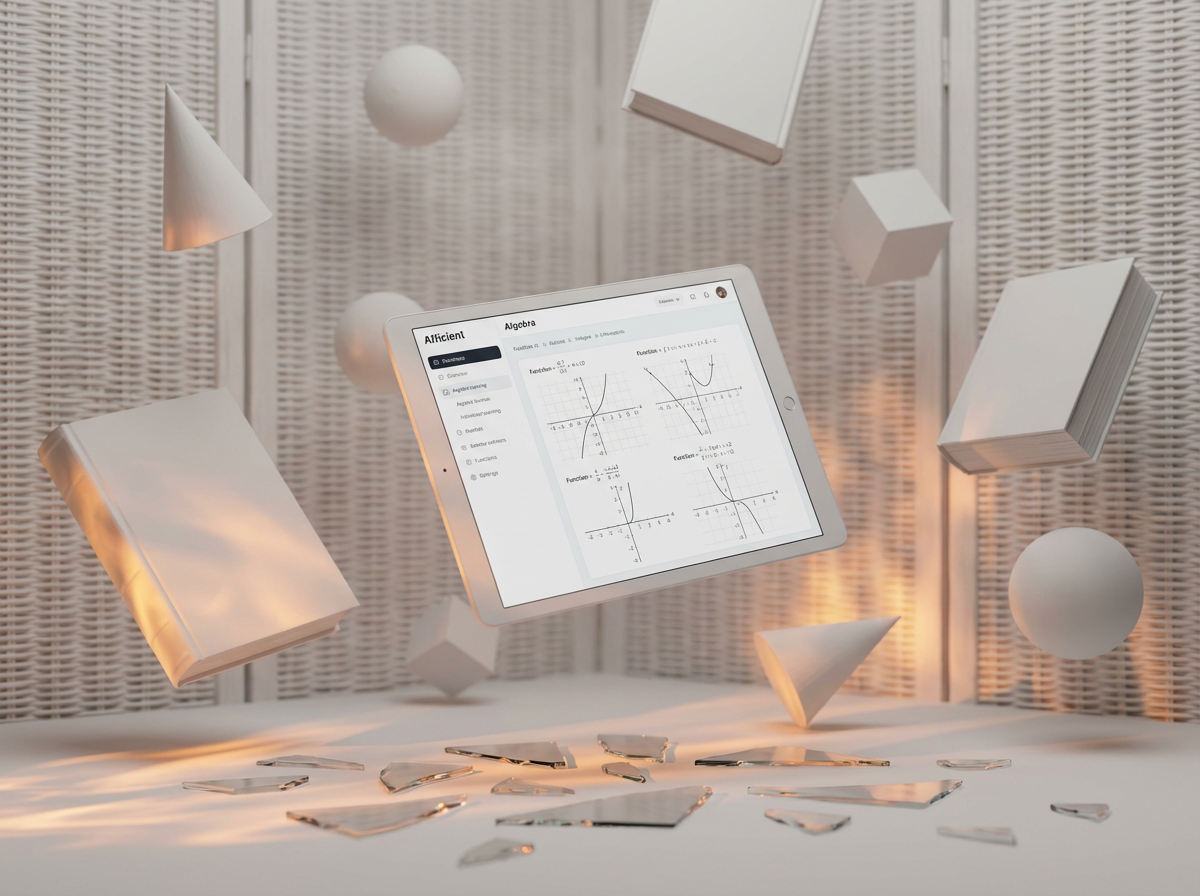
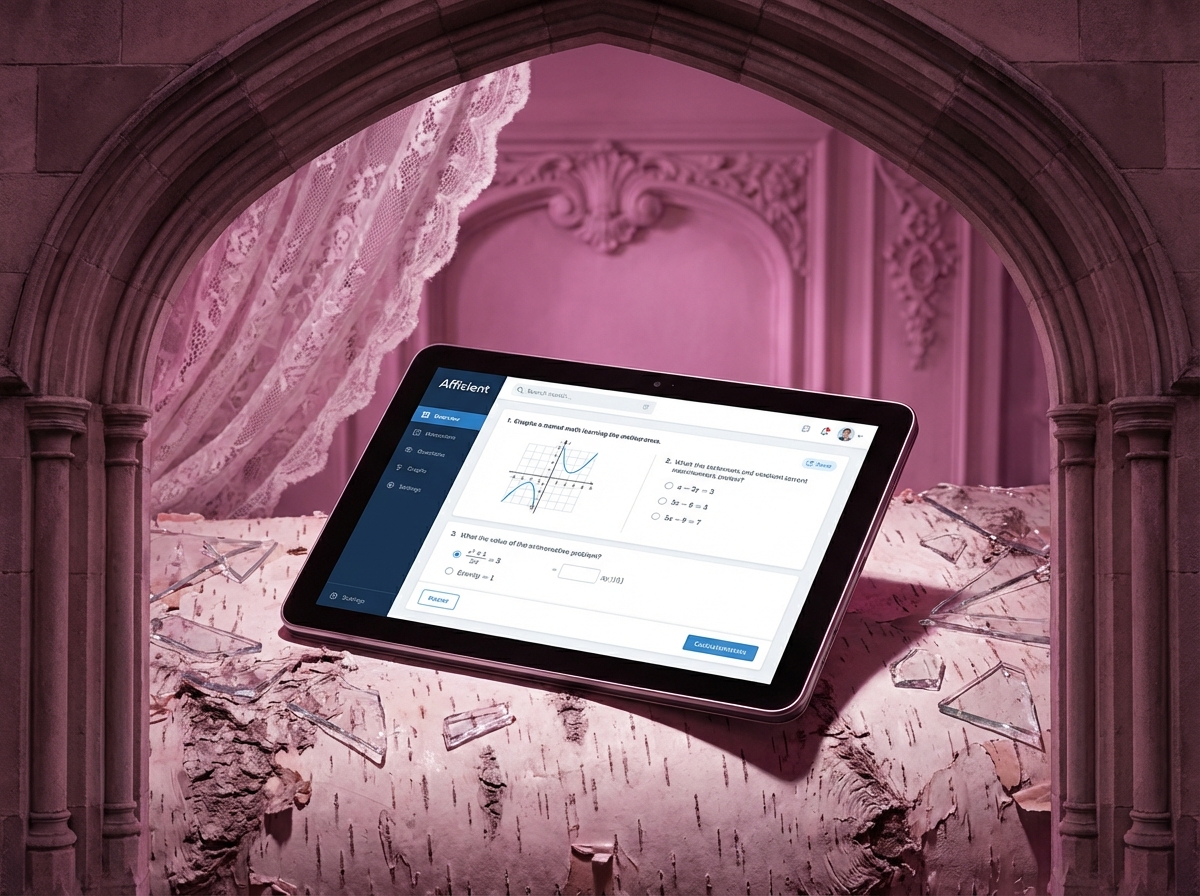
Afficient has developed specialized approaches specifically for geometry’s distinct learning requirements. Unlike generic math tutoring that treats all subjects the same, Afficient’s AI recognizes that geometry demands different support strategies.
Visual aids and multiple diagram perspectives help students see concepts from various angles. The system generates alternative representations of the same geometric relationship, allowing students to find the visualization that clicks for their learning style.
AI-powered spatial thinking gap identification goes beyond checking if answers are correct. Discover your child’s specific geometry gaps through diagnostic assessment that pinpoints exactly where spatial reasoning breaks down.
Multiple solution method presentation shows algebraic, geometric, and coordinate approaches to the same problem. Students learn that geometry problems often have several valid solution paths, building flexibility in mathematical thinking.
Step-by-step proof guidance breaks down logical reasoning into manageable steps. Instead of overwhelming students with complete proofs, Afficient scaffolds the process, gradually building proof-writing skills.
Targeted concept breakdown isolates specific geometry struggles. Whether your child is stuck on triangle congruence, circle theorems, or coordinate geometry, the system provides focused support for that exact concept.
Real results demonstrate the effectiveness of this specialized approach. Students typically master geometry concepts within 2-3 months of focused work with Afficient, with 90% achieving A or A+ grades even in challenging geometry courses.
Immediate Steps You Can Take Today
Don’t wait for the next test to address geometry struggles. The longer students remain confused, the more concepts pile up, making catch-up increasingly difficult.
Start by identifying the specific area where your child is stuck. Is it proofs? Spatial visualization? Theorem application? Understanding the precise challenge allows for targeted help rather than general review.
Create a visual learning environment at home. Encourage your child to draw diagrams, use physical models, and explain geometric concepts out loud. The act of creating visual representations builds spatial reasoning skills.
Practice multiple solution methods for the same problem. Show your child that there’s rarely one “right way” to approach geometry. This flexibility reduces anxiety and builds problem-solving confidence.
See how Afficient makes geometry click with a free evaluation that identifies your child’s specific learning needs and creates a personalized path forward.
From Geometry Struggle to Geometry Success
Geometry doesn’t have to be the bottleneck in your child’s math education. With the right support that addresses geometry’s unique challenges—visual learning, multiple representations, logical reasoning scaffolding, and error pattern analysis—students can move from confusion to confidence.
The key is recognizing that geometry requires different thinking and therefore different support than other math subjects. Generic tutoring that worked for algebra might not address the spatial reasoning and logical proof skills geometry demands.
Your child’s geometry struggle is specific, identifiable, and solvable. With targeted intervention that understands how geometry learning actually works, students who felt completely lost can achieve mastery in a matter of months.
Take the free diagnostic test to identify and fix your child’s geometry struggles before they compound. The sooner you address the specific gaps, the faster your child can move from frustration to success—and geometry can become a source of confidence rather than stress.