
For parents watching their bright child breeze through math class with a yawn, the frustration is real and deeply concerning. When a gifted elementary student complains that math is “too easy” or “boring,” it’s not just a minor inconvenience—it’s a critical warning sign that their intellectual needs aren’t being met. The challenge isn’t finding harder worksheets; it’s discovering a system that can truly grow with an exceptionally capable young mind.
The Hidden Crisis of Boredom in Gifted Education
Unchallenged gifted students face unique developmental risks that many parents and educators underestimate. When a third-grader solves multiplication problems in seconds while classmates struggle with basic facts, the gap creates more than just idle time—it establishes dangerous patterns that can persist for years.
Research consistently shows that gifted children who aren’t adequately challenged develop poor work habits precisely because they’ve never needed to try. They coast through elementary school, never learning persistence, problem-solving strategies, or how to handle intellectual struggle. More troubling, many lose their natural love of learning when subjects that once fascinated them become monotonous routines.
The boredom problem manifests in several ways: disengagement during class, reluctance to complete “easy” homework, acting out from understimulation, or paradoxically, underperforming despite high ability. Parents often hear “I already know this” or “Why do I have to show my work when I can do it in my head?” These aren’t signs of arrogance—they’re cries for intellectual stimulation.
What Gifted Learners Actually Need to Stay Engaged
Continuous intellectual challenge sits at the heart of gifted education, but what does that really mean? It’s not simply harder problems or more advanced content—it’s a fundamentally different approach to learning progression.
Gifted students need problems that make them think, not just calculate. They require opportunities to explore mathematical concepts deeply rather than racing through surface-level material. They thrive when given autonomy to direct their learning and recognition that their abilities deserve respect, not just accommodation.
The optimal challenge zone—where learning happens most effectively—exists in that sweet spot where problems are difficult enough to require genuine effort but not so hard that they create frustration. For gifted learners, this zone shifts constantly and rapidly. A concept that challenges them today might bore them next week. Traditional educational systems, designed for group instruction and standardized pacing, simply cannot keep up with this dynamic need.
The Ceiling Problem in Traditional Gifted Programs
Most gifted programs hit an invisible ceiling that parents discover too late. A school’s “advanced” math class might cover fifth-grade content for third-graders—impressive initially, but what happens when that bright third-grader masters fifth-grade math in two months? The program has nowhere left to go.
Even specialized gifted curricula face this limitation. They offer challenging content, but it’s still pre-determined, finite, and group-paced. A program might be perfect for a moderately advanced student but inadequate for an exceptionally gifted one. Parents find themselves asking: “What comes next? Where do we go from here?”
The challenge approaches vary significantly across options:
Traditional gifted programs provide fixed advanced curriculum—perhaps one or two grade levels ahead—but maintain the same ceiling problem as regular instruction, just shifted upward. The student still eventually runs out of material.
Programs like Art of Problem Solving offer genuinely challenging content with excellent problem-solving focus, but they follow scheduled curricula and group pacing. A student ready to sprint ahead must wait for the class, while one needing more time on a concept gets pulled forward regardless.
Beast Academy delivers engaging, challenging elementary math content that many gifted students love—until they complete it. The program caps at fifth-grade level, leaving parents of younger gifted students wondering what to do when their second-grader finishes the entire series.
The Unlimited Challenge Approach
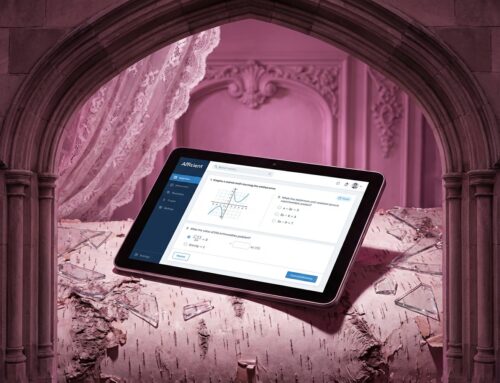
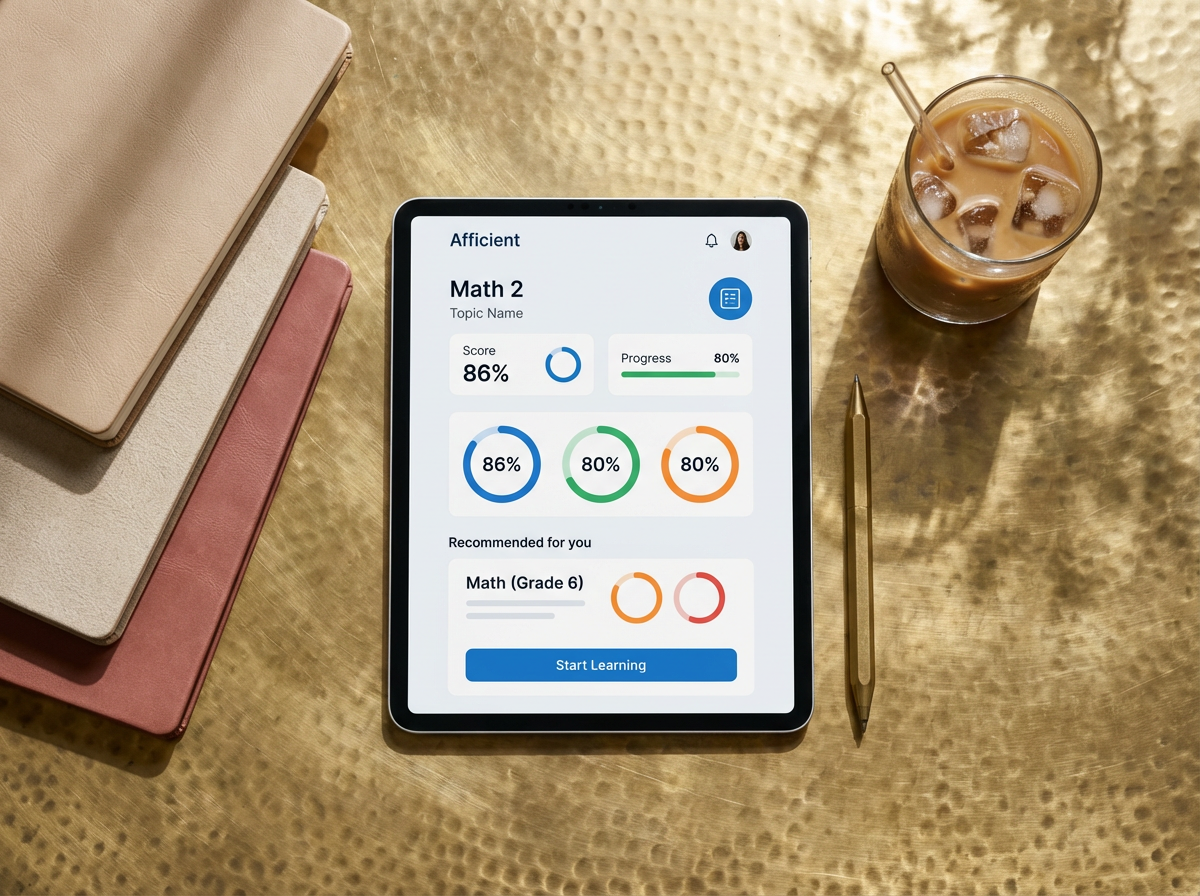
Afficient takes a fundamentally different approach: no ceiling, no predetermined endpoint, no waiting for the group. The platform uses adaptive AI technology to generate infinite mathematical challenges that continuously adjust to each student’s demonstrated ability level.
When a student consistently solves problems quickly and accurately, the system doesn’t just move to the next lesson—it increases difficulty dynamically, ensuring the student always works at their optimal challenge zone. The AI tracks engagement patterns, recognizing when a student shows signs of boredom (rapid completion, minimal effort) and automatically escalates complexity.
This means a third-grader who masters multiplication can seamlessly progress to division, fractions, pre-algebra, and beyond—all within the same platform, at their own pace, without artificial barriers. Real examples from Afficient users illustrate this unlimited potential: third-graders working through algebraic concepts, fifth-graders tackling geometry proofs, elementary students exploring mathematical territory typically reserved for middle or high school.
Students consistently report: “Finally, math that makes me think!” Parents observe renewed enthusiasm for mathematics and, crucially, the development of genuine problem-solving skills as their children encounter appropriately challenging material for the first time.
How Infinite Progression Actually Works
The technology behind unlimited challenge relies on sophisticated algorithms that do more than just select harder problems from a database. Afficient’s system generates unique problems tailored to each student’s current skill level and areas needing reinforcement.
When a student demonstrates mastery of a concept, the AI adjusts difficulty to provide more complex problem structures. The progression is truly infinite because the system can combine concepts, create novel problem types, and adjust difficulty across multiple dimensions simultaneously.
For parents concerned about whether the platform can genuinely challenge their exceptionally bright child, the answer lies in this adaptive architecture. There’s no content library to exhaust, no final level to complete. The system grows with the student indefinitely, maintaining that crucial optimal challenge zone whether the student is working at grade level, two years ahead, or five years ahead.
Addressing Parent Concerns About Unlimited Learning
“Will it really challenge my exceptionally bright child?” This question reflects valid skepticism born from disappointing experiences with programs that promised challenge but delivered more of the same. The difference with an unlimited system is that it doesn’t rely on pre-created “hard” content—it generates appropriately difficult problems in real-time based on the student’s demonstrated capabilities.
“What if they blow through the content?” This concern becomes irrelevant when there’s no fixed content to blow through. The AI continuously creates new challenges, ensuring that rapid learners never run out of material. In fact, the faster a student progresses, the more the system recognizes their capability and adjusts accordingly.
“How do you keep gifted kids engaged long-term?” Engagement comes from appropriate challenge—not too easy, not impossibly hard. By maintaining this balance automatically and continuously, the platform sustains engagement naturally. Students stay interested because they’re always working on problems that require genuine thought and effort.
Strategies for Parents Supporting Gifted Math Learners
Beyond choosing the right platform, parents can support their gifted child’s mathematical development through several key approaches:
Celebrate effort and problem-solving process, not just correct answers. Gifted children who’ve always found math easy need to learn that struggle is normal and valuable when facing genuinely challenging material.
Encourage deep exploration over rapid completion. When your child encounters a truly challenging problem, resist the urge to help them finish quickly. Let them sit with difficulty, try multiple approaches, and experience the satisfaction of breakthrough after genuine effort.
Recognize that appropriate challenge looks different for gifted learners. If your child completes math homework in five minutes without thinking, that’s not efficient learning—it’s wasted opportunity. Seek out platforms and programs that make them pause, think, and occasionally struggle.
Monitor engagement, not just achievement. A gifted child getting perfect scores on easy material isn’t thriving—they’re stagnating. Look for signs of genuine intellectual engagement: asking questions, showing curiosity, wanting to explore concepts further, or expressing satisfaction after solving difficult problems.
Moving Forward: Giving Gifted Students the Challenge They Crave
The question isn’t whether gifted students need unlimited challenge—research and experience confirm they do. The question is how to provide it practically and sustainably. Traditional approaches, constrained by fixed curricula and group pacing, inevitably hit ceilings that leave exceptionally capable students with nowhere to grow.
An unlimited, adaptive approach changes this equation fundamentally. When the platform can generate infinite challenges that grow with the student, parents no longer worry about running out of material or their child becoming bored. The focus shifts from “what’s next?” to “how far can they go?”—a much healthier question for nurturing gifted potential.
For parents watching their bright child disengage from mathematics because it’s “too easy,” the solution isn’t just finding harder problems—it’s finding a system with no upper limit. Discover how far your gifted child can really go with a comprehensive diagnostic assessment that reveals their true mathematical potential.
Every gifted child deserves to experience the joy of genuine challenge, the satisfaction of solving problems that require real thought, and the opportunity to explore mathematics as deeply as their curiosity leads them. When the ceiling disappears, so does the boredom—replaced by engagement, growth, and the development of mathematical thinking skills that will serve them throughout their academic journey and beyond.
Take the free diagnostic test and give your gifted child the unlimited challenge they crave. Because exceptional minds deserve exceptional opportunities to grow.