

Supporting Your Child’s Academic Success Without the Pressure
I totally get it. You want your child to excel in school, to reach their full potential, to have every opportunity in life. But late at night, you lie awake wondering: Am I pushing too hard? Will all this pressure backfire? What if I’m actually making things worse?
You’re not alone in this worry. Thousands of parents across America are walking this same tightrope, trying to balance ambition with wellbeing, excellence with happiness. And here’s what you need to know: your concern itself proves you’re a thoughtful, caring parent. The fact that you’re asking this question means you’re already doing better than you think.
The Real Cost of Academic Pressure
Let’s be honest about what happens when we push too hard. Academic burnout in children isn’t just a buzzword—it’s a genuine crisis affecting students as young as elementary school. When kids feel constant pressure to perform, their brains actually work against them. Stress hormones flood their system, making it harder to concentrate, retain information, and think creatively.
Research shows that burned-out students learn slower, not faster. They develop anxiety around schoolwork, lose their natural curiosity, and sometimes even start to resent learning itself. The very thing we’re trying to encourage—academic excellence—becomes the thing they want to escape from.
Watch for these warning signs: Your child complains of headaches or stomachaches before school, seems constantly tired despite adequate sleep, has lost interest in activities they once enjoyed, or shows increased irritability around homework time. These aren’t signs of laziness—they’re red flags that the pressure has become too much.
Why Balance Actually Accelerates Learning
Here’s the counterintuitive truth that neuroscience has proven: happy, relaxed children learn 2-5 times faster than stressed ones. When kids feel safe to make mistakes, when learning feels like exploration rather than evaluation, their brains enter an optimal state for absorbing new information.
Think about it this way. When you’re anxious, can you think clearly? Can you solve complex problems or remember details? Of course not. Your child’s brain works the same way. Pressure doesn’t create excellence—it creates obstacles to excellence.
Quality beats quantity every single time. A child who spends 20 focused, engaged minutes on math will learn more than one who grudgingly grinds through two hours of worksheets. The difference isn’t just in the time—it’s in the mental state, the engagement level, the intrinsic motivation.
The Sweet Spot: Acceleration Without Burnout
So how do you help your child excel without crossing that line into harmful pressure? The answer lies in working smarter, not harder. It’s about creating conditions where learning feels natural, where challenge feels exciting rather than threatening, where progress happens because your child wants it, not because they fear disappointing you.
The key is efficiency over hours. Modern educational research has identified that children learn best in short, focused sessions with immediate feedback and appropriate challenge levels. This isn’t about lowering standards—it’s about raising effectiveness.
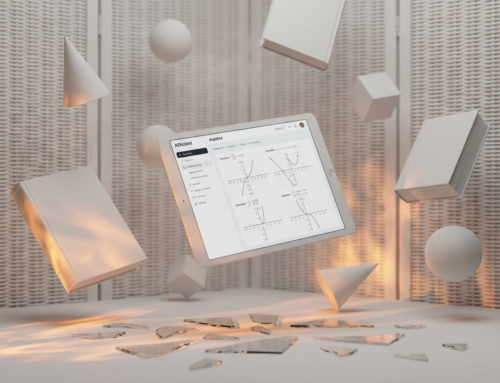
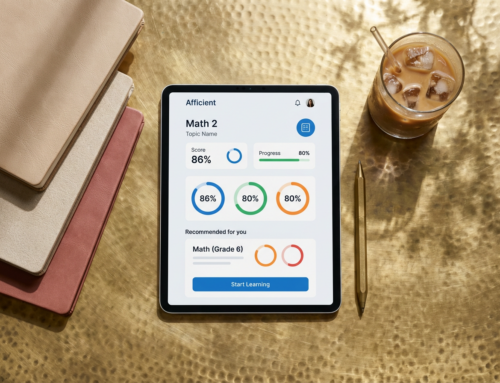
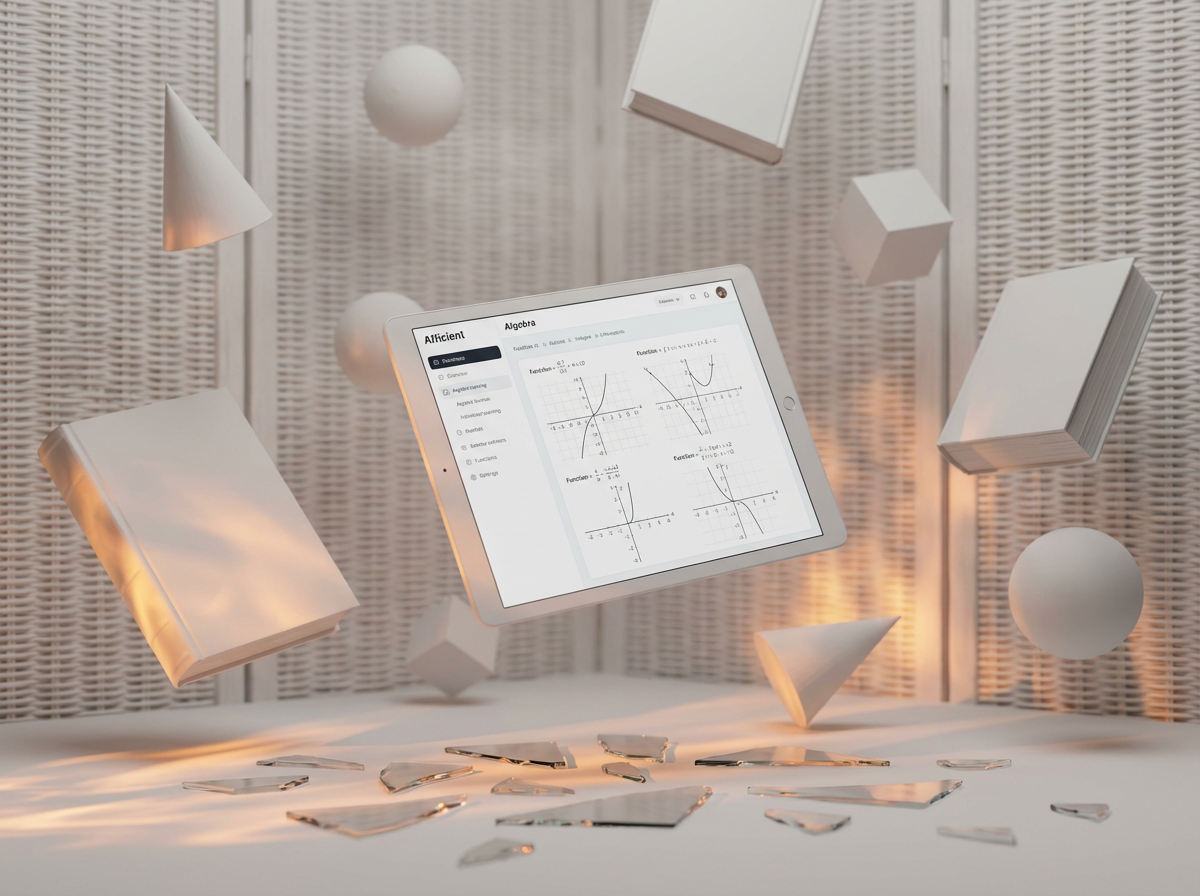
Consider how Afficient Academy approaches this balance. Their AI-driven platform with patented US technology was specifically designed around this principle: just 20 minutes of daily practice, but those 20 minutes are precisely calibrated to each child’s current level and learning pace. No busywork, no frustration from material that’s too hard or boredom from material that’s too easy.
The results speak for themselves. Ninety percent of students using Afficient improve by one grade level within 2-5 months and achieve A or A+ grades. They’re not grinding through endless worksheets or spending hours on homework. They’re engaging with material that challenges them at exactly the right level, getting immediate feedback, and progressing at their own pace.
Parent Renee Li shared her experience: “The tutors are patient and professional, able to customize methods according to each student’s unique learning style. My child actually looks forward to practice time now.” Another parent, Alien Ack, noted how their child used Afficient Math during summer break to fill knowledge gaps, leading to dramatically improved school performance—without the stress and tears that had characterized previous learning experiences.
How Much Is Too Much?
This is the question every parent asks. Here’s a practical framework: if your child is spending more than 30-45 minutes daily on supplemental learning (beyond regular homework), you’re likely in diminishing returns territory. More importantly, watch their emotional response. Do they approach learning with curiosity or dread? Do they feel proud of their progress or anxious about their performance?
Healthy enrichment looks like this: Your child has time for play, hobbies, and unstructured exploration. They sleep well and wake up reasonably refreshed. They can talk about what they’re learning with interest, not just stress about grades. They have energy for family time and social connections.
Unhealthy pressure looks like this: Your child resists learning activities, shows physical symptoms of stress, has given up hobbies they once loved, or talks primarily about grades rather than actual learning. They seem constantly tired, irritable, or anxious.
The difference often comes down to autonomy. When children feel they have some control over their learning—when they can progress at their own pace, choose some of their focus areas, and see learning as something they’re doing for themselves rather than to please others—the entire dynamic shifts.
Creating Sustainable Excellence
You don’t have to choose between excellence and wellbeing. The most successful students aren’t the ones who work the hardest—they’re the ones who work the smartest, who maintain their intrinsic motivation, who see challenges as interesting puzzles rather than threats to their self-worth.
Start by reframing success. Instead of asking “Did you get an A?” ask “What did you learn today that surprised you?” Instead of praising grades, praise effort, strategy, and persistence. “I noticed you tried three different approaches to that problem—that’s real mathematical thinking” means more than “Great job getting 100%.”
Make learning relevant to your child’s interests. If they love video games, explore the math behind game design. If they’re into sports, investigate the statistics and physics involved. When learning connects to genuine curiosity, it stops feeling like work.
Give them ownership. Let your child have input into when they practice, what they focus on first, how they organize their learning space. Afficient’s platform does this naturally—students control their pace, the AI adjusts to their needs, and parents can monitor progress without hovering. This combination of structure and autonomy creates the ideal learning environment.
Celebrate small wins consistently. Progress isn’t always linear, and that’s okay. A child who masters a concept they struggled with last week deserves recognition, even if they’re not at grade level yet. Growth mindset research shows that praising progress over perfection builds resilience and motivation.
The Afficient Difference
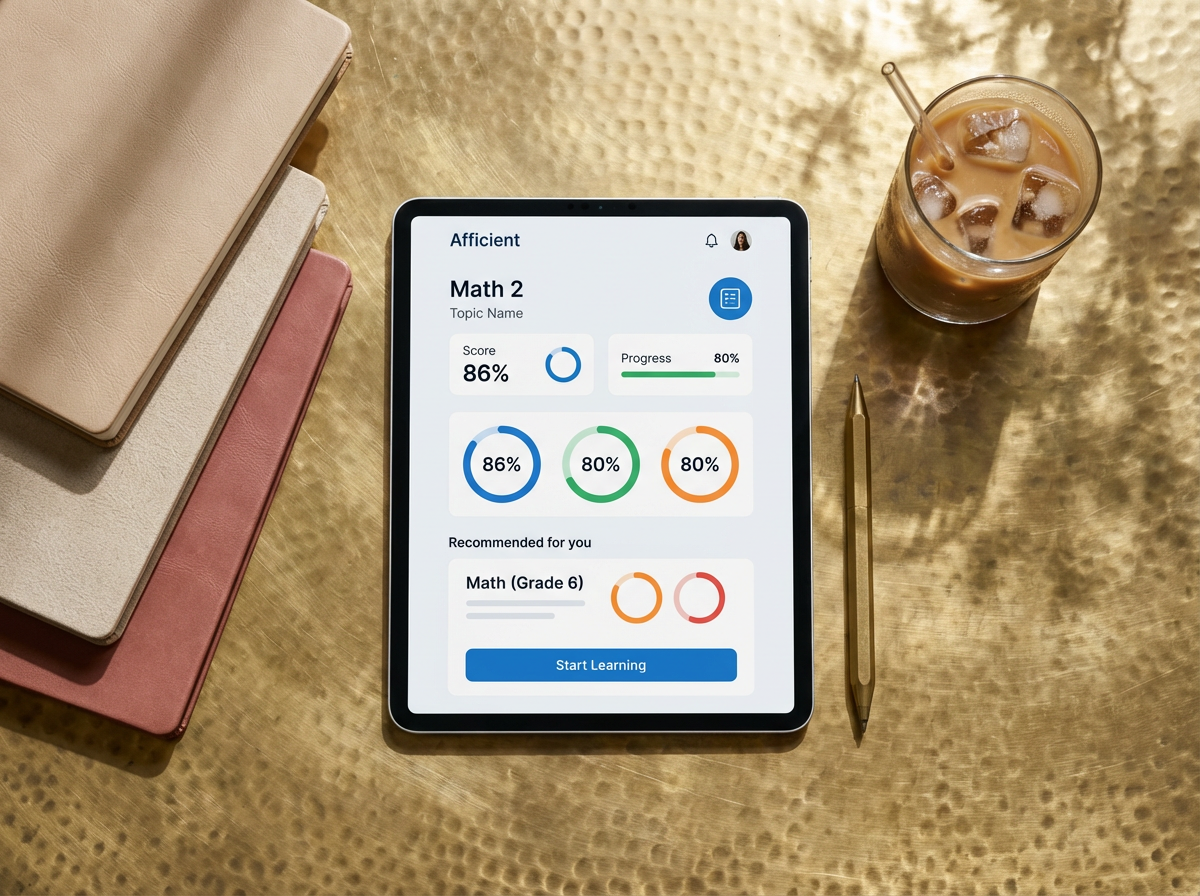
What makes Afficient Academy’s approach particularly effective for anxious parents is the transparency and efficiency built into the system. You get a real-time dashboard showing exactly where your child is, what they’re working on, and how they’re progressing. No more guessing, no more daily battles over homework, no more wondering if you’re doing enough or too much.
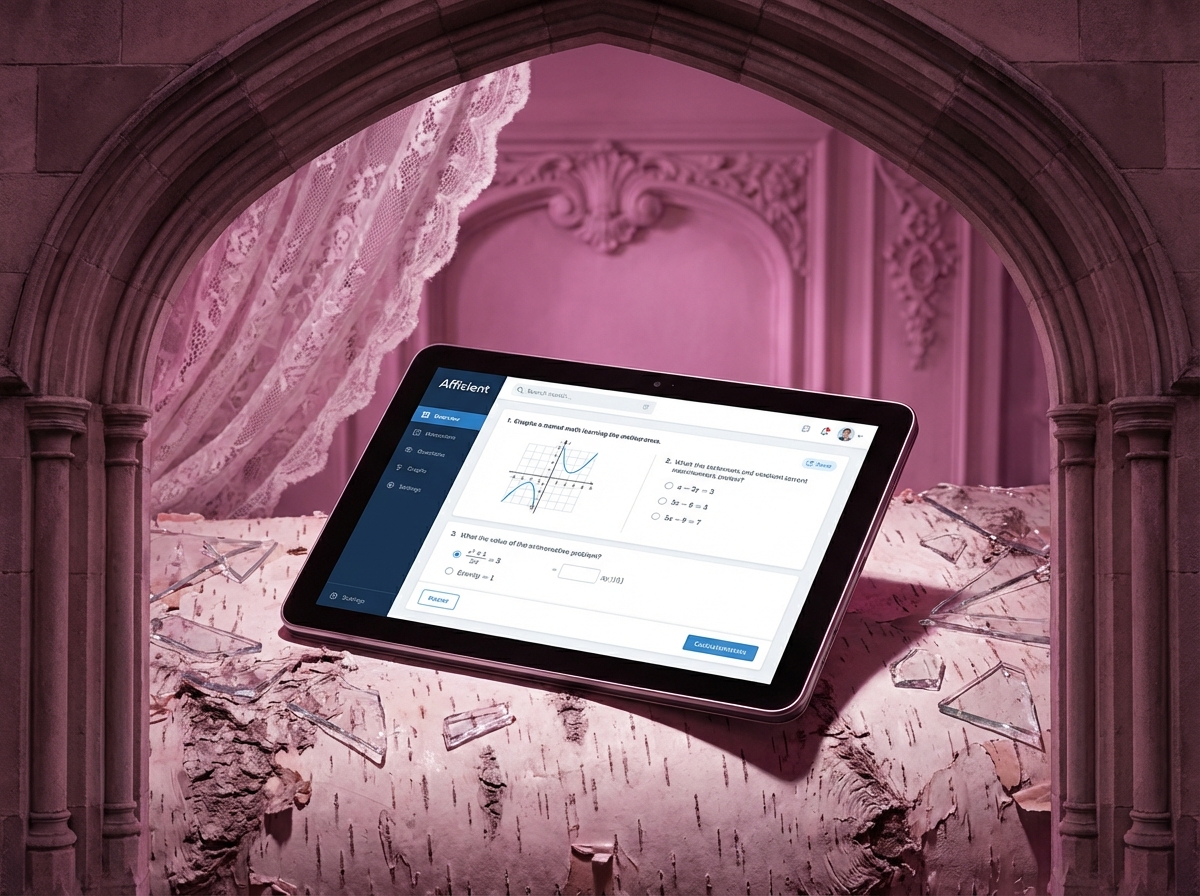
The platform’s AI adapts continuously to your child’s performance, ensuring they’re always working in that optimal challenge zone—not so easy they’re bored, not so hard they’re frustrated. This is the sweet spot where learning happens fastest and feels most rewarding.
With WASC-accredited curriculum and proven results—90% of students advance one full grade level in 2-5 months and achieve A/A+ grades—you can trust that your child is getting rigorous, high-quality instruction. But unlike traditional intensive programs, this happens in just 20 minutes a day. That’s efficiency that respects both academic goals and childhood wellbeing.
Moving Forward With Confidence
Here’s what you can do starting today. First, have an honest conversation with your child. Ask them how they feel about school and learning. Really listen to their answer without immediately problem-solving or defending your approach.
Second, audit their current schedule. Add up all the time spent on academics—school, homework, tutoring, enrichment. If it’s more than 8-9 hours daily for elementary students or 10-11 for middle schoolers, something needs to give.
Third, focus on quality over quantity. Find out how your child can excel without stress with a free diagnostic assessment that shows their optimal learning pace and identifies exactly where targeted support would help most.
Remember, sustainable growth beats burnout every single time. Your child has years of learning ahead of them. Building a foundation of curiosity, confidence, and effective learning strategies matters far more than cramming in extra content right now.
The goal isn’t to eliminate all challenge or lower your expectations. It’s to create conditions where your child can meet high standards while maintaining their mental health, their love of learning, and their childhood. That’s not just possible—it’s the most effective path to long-term academic success.
You want your child to do well. They want to do well too. The question isn’t whether to support their learning, but how to do it in a way that builds them up rather than wearing them down. With the right approach—focused, efficient, adaptive, and respectful of their developmental needs—you can have both excellence and wellbeing.
Take the free diagnostic test to see how 20 minutes a day can accelerate your child’s learning without the burnout, stress, or family conflict. Because you shouldn’t have to choose between your child’s success and their happiness—and with the right support, you don’t have to.


Leave A Comment