

Smart Kids Without Burnout: The 20-Minute Solution Parents Are Discovering
I totally get it. You want your child to excel, to reach their full potential, maybe even skip ahead a grade or two. But late at night, you lie awake wondering: Am I pushing too hard? Will this stress them out? What if I’m stealing their childhood?
You’re not alone in this worry. And honestly? The fact that you’re asking these questions shows you’re exactly the kind of thoughtful parent your child needs.
Here’s the truth that might surprise you: academic burnout in gifted children is absolutely real, but acceleration and wellbeing don’t have to be enemies. In fact, when done right, challenging your smart kid can actually make them happier, more confident, and more engaged with learning.
Let me walk you through what I’ve learned from working with thousands of families navigating this exact dilemma.
Why Your Worry About Burnout Is Valid (And Important)
First, let’s acknowledge something crucial: your concern about burnout isn’t paranoia. Research shows that gifted children face unique pressures. They’re often expected to perform flawlessly, feel isolated from peers, and carry the weight of everyone’s high expectations.
Warning signs of academic stress in smart kids include:
- Sudden resistance to activities they once loved
- Perfectionism that leads to anxiety or tears
- Physical complaints (headaches, stomachaches) before school
- Sleep problems or changes in eating habits
- Withdrawal from friends or family
- Statements like “I’m not smart enough” or “I’ll never be good at this”
If you’re seeing these signs, your instinct to pull back is protective and loving. But here’s where it gets interesting: sometimes, gifted kids burn out not because they’re challenged too much, but because they’re challenged in the wrong way.
The Paradox: Bored Kids Burn Out Too
Here’s something that surprised me when I first learned it: understimulated gifted children can experience burnout just as severe as overstressed ones.
When smart kids spend hours on work that’s too easy, they learn to associate “school” with boredom and busywork. They develop poor study habits because they’ve never needed to try. Then, when they finally hit material that challenges them—often in middle or high school—they crash hard. They don’t know how to struggle productively, and they interpret difficulty as failure.
One parent told me: “My daughter breezed through elementary school doing the minimum. Then seventh-grade pre-algebra hit, and she had a complete meltdown. She’d never learned how to learn.”
This is why the question isn’t really “Should I challenge my child?” It’s “How do I challenge them in a way that builds resilience instead of stress?”
The Science of Sustainable Acceleration
Research in educational psychology has identified what’s called the “zone of proximal development”—that sweet spot where material is challenging enough to require effort but not so hard that it causes frustration and shutdown.
Here’s what healthy academic acceleration looks like:
Efficiency over hours: A child working 20 minutes on appropriately challenging material learns more than one grinding through 2 hours of busywork. Quality beats quantity every single time.
Student agency: When kids have some control over their learning pace and can see their progress, intrinsic motivation stays high. They’re learning because they want to, not because someone’s forcing them.
Immediate feedback: Quick correction of mistakes prevents the frustration of practicing errors repeatedly. This is where traditional homework often fails—kids practice incorrectly for days before anyone notices.
Mastery-based progression: Moving forward only after truly understanding a concept builds confidence and prevents the shaky foundation that leads to later anxiety.
Built-in breaks and variety: The brain needs downtime to consolidate learning. Programs that respect this biological reality get better results with less stress.
What Makes Afficient Different (And Why Kids Actually Ask to Practice)
I know, I know—you’re skeptical that any educational program could make kids want to practice. But here’s what happens when you design learning around how brains actually work instead of how we think they should work.
Afficient’s approach centers on sustainable excellence through AI-powered personalization. The platform uses patented AI technology to identify exactly where each child is—not where their grade level says they should be—and creates a custom learning path from there.
Here’s the part that addresses your burnout worry directly: students can spend as little as 20 minutes daily on the platform for effective learning. That’s it. No marathon homework sessions. No tears at the kitchen table at 9 PM.
But here’s why those 20 minutes work: the AI keeps the material in that optimal challenge zone. Not too easy (boring), not too hard (frustrating). Just right to keep your child engaged and building skills efficiently.
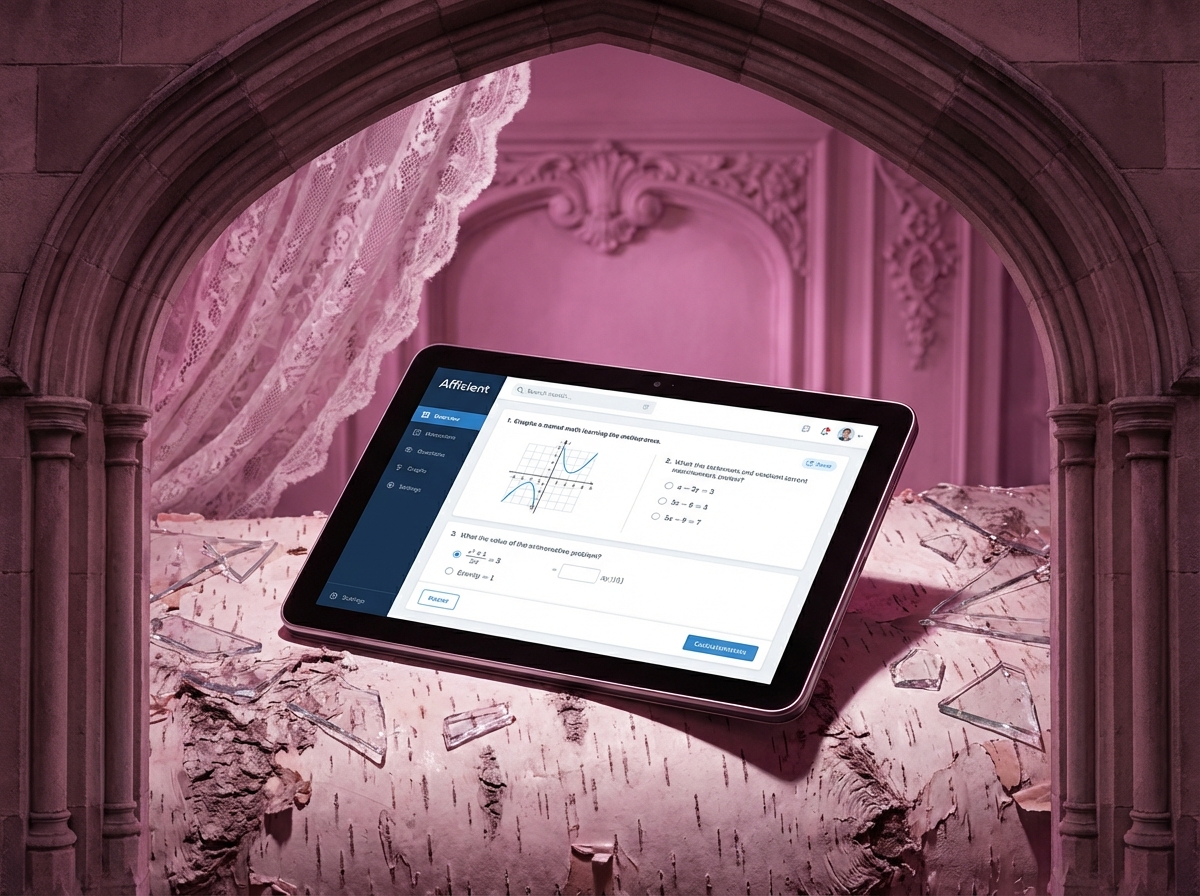
The system provides instant feedback, so your child never practices mistakes. They know immediately if they’ve got it right, can ask for hints if they’re stuck, and move forward only when they’ve truly mastered the concept.
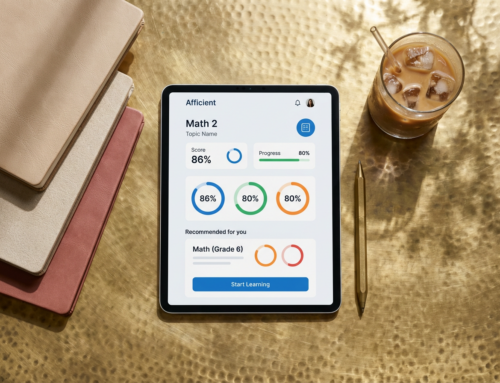
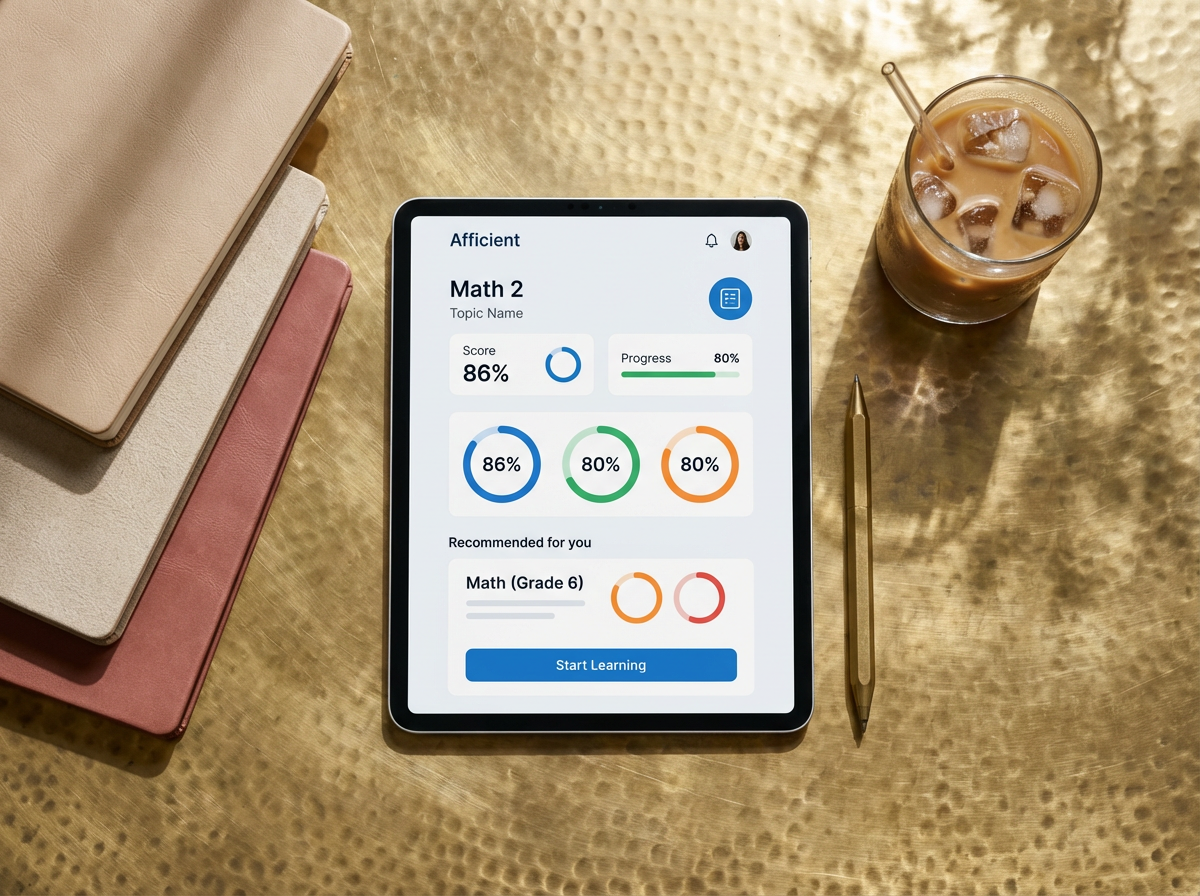
And here’s the part that helps you sleep better at night: you can monitor their progress through a parent dashboard. You’ll see if they’re struggling, if they’re racing ahead, if they’re spending too much time on the platform. No guessing. No wondering if the stress is building invisibly.
The results speak to the effectiveness of this approach: over 90% of Afficient students complete a full grade level of math in 2-5 months with A or A+ grades. But here’s what matters more—they’re still excited about learning. Parents consistently report their kids asking to log in, not dragging their feet.
One mother shared: “My son used to cry over math homework. Now he asks if he can do his Afficient lesson before dinner. I honestly didn’t think that was possible.”
How Much Challenge Is Too Much? A Practical Framework
Let’s get specific about what healthy enrichment looks like versus what crosses into harmful pressure.
Healthy enrichment characteristics:
- Time-limited: 20-30 minutes of focused work is plenty for elementary students, 45-60 minutes for middle schoolers
- Child shows interest: They’re curious about the subject, even if they find it challenging
- Mistakes are learning opportunities: Your child isn’t afraid to get things wrong
- Progress is visible: They can see themselves improving, which builds motivation
- Maintains other activities: Still has time for play, sports, arts, friends
- Sleep is protected: Getting age-appropriate sleep (9-12 hours for elementary, 8-10 for teens)
Warning signs of unhealthy pressure:
- Constant work: Homework consuming multiple hours daily
- Perfectionism paralysis: Won’t start work for fear of mistakes
- Physical stress symptoms: Headaches, stomachaches, sleep problems
- Social withdrawal: Dropping activities or friends to “keep up”
- Loss of joy: No longer excited about subjects they once loved
- Parent-driven: You’re more invested in their success than they are
If you’re seeing more items from the second list, it’s time to reassess. And that’s okay—recognizing the problem is the first step to fixing it.
Answering Your Specific Worries
“How do I know if my child is actually stressed or just complaining about normal work?”
Trust your gut, but also look for patterns. Occasional complaints about homework are normal. Consistent physical symptoms, sleep changes, or emotional outbursts around schoolwork are red flags. Keep a simple log for a week—note mood before and after academic work. Patterns will emerge.
“What if they fall behind if we don’t push now?”
Here’s a truth that might surprise you: burned-out kids fall further behind than kids who learn at a sustainable pace. A child who maintains curiosity and develops strong study habits will ultimately go further than one who races ahead but crashes in middle school. Think marathon, not sprint.
“How much enrichment is appropriate for elementary vs. middle school?”
Elementary (K-5): 20-30 minutes of focused enrichment daily is plenty. Prioritize breadth—exposure to many subjects—over depth. Protect play time fiercely.
Middle School (6-8): 45-60 minutes daily is reasonable, but watch for signs of overload. This is when kids start managing multiple subjects and need to develop organizational skills. Support systems matter more than hours.
“Should I let them quit if they complain?”
Distinguish between productive struggle and harmful stress. If they’re frustrated but still engaged, that’s learning. If they’re shutting down, crying, or showing physical stress symptoms, that’s a signal to adjust. Get a free diagnostic assessment to see if the material is appropriately challenging.
Real Parent Scenarios: Finding the Balance
Scenario 1: The Perfectionist Emma, a fourth-grader, spent three hours on homework that should take 30 minutes because she erased and rewrote everything multiple times. Her parents switched to a mastery-based program where she could see her progress clearly and get immediate feedback. Within weeks, homework time dropped to 45 minutes, and her anxiety decreased noticeably.
Scenario 2: The Bored Accelerator Marcus finished his grade-level math in the first month of school and spent the rest of the year bored and disruptive. His parents worried that advancing him would create pressure, but keeping him understimulated was clearly causing problems. They found a program that let him work ahead at his own pace with built-in checkpoints. He thrived with the challenge and actually became calmer because he was engaged.
Scenario 3: The Overcommitted Achiever Sophia was taking advanced classes, playing two sports, and doing music lessons. She was excelling but exhausted. Her parents helped her choose her top priorities and found more efficient learning tools for academics. Finding out how your child can excel without stress helped them identify where time was being wasted on busywork versus productive learning.
Your Action Plan: Starting Today
If you’re worried about the balance between challenge and stress, here’s what you can do right now:
This week: – Have an honest conversation with your child about how they feel about school and enrichment activities – Track their actual time spent on academic work for three days – Note their mood and energy before and after homework – Identify one activity that could be eliminated or reduced
This month: – Evaluate whether current programs are efficient or just time-consuming – Look for signs of both understimulation (boredom, behavior problems) and overstress (physical symptoms, emotional changes) – Consider whether your child has agency in their learning or is just following instructions – Explore programs designed for efficiency rather than hours logged
Long-term: – Build in regular check-ins about stress and enjoyment – Protect sleep, play time, and unstructured creativity – Model healthy achievement—let your child see you struggle productively with challenges – Remember that sustainable growth beats burnout every single time
The Bottom Line: You Don’t Have to Choose
Here’s what I want you to remember: you don’t have to choose between your child’s excellence and their wellbeing. The right approach to acceleration actually enhances both.
When learning is efficient, personalized, and respects how brains actually work, kids can advance 2-5x faster than traditional grade-level progression while maintaining their love of learning. They build confidence through mastery. They develop resilience through appropriate challenge. They stay curious because they’re never bored or overwhelmed.
Your worry about burnout shows you’re paying attention to what matters. Now channel that care into finding approaches that work with your child’s natural abilities rather than grinding against them.
Twenty minutes of the right kind of practice beats two hours of the wrong kind. Efficiency, not hours, creates sustainable acceleration. Happy learners learn faster and retain more. And most importantly: you can challenge your smart kid without stealing their childhood.
Take the free diagnostic test to see exactly where your child is and discover how 20 minutes daily can accelerate their learning without burnout. Because the best programs for smart kids aren’t the ones that push hardest—they’re the ones that push smartest.
Your child can excel. They can be challenged. They can grow. And they can still be happy, healthy kids who love learning. You don’t have to sacrifice one for the other. That’s not just possible—with the right approach, it’s the natural outcome.




Leave A Comment