When your child breezes through algebra but suddenly hits a wall with geometry, you’re not alone. Geometry represents a fundamental shift in mathematical thinking—one that requires a completely different cognitive approach than the arithmetic and algebra your child has mastered so far. Understanding why geometry feels so different, and knowing how to support your child through this transition, can transform frustration into confidence.
Why Geometry Feels Like a Different Subject Entirely
Geometry demands visual-spatial reasoning that many students haven’t fully developed yet. Unlike algebra, where students manipulate numbers and variables in predictable patterns, geometry asks them to visualize shapes, understand spatial relationships, and think in multiple dimensions simultaneously. This isn’t just “harder math”—it’s a different type of thinking altogether.
Middle schoolers face several unique challenges when encountering geometry for the first time. They must learn to translate between visual representations and mathematical language, understand abstract concepts like congruence and similarity, and develop the logical reasoning skills needed for geometric proofs. Many students who excel at computational math find themselves struggling because geometry requires them to “see” mathematics in ways they haven’t before.
The transition typically happens in grades 6-8, a critical period when students are building the foundation for high school mathematics. When geometry concepts don’t click during this window, students often carry these gaps forward, making advanced math increasingly difficult. This is why addressing geometry struggles early matters so much—it’s not just about one challenging unit, but about building the spatial reasoning skills that underpin much of higher mathematics.
The Hidden Complexity Behind Simple Shapes
What looks simple on paper often involves multiple layers of mathematical thinking. Consider a basic problem about finding the area of a triangle. A student must recognize the shape, recall the correct formula, identify which measurements correspond to base and height, perform the calculation, and verify that their answer makes sense. Each step requires different cognitive skills, and a breakdown at any point leads to confusion.
Geometric proofs present an even greater challenge. Students must learn to think logically, construct valid arguments, and communicate mathematical reasoning—all while visualizing spatial relationships. This combination of visual, logical, and verbal skills makes geometry uniquely demanding. Many students can follow a teacher’s explanation but struggle to recreate that reasoning independently.
The abstract nature of geometric concepts compounds these difficulties. Terms like “congruent,” “perpendicular,” and “complementary” describe relationships that students must learn to recognize across different contexts and orientations. A triangle rotated 90 degrees is still a triangle, but many middle schoolers initially struggle to see past the changed orientation to recognize the underlying properties.
Building Spatial Reasoning: The Foundation of Geometry Success
Developing strong spatial visualization skills is the key to making geometry accessible. Students need multiple ways to interact with geometric concepts—through physical models, digital manipulatives, and varied visual representations. When students can rotate shapes mentally, predict how transformations affect figures, and visualize three-dimensional objects from two-dimensional drawings, geometry becomes significantly more manageable.
Effective geometry instruction breaks down complex concepts into digestible steps while maintaining connections between ideas. Rather than memorizing isolated formulas, students benefit from understanding the relationships between different geometric principles. For example, understanding why the area formula for a triangle is half the area of a rectangle helps students remember and apply the formula correctly.
Multiple representation methods prove particularly powerful for geometry learning. The same concept might be expressed through a diagram, an equation, a verbal description, and a real-world application. Students who struggle with one representation often find clarity through another. This flexibility in thinking—moving fluidly between different ways of expressing geometric ideas—marks the difference between surface-level memorization and deep understanding.
How Modern Learning Tools Address Geometry’s Unique Challenges
Technology has transformed how students can interact with geometric concepts. Discover your child’s specific geometry gaps through diagnostic assessments that identify exactly where spatial reasoning breaks down. Advanced learning platforms now offer dynamic visualizations that let students manipulate shapes, observe transformations in real-time, and build intuition through interactive exploration.
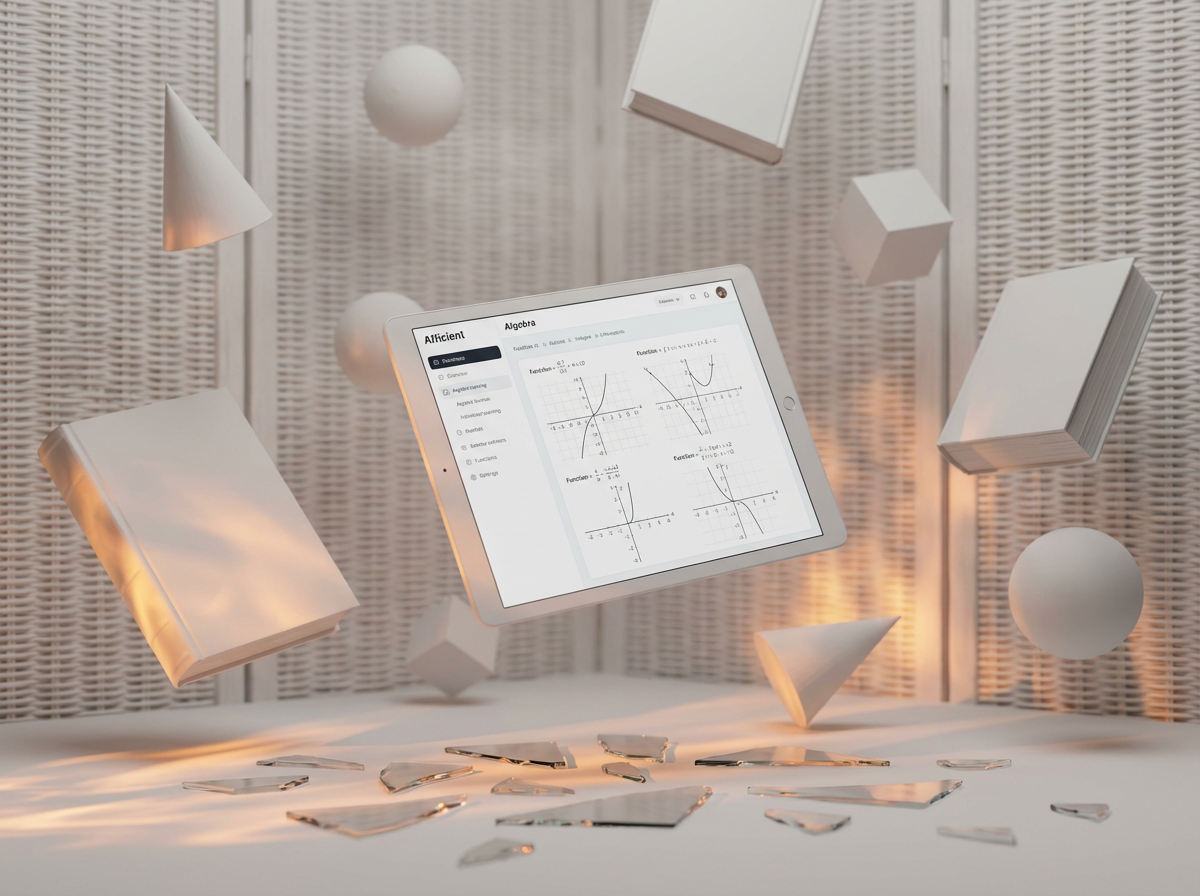
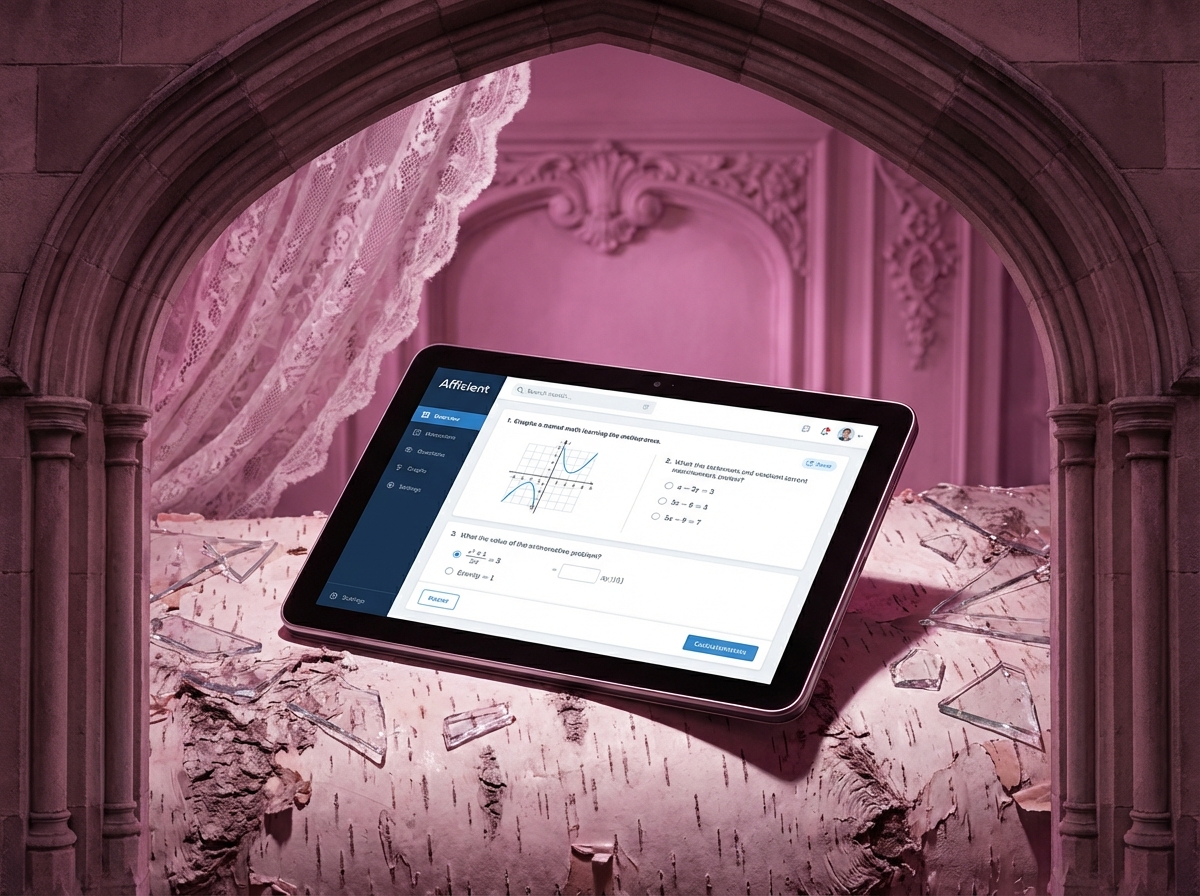
Afficient has developed an approach specifically designed for geometry’s unique demands. The platform uses innovative tools to help students understand geometric concepts through visual and interactive methods, providing support tailored to different learning needs.
The visual aids within Afficient allow students to see concepts from multiple angles simultaneously. A single geometric principle might be illustrated through static diagrams, animated transformations, and interactive models that students can manipulate themselves. This multi-modal approach ensures that students with different learning styles all find pathways to understanding.
What sets Afficient apart is its ability to provide step-by-step guidance through geometric proofs and complex problems. Rather than simply showing the solution, the platform breaks down the logical reasoning process, helping students understand not just what to do, but why each step follows from the previous one. This scaffolded approach builds the critical thinking skills that geometry demands.
Practical Strategies for Supporting Your Middle Schooler
Creating a geometry-friendly learning environment at home makes a significant difference. Encourage your child to draw diagrams for every problem, even when one isn’t provided. The act of translating words into visual representations strengthens spatial thinking and often reveals the path to a solution. Keep graph paper, rulers, protractors, and colored pencils readily available—these tools help students think through geometric relationships.
Connect geometry to the real world whenever possible. Point out geometric shapes in architecture, discuss symmetry in nature, and explore how geometric principles apply to sports, art, and design. When students see geometry as relevant rather than abstract, their engagement and retention improve dramatically.
Break down complex problems into smaller steps. Many geometry struggles stem from trying to process too much information at once. Teach your child to identify what they know, what they need to find, and what geometric principles might connect the two. This systematic approach reduces overwhelm and builds problem-solving confidence.
Practice with varied problem types helps students develop flexibility in their thinking. See how Afficient makes geometry click by exposing students to the same concept presented in different ways—through coordinate geometry, pure geometric reasoning, and algebraic approaches. This variety prevents rigid thinking and helps students recognize geometric principles across different contexts.
Recognizing and Addressing Common Geometry Misconceptions
Many geometry struggles stem from specific misconceptions that persist if not directly addressed. Students often confuse perimeter and area, struggle to distinguish between similar and congruent figures, or misapply formulas by mixing up which measurements to use. These aren’t signs of mathematical inability—they’re normal parts of the learning process that require targeted correction.
Error pattern analysis reveals that geometry mistakes often cluster around specific concepts. A student might consistently struggle with angle relationships but excel at area calculations. Or they might understand two-dimensional geometry but find three-dimensional figures baffling. Identifying these patterns allows for focused intervention rather than generic review.
Afficient’s AI technology excels at recognizing these error patterns. Rather than simply marking answers wrong, the system analyzes why students make specific mistakes and provides explanations targeted to their particular misunderstanding. This personalized feedback accelerates learning by addressing the root cause of confusion rather than just the symptoms.
The Path from Struggle to Mastery
Geometry mastery is achievable for virtually all students when they receive appropriate support. Students using targeted geometry interventions can show significant improvement with consistent practice and appropriate support. The key is consistent practice with immediate feedback, multiple opportunities to engage with concepts through different modalities, and support that addresses their specific areas of difficulty.
Success in geometry builds more than mathematical skills—it develops spatial reasoning, logical thinking, and problem-solving abilities that benefit students across all subjects. Students who overcome geometry challenges often report increased confidence in their overall academic abilities. The struggle itself, when properly supported, teaches resilience and the value of persistence.
Real results demonstrate what’s possible with the right approach. Students working with Afficient show significant improvement in their geometry understanding and performance. These outcomes reflect not just improved test scores but genuine understanding—students who can apply geometric principles flexibly and explain their reasoning clearly.
Taking Action: Your Next Steps
If your child is struggling with geometry, early intervention prevents small gaps from becoming major obstacles. The first step is understanding exactly where their difficulties lie. Is it visualization? Logical reasoning? Specific concepts like proofs or transformations? A comprehensive diagnostic assessment reveals these patterns and guides targeted support.
Take the free diagnostic test to identify your child’s specific geometry challenges. This assessment goes beyond simple right-or-wrong scoring to analyze thinking patterns and pinpoint exactly where spatial reasoning breaks down. With this information, you can provide the precise support your child needs to transform geometry from a source of frustration into a subject they genuinely understand and even enjoy.
Geometry doesn’t have to be the bottleneck in your child’s mathematical journey. With understanding, appropriate tools, and targeted support, every student can develop the spatial reasoning skills that make geometry accessible. The key is recognizing that geometry requires different thinking—and providing the different support that this unique subject demands.