
Every parent of a bright student has experienced that sinking feeling: your child breezes through their math homework in minutes, complains that class is “boring,” or starts making careless mistakes simply because they’re not engaged. You watch their natural curiosity about numbers fade, replaced by disinterest or even resistance. The question keeps you up at night: Is my child being challenged enough in math?
This isn’t just about academic performance—it’s about preserving your child’s love of learning and ensuring they develop the resilience that comes from tackling genuinely difficult problems. When gifted or advanced learners aren’t appropriately challenged, the consequences extend far beyond a single school year.
The Hidden Dangers of Mathematical Boredom
Unchallenged students don’t just coast—they actively disengage. Research consistently shows that when bright students aren’t intellectually stimulated, they develop problematic patterns that can persist for years. They may never learn how to struggle productively with difficult material because they’ve never had to try. They lose the intrinsic motivation that makes learning rewarding, replacing curiosity with compliance.
Perhaps most concerning, these students often underperform relative to their actual abilities. A child who could excel at advanced mathematics may settle for easy A’s on material they mastered months ago, never discovering what they’re truly capable of achieving. The boredom isn’t harmless—it’s actively damaging to their mathematical development and their identity as learners.
Parents frequently notice warning signs: their child finishes assignments in a fraction of the allotted time, makes careless errors on simple problems while demonstrating sophisticated reasoning on harder ones, or explicitly states that math class is “too easy” or “boring.” These aren’t complaints to dismiss—they’re urgent signals that your child needs greater intellectual challenge.
What Gifted Math Students Actually Need
Continuous intellectual challenge isn’t a luxury for advanced learners—it’s a necessity. Gifted students require problems that make them think deeply, opportunities to explore mathematical concepts at greater depth, and the autonomy to pursue topics that genuinely interest them. They need recognition that their abilities are real and valuable, not something to hide or downplay.
Most importantly, they need to work consistently at the edge of their capabilities—that optimal zone where material is neither too easy nor impossibly difficult. This is where genuine learning happens, where students develop mathematical reasoning skills, and where they build the persistence required for advanced work.
Traditional classroom settings, even gifted programs, often struggle to provide this level of individualized challenge. A teacher managing 25-30 students simply cannot create infinitely scalable difficulty for each learner. Fixed curricula, no matter how advanced, eventually reach a ceiling that bright students hit and then wait, bored, for their peers to catch up.
The Unlimited Challenge Approach
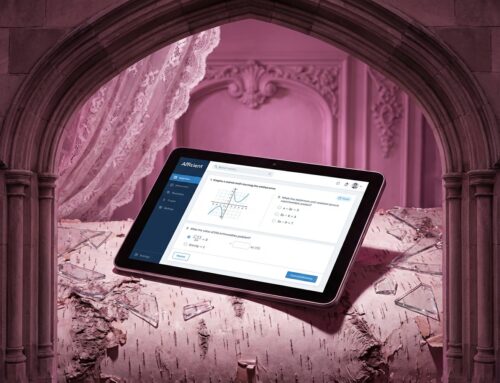
What if mathematical challenge had no upper limit? This is where adaptive learning technology fundamentally changes what’s possible for advanced students. Platforms like Afficient Math use AI algorithms to create truly unlimited progression, where elementary students can tackle high school concepts when they’re ready, and the difficulty automatically increases as soon as the system detects mastery.
The key difference lies in how challenge is delivered. Traditional gifted programs offer a fixed advanced curriculum—perhaps 6th grade math for 4th graders—but this still has a ceiling. Once students master that level, they’re back to waiting. Programs like Art of Problem Solving provide excellent challenging content, but follow scheduled, group-paced instruction. Beast Academy offers engaging, difficult problems, but caps at 5th grade level.
Afficient Math operates differently: there is genuinely no ceiling. The AI adapts to any difficulty level, continuously adjusting based on student performance. When a 3rd grader demonstrates readiness for algebraic thinking, the system provides it. When a 5th grader shows aptitude for geometric proofs, those problems appear. The platform tracks engagement in real-time, recognizing when a student is bored and automatically increasing difficulty before disengagement sets in.
Real families report transformative results. Third graders master algebra concepts. Fifth graders work through geometry proofs. Students who previously complained about boring math homework now say, “Finally, math that makes me think!” Over 90% of students using the platform improve one grade level and achieve A/A+ grades within 2-5 months.
How to Assess Your Child’s Challenge Level
Parents can identify whether their child needs greater challenge by watching for specific indicators. Does your child complete math assignments significantly faster than the allotted time? Do they make careless errors on simple problems while demonstrating sophisticated reasoning on harder ones? Have they explicitly stated that math is “too easy” or “boring”?
Beyond these obvious signs, look for more subtle patterns. Is your child losing interest in math despite previously enjoying it? Do they avoid showing their work because the steps seem unnecessary to them? Have they stopped asking mathematical questions or exploring numerical patterns independently?
Diagnostic assessment provides objective data to supplement these observations. Afficient Math’s initial evaluation measures not just what grade level content a student has memorized, but their actual mathematical reasoning ability and readiness for advanced concepts. The assessment identifies specific knowledge gaps while also revealing areas where students are prepared to work well above their current grade level.
This diagnostic approach answers the critical question: where exactly does my child need challenge? Some students need remediation in specific areas before advancing, while others are ready to leap forward immediately. The assessment removes guesswork, providing clear data about your child’s current mathematical abilities and optimal challenge level.
Comparing Challenge Delivery Methods
Different educational approaches deliver challenge in fundamentally different ways. Understanding these differences helps parents make informed decisions about their child’s mathematical education.
Traditional gifted programs typically accelerate students through a fixed curriculum—perhaps placing a 4th grader in 6th grade math. This provides initial challenge but eventually reaches another ceiling. The student is still constrained by the pace and scope of a predetermined curriculum.
Enrichment programs add depth and complexity to grade-level content, teaching students to think more deeply about mathematical concepts. This approach benefits many learners but may not satisfy students who need genuine advancement, not just more sophisticated treatment of material they’ve already mastered.
Competition-focused programs like Art of Problem Solving teach advanced problem-solving techniques and expose students to challenging mathematical thinking. These programs excel at developing mathematical reasoning but follow scheduled curricula and group pacing, which may not match an individual student’s optimal learning speed.
Adaptive AI platforms like Afficient Math provide individualized, unlimited progression. The system continuously assesses each student’s performance, automatically adjusting difficulty to maintain optimal challenge. Students work at their own pace, advancing as quickly as they demonstrate mastery. There’s no waiting for the class to catch up, no predetermined ceiling, and no risk of boredom from material that’s too easy.
The system generates personalized weekly homework with instant grading and provides detailed progress reports for parents, showing how far the student is from mastering A/A+ level performance at their grade. This transparency helps families understand whether their child is receiving appropriate challenge and make data-driven decisions about their mathematical education.
Addressing Common Parent Concerns
“Will it really challenge my exceptionally bright child?” This is perhaps the most frequent question from parents of gifted learners. The answer lies in the platform’s fundamental design: there is no upper limit to difficulty. The AI doesn’t run out of harder problems. Elementary students regularly work on high school concepts when they demonstrate readiness. The system’s job is to keep students in that optimal challenge zone, regardless of how advanced they become.
“What if they blow through the content?” Traditional curricula have endpoints, but adaptive AI systems don’t. When a student masters one concept, the system immediately introduces the next appropriate challenge. The progression is continuous and individualized, based on demonstrated mastery rather than predetermined pacing. Students advance as quickly as they’re capable of learning, without artificial constraints.
“How do you keep gifted kids engaged long-term?” Engagement comes from working at the edge of one’s abilities—problems that are challenging but achievable. The AI monitors engagement indicators in real-time, recognizing when difficulty needs adjustment. If a student is breezing through problems, the system increases complexity. If they’re struggling excessively, it provides additional support. This dynamic adjustment maintains engagement far more effectively than static curricula.
Parents also worry about whether their child will develop gaps in foundational knowledge by advancing too quickly. Quality adaptive systems address this by continuously assessing prerequisite skills and providing targeted practice when gaps appear. Students don’t simply skip ahead—they demonstrate mastery at each level before advancing, ensuring solid mathematical foundations even as they work on advanced concepts.
Practical Strategies for Parents
Supporting a gifted math student requires both advocacy and appropriate resources. Start by documenting specific examples of your child’s mathematical abilities and signs of under-challenge. Collect samples of work completed quickly, note instances of boredom or disengagement, and record any advanced mathematical thinking your child demonstrates.
Communicate with your child’s teacher, sharing these observations and asking about options for increased challenge. Many teachers want to support advanced learners but may not realize a student needs more difficulty unless parents advocate clearly. Approach these conversations collaboratively, focusing on your child’s needs rather than criticizing current instruction.
Discover how far your gifted child can really go with an advanced diagnostic assessment that measures true mathematical reasoning ability, not just grade-level content mastery.
Consider supplementing school instruction with programs designed for advanced learners. Look for options that provide unlimited progression rather than fixed curricula, individualized pacing rather than group instruction, and continuous assessment rather than periodic testing. The goal is finding resources that grow with your child rather than imposing artificial ceilings.
Monitor your child’s emotional relationship with mathematics. Gifted students who aren’t appropriately challenged often develop negative attitudes toward math, viewing it as boring busywork rather than an exciting intellectual pursuit. Preserving their natural curiosity and love of mathematical thinking is just as important as advancing their technical skills.
See if Afficient can finally challenge your advanced learner with a free evaluation that identifies exactly where your child needs greater difficulty and creates a personalized learning path.
The Path Forward
Your child’s mathematical potential is unlimited—their learning environment should be too. When bright students complain that math is too easy, they’re not bragging or being difficult. They’re expressing a genuine need for intellectual challenge that, if unmet, can lead to disengagement, underperformance, and loss of mathematical interest.
The solution isn’t simply moving them to a higher grade level or adding more problems of the same difficulty. It’s providing truly adaptive challenge that grows continuously with their abilities, maintains optimal difficulty, and recognizes that gifted learners need fundamentally different educational approaches than their age peers.
Modern adaptive learning technology makes this possible in ways that traditional education cannot. AI systems can provide unlimited progression, individualized pacing, continuous assessment, and real-time difficulty adjustment—all the elements gifted students need to stay engaged and reach their full mathematical potential.
The question isn’t whether your child is being challenged enough—if you’re asking, they probably aren’t. The question is what you’ll do about it. Will you accept artificial ceilings and predetermined pacing, or will you seek resources that truly grow with your child’s abilities?
Take the free diagnostic test and give your gifted child the unlimited challenge they crave. Discover exactly where they stand mathematically, identify areas ready for advancement, and create a learning path with no upper limit. Your child’s mathematical journey doesn’t have to have a ceiling—it’s time to find out how far they can really go.