Geometry stands apart from other math subjects. While your child might breeze through algebra or excel at arithmetic, geometry introduces a completely different challenge: spatial reasoning. This isn’t just about numbers anymore—it’s about visualizing shapes, understanding proofs, and thinking in multiple dimensions simultaneously. If your child is struggling with geometry, you’re not alone. Research shows that geometry creates a unique bottleneck for students, requiring different cognitive skills than traditional computational math.
Why Geometry Is Genuinely Harder
Geometry demands a different type of thinking. Unlike algebra, where students follow procedural steps to solve equations, geometry requires visual-spatial intelligence. Students must mentally rotate shapes, understand abstract theorems, and construct logical proofs—all while translating between diagrams, equations, and written explanations.
The challenge intensifies because geometry combines multiple skill sets. A single problem might require students to visualize a three-dimensional object, apply the Pythagorean theorem, write a formal proof, and calculate precise measurements. This multi-layered complexity explains why students who excel in other math areas suddenly hit a wall with geometry.
Common struggles include understanding why theorems work (not just memorizing them), visualizing how shapes transform, connecting algebraic expressions to geometric representations, and constructing logical proof sequences. These aren’t signs of mathematical weakness—they’re indicators that geometry requires specialized learning approaches.
The Visual Learning Advantage
Visual learning transforms geometry from abstract to concrete. Students who struggle with traditional textbook explanations often experience breakthroughs when concepts are presented visually. Seeing a theorem demonstrated through multiple diagrams, watching shapes transform in real-time, and exploring concepts from different angles activates spatial reasoning in ways that text alone cannot achieve.
Effective visual learning programs provide multiple representations of the same concept. For example, the Pythagorean theorem becomes clearer when students see it as a geometric relationship, an algebraic equation, and a practical measurement tool—all simultaneously. This multi-modal approach builds deeper understanding than any single explanation method.
The most effective programs go beyond static diagrams. Interactive visualizations allow students to manipulate shapes, test hypotheses, and discover relationships independently. This hands-on exploration builds intuitive understanding that supports formal proof construction later.
What Makes Geometry Programs Effective
The best geometry help programs address specific learning gaps. Generic math tutoring often fails because it doesn’t account for geometry’s unique challenges. Effective programs identify exactly where spatial reasoning breaks down—whether in visualization, logical reasoning, or theorem application.
Look for programs that offer step-by-step proof guidance. Proofs intimidate many students because they require both logical thinking and formal mathematical language. Breaking proofs into manageable steps, showing multiple solution paths, and explaining the reasoning behind each statement helps students build confidence and competence.
Error pattern analysis proves crucial. When students make mistakes in geometry, it’s rarely random. Patterns emerge: consistently confusing similar theorems, struggling with specific types of transformations, or missing key diagram information. Programs that identify these patterns can target instruction precisely where students need it most.
Discover your child’s specific geometry gaps with a comprehensive diagnostic assessment that pinpoints exactly where spatial reasoning support is needed.
Afficient’s Geometry-Specific Approach
Afficient addresses geometry’s unique challenges through AI-powered visual learning. The platform recognizes that geometry struggles stem from spatial thinking gaps, not just calculation errors. This understanding shapes every aspect of the learning experience.
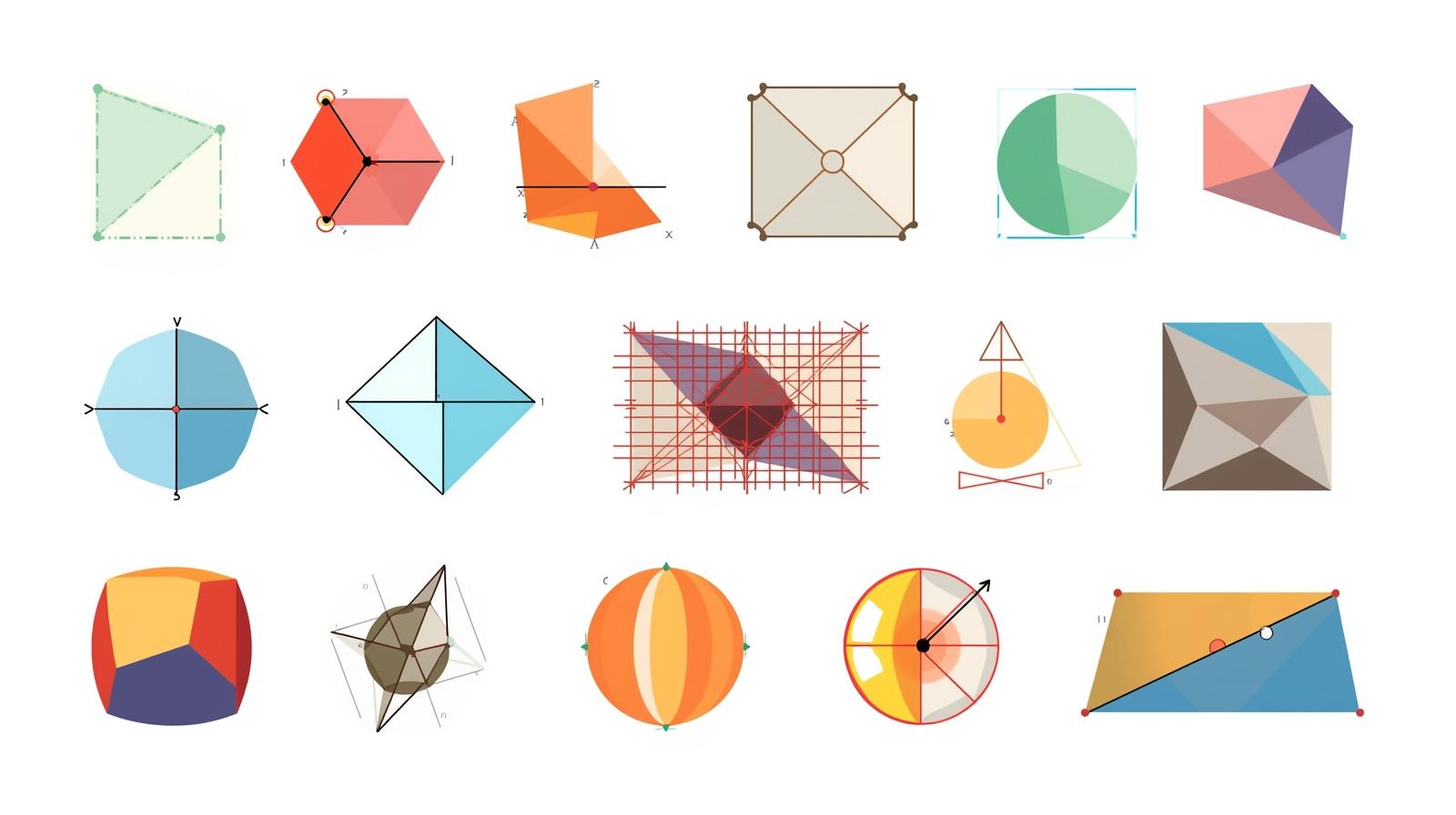
The visual aids system presents concepts through multiple diagrams and representations. Students see geometric relationships from algebraic, coordinate, and pure geometry perspectives. This multi-angle approach ensures that regardless of a student’s learning style, they find an entry point that makes sense.
Afficient’s AI identifies spatial thinking gaps by analyzing not just wrong answers, but the reasoning patterns behind them. When a student struggles with triangle congruence, the system determines whether the issue is visualization, theorem selection, or logical sequencing—then provides targeted support for that specific challenge.
The platform offers multiple solution methods for every problem. Students might solve a geometry problem using coordinate geometry, pure geometric reasoning, or algebraic approaches. Seeing these different paths reinforces understanding and builds flexibility in mathematical thinking.
Step-by-step proof guidance breaks down logical reasoning into manageable components. Students learn to identify given information, determine what needs proving, select appropriate theorems, and construct valid arguments. This scaffolded approach builds proof-writing skills systematically.
Real results demonstrate the approach’s effectiveness. Students typically master geometry concepts through consistent practice. Even in challenging geometry courses, Afficient users show significant improvement, transforming geometry from a bottleneck into a strength.
See how Afficient makes geometry click through personalized visual learning and AI-powered gap analysis.
Practical Strategies for Geometry Success
Combine visual learning with systematic practice. Encourage your child to draw diagrams for every problem, even when not explicitly required. This habit strengthens spatial visualization and often reveals solution paths that aren’t obvious from equations alone.
Use multiple representations consistently. When learning a new theorem, have your child explain it verbally, draw it geometrically, and write it algebraically. This multi-modal encoding strengthens memory and understanding.
Break complex proofs into smaller steps. Rather than attempting entire proofs at once, practice identifying given information, stating what needs proving, and listing potentially useful theorems. This analytical approach reduces overwhelm and builds systematic thinking.
Connect geometry to real-world applications. Point out geometric principles in architecture, art, and nature. These connections make abstract concepts concrete and increase engagement.
Practice spatial reasoning outside formal study. Puzzles, origami, and even video games that involve spatial manipulation strengthen the cognitive skills geometry requires.
Common Geometry Struggles and Solutions
Proof construction challenges often stem from not knowing where to start. Solution: Create a proof template that students fill in systematically—given information, goal statement, theorem selection, logical steps, and conclusion. This structure reduces cognitive load and builds confidence.
Spatial visualization difficulties make it hard to mentally manipulate shapes. Solution: Use physical models and interactive software that allow hands-on exploration. Afficient’s visual aids provide this crucial support, showing transformations and relationships dynamically.
Theorem application confusion occurs when students memorize theorems without understanding when to use them. Solution: Practice categorizing problems by theorem type and creating decision trees for theorem selection. Understanding the “why” behind theorem choice builds strategic thinking.
Word problem interpretation struggles happen when students can’t translate text into diagrams. Solution: Practice diagram creation separately from problem-solving. Given a word problem, focus first on drawing an accurate diagram, then solve using that visual representation.
The Path Forward
Geometry doesn’t have to be the bottleneck in your child’s math education. With the right support—visual learning tools, targeted gap identification, and systematic skill building—students who struggle with geometry can achieve mastery and confidence.
The key is recognizing that geometry requires different support than other math subjects. Generic tutoring or more practice with the same methods rarely solves geometry struggles. Instead, students need programs specifically designed for spatial reasoning development, visual learning, and logical proof construction.
Afficient provides this specialized support through AI-powered analysis, multiple visual representations, and targeted instruction that addresses individual learning gaps. The platform transforms geometry from a frustrating obstacle into an achievable challenge.
Take the free diagnostic test to identify and address your child’s specific geometry struggles. Discover how visual learning and AI-powered support can turn geometry confusion into confidence and mastery.