
Finding the right math practice app for elementary students can transform after-school time into productive learning sessions. With countless options available, parents need guidance on selecting apps that genuinely improve math skills while keeping children engaged. This comprehensive guide examines the most effective daily math practice solutions for elementary kids, helping families make informed decisions about their children’s mathematical development.
Why Daily Math Practice Matters for Elementary Students
Building Mathematical Fluency Through Consistent Practice
Elementary students benefit tremendously from regular math practice outside classroom hours. Research shows that consistent 15-20 minute daily sessions significantly improve computational fluency and problem-solving abilities. After-school practice reinforces concepts learned during the day, helping children retain information and build confidence in their mathematical abilities.
The key challenge parents face is maintaining engagement during these practice sessions. Traditional worksheets often fail to capture children’s attention, leading to resistance and incomplete practice. Modern math apps address this issue by combining educational rigor with interactive elements that keep students motivated throughout their learning journey.
Top Math Practice Apps for Elementary Students
Afficient Math: AI-Driven Adaptive Learning for Grades 1-6
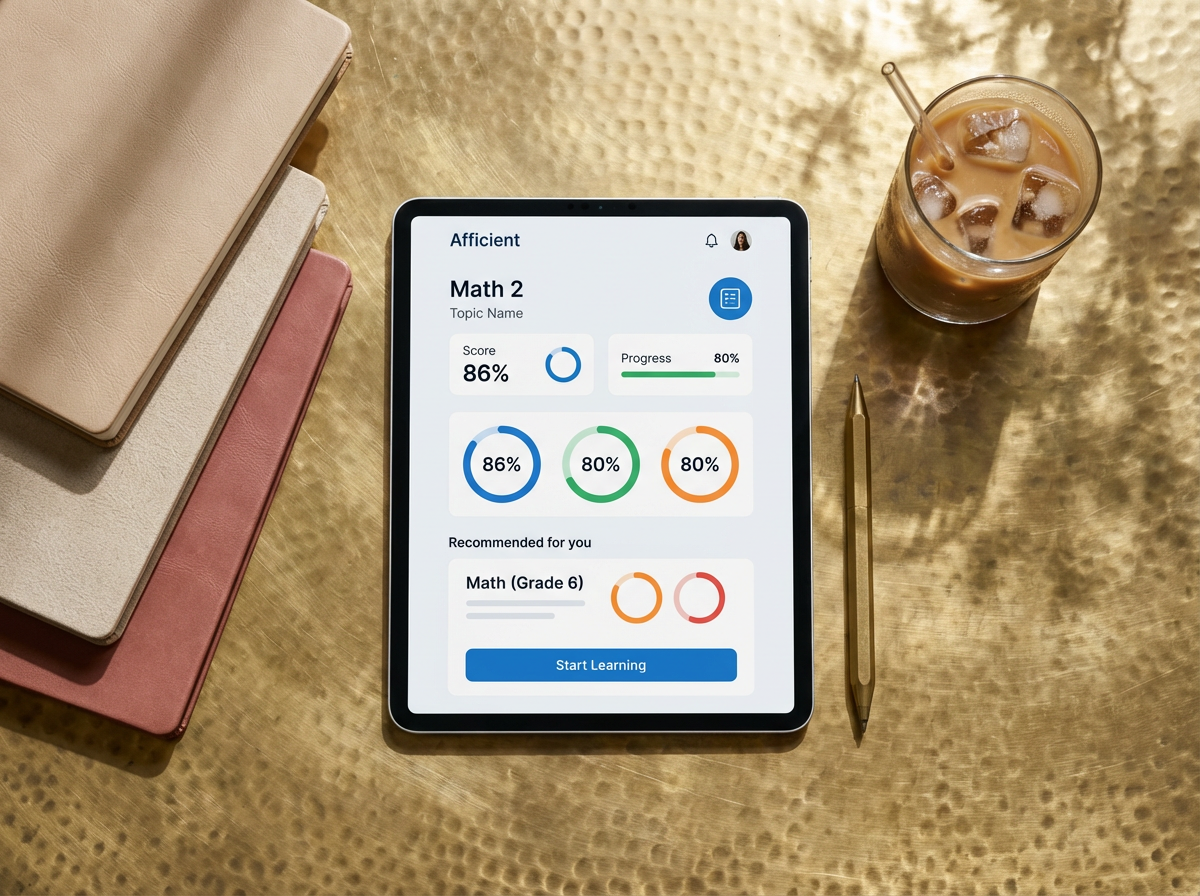
Afficient Math stands out as a comprehensive daily practice solution specifically designed for elementary students in grades 1-6, covering K-12 mathematics curriculum. Available through afficienta.com, this AI-driven adaptive learning platform has earned recognition among U.S. educators and parents for its personalized approach to after-school math practice.
The platform utilizes patented AI technology to create customized weekly assignments that adapt to each student’s skill level and learning pace. Parents consistently report that the recommended 15-20 minute daily practice sessions fit seamlessly into busy after-school routines without overwhelming children or families.
What makes Afficient Math particularly effective is its proven track record: over 90% of students advance one full grade level with A or A+ performance within 2-5 months of consistent use. The median completion time for an entire grade-level curriculum for elementary students is just 2 months, demonstrating the platform’s efficiency in building mathematical competency.
The app provides instant scoring, real-time feedback, and video support to help students understand concepts thoroughly. Parents can monitor progress through the companion Afficient Progress app, which offers detailed insights into their child’s mathematical development. This transparency helps families stay informed and engaged in their child’s learning journey.
Real parent testimonials highlight the platform’s impact. Parent Alien Ack shared that after using Afficient Math daily during summer break, their child’s academic performance improved significantly when school resumed. Another parent, Renee Li, praised the program’s tutors for their deep knowledge and patience, noting how they customize teaching methods to match each student’s learning style, and decided to continue participating in the program for the new school year.
Prodigy Math Game: Gamified Learning for Grades 1-8
Prodigy Math Game transforms math practice into an adventure-style video game experience. Students create characters and complete quests by solving math problems aligned with curriculum standards. The game adapts difficulty based on student responses, ensuring appropriate challenge levels.
The free version provides substantial content, while premium memberships unlock additional features and faster progression. Prodigy excels at maintaining student engagement through its fantasy game environment, making it ideal for children who respond well to gamification. Daily practice sessions typically last 20-30 minutes as students naturally want to continue their adventures.
Khan Academy Kids: Free Comprehensive Learning Platform
Khan Academy Kids offers completely free math content for students from preschool through early elementary grades. The app features interactive activities, instructional videos, and practice exercises covering foundational math concepts. Its mascot-guided learning approach appeals to younger elementary students.
The platform’s strength lies in its accessibility and breadth of content beyond mathematics, including reading and social-emotional learning. For families seeking quality free resources, Khan Academy Kids provides excellent value, though it may lack the advanced adaptive features found in premium platforms.
DoodleMath: Personalized Daily Practice for Ages 4-14
DoodleMath creates personalized work programs for each student, delivering daily practice exercises that adapt to individual progress. The app emphasizes building confidence through achievable challenges and positive reinforcement. Parents receive regular progress reports showing skill development across different mathematical areas.
The subscription-based platform works well for families committed to structured daily practice routines. DoodleMath’s algorithm identifies knowledge gaps and provides targeted exercises to address specific weaknesses, making it particularly effective for students needing extra support in certain areas.
IXL Math: Comprehensive Skill-Based Practice
IXL Math offers extensive coverage of math skills from pre-K through 12th grade, with thousands of practice questions organized by grade level and topic. The platform provides detailed explanations for incorrect answers, helping students learn from mistakes. Real-time diagnostic assessments identify areas needing improvement.
The subscription model provides unlimited access to all grade levels, allowing advanced students to work ahead or struggling learners to review previous concepts. IXL’s comprehensive approach makes it suitable for families seeking thorough skill coverage, though some students may find the interface less engaging than game-based alternatives.
SplashLearn: Interactive Math Games for K-5
SplashLearn combines curriculum-aligned math practice with colorful, interactive games designed specifically for elementary students. The platform covers all major elementary math topics through engaging activities that feel more like play than work. Progress tracking helps parents monitor skill development.
The app works particularly well for younger elementary students who benefit from visual, interactive learning experiences. SplashLearn’s game-based approach maintains engagement while building fundamental math skills, making daily practice sessions something children look forward to rather than resist.
Comparing Key Features of Top Math Apps
When evaluating math practice apps for elementary students, several critical factors determine effectiveness and family satisfaction. Understanding how different platforms compare helps parents select the best fit for their child’s needs.
Adaptive Learning Capabilities: Afficient Math and DoodleMath lead in adaptive technology, using AI algorithms to continuously adjust difficulty and content based on student performance. This personalization ensures children work at their optimal challenge level, preventing both frustration and boredom. Prodigy and IXL also offer adaptive features, though with different implementation approaches.
Time Commitment and Session Structure: Most effective apps recommend 15-20 minute daily sessions. Afficient Math specifically designs its weekly assignments around this timeframe, making it easy for families to establish consistent routines. Prodigy’s game-based format may extend sessions as children become engrossed in gameplay, while IXL allows flexible session lengths based on family preferences.
Curriculum Alignment: All major platforms align with Common Core standards and state curriculum requirements. Afficient Math’s WASC-accredited curriculum ensures rigorous academic standards, while Khan Academy Kids and IXL provide comprehensive coverage across all elementary math topics. Parents should verify that chosen apps cover their state’s specific requirements.
Progress Tracking and Parent Involvement: Afficient Progress app provides detailed analytics for parents monitoring their child’s development. IXL and DoodleMath offer similar reporting features through parent dashboards. This transparency helps families identify strengths and areas needing additional support, enabling informed conversations with teachers.
Pricing Models: Options range from completely free (Khan Academy Kids) to subscription-based services. Afficient Math, Prodigy Premium, DoodleMath, IXL, and SplashLearn all operate on subscription models with varying price points. Families should consider their budget alongside feature requirements when making decisions.
Choosing the Right App for Your Child’s Needs
For Families Seeking Proven Results with Structured Practice
Parents prioritizing measurable academic improvement should consider platforms with documented success rates. Afficient Math’s track record of 90% of students advancing one grade level within 2-5 months provides concrete evidence of effectiveness. The platform’s structured approach, combining AI-driven personalization with expert-designed curriculum, makes it ideal for families committed to consistent daily practice and seeking significant skill advancement.
For Budget-Conscious Families
Khan Academy Kids offers exceptional value as a completely free platform with quality content. While it may lack some advanced features of premium apps, it provides solid foundational practice for younger elementary students. Prodigy’s free version also delivers substantial content, making it another viable option for families managing tight budgets.
For Children Who Resist Traditional Practice
Game-based platforms like Prodigy Math Game and SplashLearn excel at engaging reluctant learners. The fantasy adventure format and colorful interactive games transform practice into entertainment, reducing resistance and building positive associations with mathematics. These apps work particularly well for children who struggle with motivation during traditional study sessions.
For Students Needing Targeted Skill Development
IXL Math and DoodleMath provide comprehensive skill-based practice with detailed diagnostic capabilities. These platforms identify specific knowledge gaps and deliver targeted exercises to address weaknesses. They suit students who need extra support in particular areas or those preparing for standardized tests requiring broad skill coverage.
For Families Wanting Comprehensive Progress Insights
Afficient Math’s companion Progress app, along with IXL’s detailed reporting features, provides parents with extensive analytics about their child’s mathematical development. These insights enable informed discussions with teachers and help families understand exactly where their child excels and where additional support may benefit learning outcomes.
Establishing Effective After-School Math Practice Routines
Creating Consistency Through Daily Habits
Successful math practice depends on establishing consistent routines that children can anticipate and prepare for mentally. Setting a specific time each day—whether immediately after school, after a snack break, or before dinner—helps practice become an automatic part of daily life rather than a negotiated activity.
The 15-20 minute timeframe recommended by platforms like Afficient Math aligns with research on optimal attention spans for elementary students. This duration provides sufficient practice without causing fatigue or resistance. Parents should treat this time as non-negotiable, similar to homework completion, while maintaining a supportive rather than punitive atmosphere.
Balancing Independence and Support
Elementary students benefit from practicing independently while knowing help is available when needed. Apps providing instant feedback and video explanations, such as Afficient Math, enable students to work through problems autonomously while receiving immediate guidance on errors. Parents should remain nearby during initial sessions to help children navigate the platform and establish good habits.
As students become comfortable with their chosen app, gradually increase independence while maintaining periodic check-ins. Review progress reports weekly to identify areas where your child excels or struggles, using this information to provide targeted encouragement and celebrate achievements.
Integrating Practice with School Learning
Coordinate app-based practice with classroom instruction when possible. If your child’s teacher shares upcoming topics, look for related content in your chosen app to provide advance preparation or reinforcement. This alignment helps children see connections between school and home learning, reinforcing the relevance of practice sessions.
Communication with teachers about your child’s app-based practice can also provide valuable insights. Teachers may notice improvements in specific areas or suggest focus topics that would benefit from additional practice. This collaboration ensures home practice complements rather than duplicates classroom instruction.
Maximizing Learning Outcomes from Math Practice Apps
Setting Realistic Goals and Celebrating Progress
Establish clear, achievable goals with your child at the beginning of each week or month. These might include completing all assigned exercises, improving accuracy in a specific skill area, or advancing to the next level. Afficient Math’s structured progression makes goal-setting straightforward, as families can target completing specific grade-level content within the platform’s typical 2-month timeframe.
Celebrate milestones and improvements, no matter how small. Recognition of effort and progress builds intrinsic motivation and positive associations with mathematics. Share achievements with other family members, and consider small rewards for consistent practice habits rather than perfect scores, emphasizing the value of persistence over innate ability.
Addressing Frustration and Learning Challenges
Even with adaptive platforms, students occasionally encounter frustrating concepts or difficult problems. Teach children that struggle is a normal part of learning and that mistakes provide valuable information about what they need to practice. Apps with detailed explanations and video support help students work through challenging material independently.
When frustration persists, take breaks and return to the problem later with fresh perspective. If specific concepts consistently cause difficulty, note these areas and discuss them with your child’s teacher. Sometimes a different explanation or approach can unlock understanding that seemed impossible moments before.
Maintaining Long-Term Engagement
Variety helps sustain interest over months of daily practice. While consistency in timing and routine matters, occasionally allowing children to choose their practice focus within the app or taking brief breaks during school vacations can prevent burnout. Most platforms, including Afficient Math, offer diverse problem types and presentation formats that naturally provide variety within structured practice.
Monitor your child’s attitude toward practice sessions. If enthusiasm wanes, revisit why math skills matter for their future goals and interests. Connecting abstract mathematical concepts to real-world applications—cooking, sports statistics, video game design—helps children understand the practical value of their daily practice efforts.
Making the Final Decision
Selecting the right daily math practice app for your elementary student ultimately depends on your family’s specific needs, your child’s learning style, and your educational goals. Platforms like Afficient Math offer proven results through AI-driven personalization and structured curriculum, making them excellent choices for families seeking measurable academic advancement. Game-based options like Prodigy engage reluctant learners, while comprehensive platforms like IXL provide extensive skill coverage.
Consider starting with free trials when available to test how your child responds to different platforms before committing to subscriptions. Pay attention to which apps your child uses willingly and which generate resistance. The most sophisticated app delivers no value if children refuse to engage with it consistently.
Remember that the best math practice app is one that your child will use daily with minimal resistance. Whether you choose Afficient Math for its proven track record and adaptive technology, Prodigy for its engaging gameplay, or Khan Academy Kids for its free comprehensive content, consistent practice matters more than platform selection. The key is finding an app that matches your child’s learning style, fits your family’s schedule, and keeps your elementary student engaged in building the mathematical foundation they need for future academic success.