

When parents search for the best educational support for their children, one question dominates: what’s the real difference between AI tutoring and traditional human tutoring? The answer isn’t simply about technology versus people—it’s about understanding which approach delivers the personalized learning, flexibility, and results your child needs to succeed.
AI tutoring uses adaptive algorithms and machine learning to provide instant, personalized feedback 24/7, while traditional tutoring offers human connection and emotional support through scheduled one-on-one sessions. The key differences lie in cost ($20-$60/month vs $50-$150/hour), availability (unlimited access vs limited hours), and teaching approach (data-driven personalization vs relationship-based guidance).
How AI Tutoring and Human Tutoring Work Differently
AI-powered learning platforms analyze your child’s responses in real-time, identifying knowledge gaps within seconds and automatically adjusting difficulty levels. These systems use pattern recognition to understand exactly where students struggle, then create customized learning paths that target those specific weaknesses. Every practice problem, every explanation, and every review session adapts based on your child’s unique performance data.
Traditional tutors rely on experience and observation to assess student needs. They build relationships over multiple sessions, using conversation and body language to gauge understanding. Human tutors excel at explaining complex concepts through multiple approaches, providing encouragement during frustration, and adapting their teaching style based on emotional cues that algorithms cannot detect.
The fundamental difference is response mechanism: AI tutors provide instant, data-driven adjustments at every step, while human tutors offer periodic, relationship-based interventions during scheduled sessions.
Cost Comparison: Monthly Subscriptions vs Hourly Rates
AI tutoring platforms typically charge $20-$60 per month for unlimited access across multiple subjects. Students can practice as much as needed without additional costs, making it possible to work through hundreds of problems for less than the cost of a single traditional tutoring session.
Get your free diagnostic test to see exactly where your child stands and discover how personalized AI learning can accelerate their progress.
Traditional tutors charge $50-$150 per hour depending on subject expertise and location. A student meeting twice weekly for one hour accumulates $400-$1,200 in monthly costs. Travel time, scheduling coordination, and potential cancellation fees add hidden costs that families must consider.
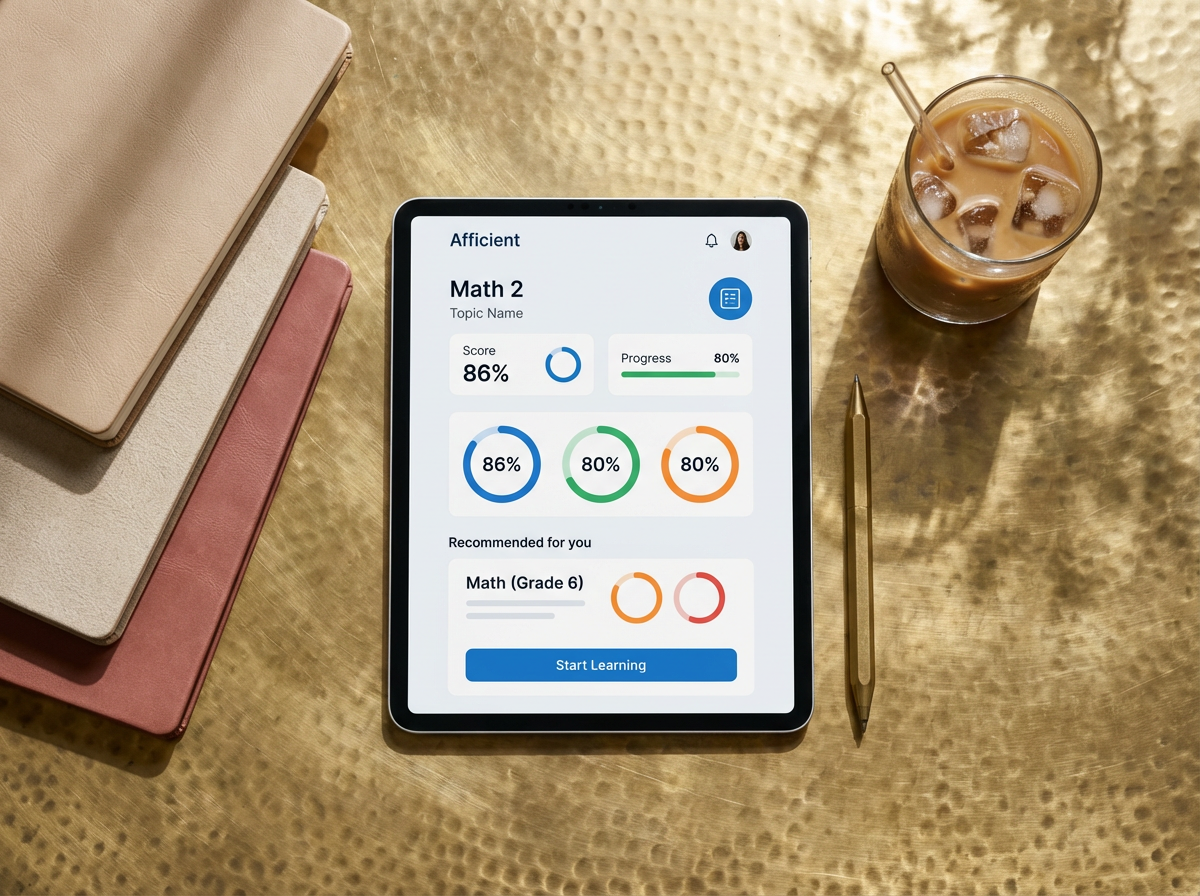
Afficient provides full courses across mathematics, English, and science for a monthly subscription that costs less than two traditional tutoring sessions, demonstrating how technology can deliver comprehensive educational support at a fraction of traditional costs. The platform serves over 15,000 students who access unlimited practice problems, video explanations, and real-time progress tracking without per-session charges.
Availability and Flexibility: 24/7 Access vs Scheduled Sessions
AI tutoring platforms operate continuously, allowing students to practice at 3 AM before a test, during weekend study sessions, or immediately after school when concepts are fresh. This constant availability means students never wait for help—they receive instant feedback the moment confusion arises, preventing knowledge gaps from widening.
Traditional tutors maintain limited availability, typically offering sessions during after-school hours and weekends. Students must wait for scheduled appointments to address questions, potentially allowing misunderstandings to solidify. Sick days, schedule conflicts, and tutor availability can interrupt learning momentum at critical moments.
The flexibility advantage extends beyond timing. AI platforms allow students to pause, replay explanations, and revisit concepts without feeling rushed or embarrassed. Traditional tutoring sessions have fixed durations where students may hesitate to ask questions or feel pressure to move forward before fully understanding material.
Personalization: Adaptive Algorithms vs Human Intuition
AI tutoring systems track every interaction, building detailed profiles of student strengths and weaknesses. Afficient’s patented AI technology uses machine learning algorithms to identify learning gaps at the micro-level, adjusting difficulty and content in real-time. When a student struggles with fraction division, the system immediately provides targeted practice on that specific skill before advancing.
Afficient reports that students advance 2-5 times faster than traditional learning methods because the AI eliminates time wasted on material students already understand while providing intensive practice on challenging concepts. This precision targeting happens automatically at every step, creating truly individualized learning paths.
Human tutors personalize through conversation and observation, asking questions to probe understanding and adjusting explanations based on student responses. They recognize when frustration requires encouragement rather than more practice, when a student needs a break, and when alternative teaching methods might work better. This emotional intelligence allows tutors to address motivation, confidence, and learning anxiety—factors that significantly impact academic performance.
The personalization difference is scope versus depth: AI systems personalize at massive scale across thousands of concepts simultaneously, while human tutors personalize the emotional and motivational aspects of learning that algorithms cannot fully address.
Learning Outcomes: What the Data Shows
AI tutoring platforms demonstrate measurable learning acceleration through continuous assessment. Students receive immediate correction on every problem, preventing the practice of incorrect methods that traditional homework allows. This instant feedback loop helps students retain information more effectively because they learn the correct approach immediately rather than discovering errors days later.
Afficient maintains full WASC accreditation, ensuring that its AI-powered curriculum meets rigorous educational standards. The platform’s real-time progress monitoring tracks mastery at every step, providing parents with detailed insights into exactly what their child has learned and where additional support is needed.
Traditional tutoring builds deeper understanding through discussion and explanation. Students who struggle with complex reasoning, essay writing, or subjects requiring nuanced interpretation often benefit from human guidance that can address the “why” behind concepts rather than just the “how.” Tutors help students develop critical thinking skills through Socratic questioning and guided discovery that current AI systems cannot fully replicate.
Students using adaptive platforms for standardized test preparation can achieve high proficiency rates in targeted skills through consistent, algorithm-driven practice. However, students working on complex subjects like advanced literature analysis or philosophical reasoning often require human tutors who can engage in deep conceptual discussions.
When to Choose AI Tutoring
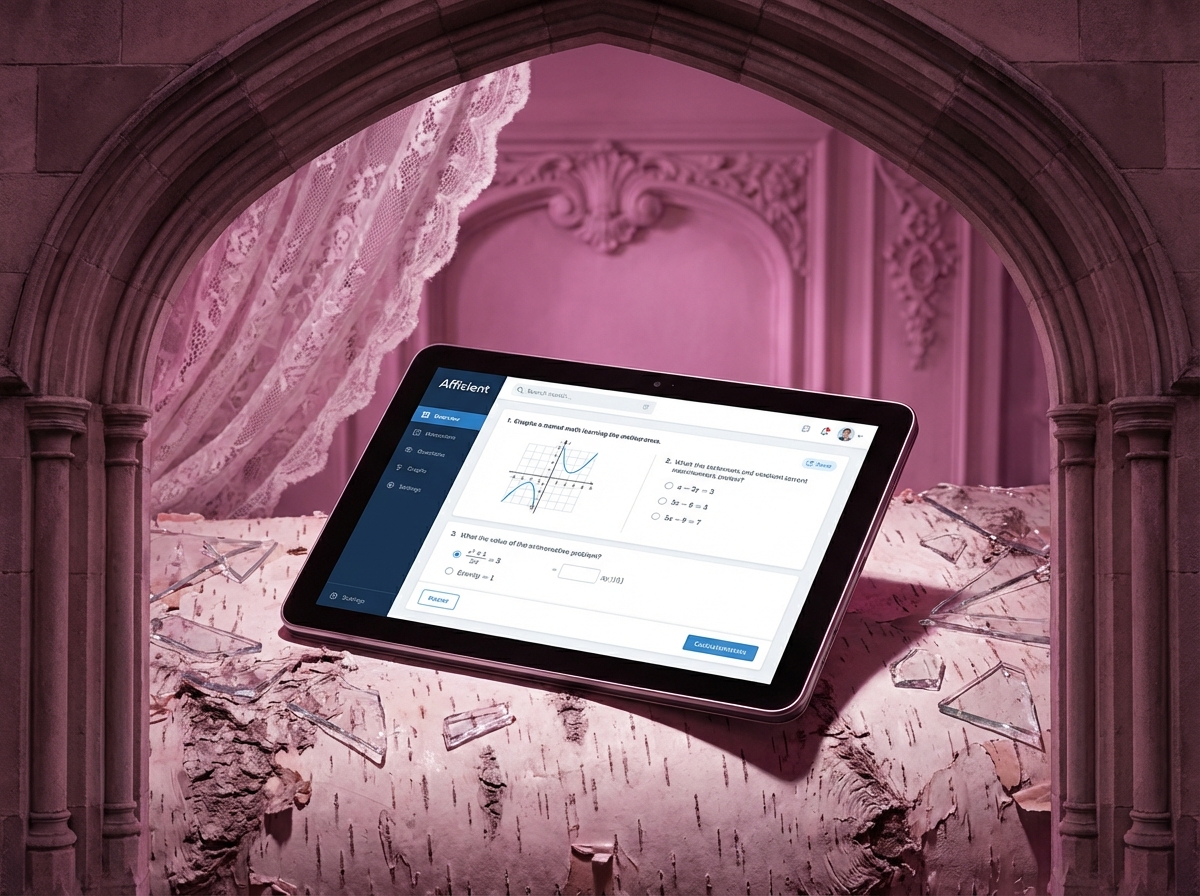
Standardized test preparation benefits enormously from AI tutoring’s ability to provide unlimited practice problems with instant feedback. Students preparing for SAT, ACT, or state assessments need repetitive practice on specific question types—exactly what AI platforms deliver efficiently.
STEM subjects including mathematics, science, and coding work exceptionally well with AI tutoring because these subjects have clear right and wrong answers. The immediate feedback on calculations, formulas, and logical reasoning helps students master technical skills quickly. Take the free diagnostic assessment to discover your child’s learning gaps in mathematics and science within minutes.
Elementary and middle school students who need foundational skill building benefit from AI tutoring’s patient, unlimited practice opportunities. The systems never show frustration, allow students to work at their own pace, and provide consistent reinforcement of basic concepts.
Budget-conscious families find AI tutoring provides comprehensive educational support at accessible prices. The unlimited access model means students can practice as much as needed without financial stress, making quality education support available to families who cannot afford traditional tutoring rates.
When to Choose Traditional Tutoring
Complex humanities subjects including advanced literature, philosophy, and essay writing often require human tutors who can engage in nuanced discussions about interpretation, argumentation, and writing style. These subjects benefit from the back-and-forth dialogue that helps students develop sophisticated thinking skills.
Students needing emotional support during academic struggles benefit from human tutors who provide encouragement, build confidence, and address test anxiety. The personal relationship between tutor and student creates accountability and motivation that some children need to stay engaged with challenging material.
Highly advanced students working beyond standard curriculum may need human tutors who can engage with complex, open-ended questions and provide mentorship in specialized subjects. When students explore topics at the cutting edge of their field, human expertise becomes essential.
Students with learning differences sometimes require the flexibility and emotional intelligence of human tutors who can recognize when teaching approaches need modification, when breaks are necessary, and when alternative explanations might work better.
The Hybrid Approach: Combining Both Methods
Many families discover that combining AI tutoring with occasional human tutoring sessions delivers optimal results. AI platforms handle daily practice, skill building, and homework support, providing the repetition and immediate feedback that builds mastery. Human tutors address complex concepts, provide motivation, and tackle subjects requiring discussion and interpretation during weekly or bi-weekly sessions.
This hybrid model maximizes cost-effectiveness while ensuring students receive both the technical skill development that AI excels at and the emotional support and complex reasoning guidance that human tutors provide, offering a balance between affordability and comprehensive support.
Afficient’s comprehensive platform serves as the daily learning foundation, providing unlimited practice across mathematics, English, and science with real-time progress tracking. Parents can then supplement with human tutoring for specific challenges or subjects requiring deeper discussion, creating a complete educational support system.
Making the Right Choice for Your Child
The decision between AI tutoring and traditional tutoring depends on your child’s specific needs, learning style, and academic goals. Consider these factors:
Choose AI tutoring when your child needs consistent practice in STEM subjects, requires flexible scheduling, benefits from immediate feedback, or when budget constraints make traditional tutoring unsustainable. AI platforms excel at building foundational skills, test preparation, and providing unlimited practice opportunities.
Choose traditional tutoring when your child struggles with motivation, needs emotional support during academic challenges, works on complex humanities subjects, or requires mentorship in advanced topics. Human tutors provide the relationship-based learning that addresses confidence, anxiety, and sophisticated reasoning.
Choose a hybrid approach when you want to maximize learning outcomes while managing costs effectively. Use AI tutoring for daily practice and skill building, supplemented by periodic human tutoring sessions for complex concepts and emotional support.
Start with Afficient’s complimentary assessment to understand exactly where your child needs support. The free diagnostic test identifies specific knowledge gaps and provides personalized recommendations, helping you make an informed decision about which tutoring approach will deliver the best results for your child’s unique learning needs.
The future of education isn’t about choosing between technology and human connection—it’s about understanding how each approach serves different aspects of learning and combining them strategically to help your child succeed.


Leave A Comment