The elementary math education landscape is experiencing a fundamental shift as AI-powered adaptive learning platforms gain prominence alongside traditional human tutoring. Parents seeking optimal learning outcomes for their children increasingly ask: can artificial intelligence truly match or even surpass the personalized attention of human tutors? This comprehensive analysis examines the capabilities, limitations, and real-world performance data of both approaches to help families make informed educational decisions.
Understanding AI Adaptive Learning Technology
AI adaptive learning systems represent a breakthrough in personalized education. These platforms utilize sophisticated algorithms to analyze each student’s performance in real-time, identifying knowledge gaps and automatically adjusting difficulty levels to match individual learning pace. Unlike traditional one-size-fits-all curricula, adaptive systems create unique learning pathways for every student.
Core AI capabilities in elementary math education include:
- Instant identification of specific skill gaps through diagnostic assessments
- Real-time content adjustment based on student responses
- Immediate feedback on every problem attempt
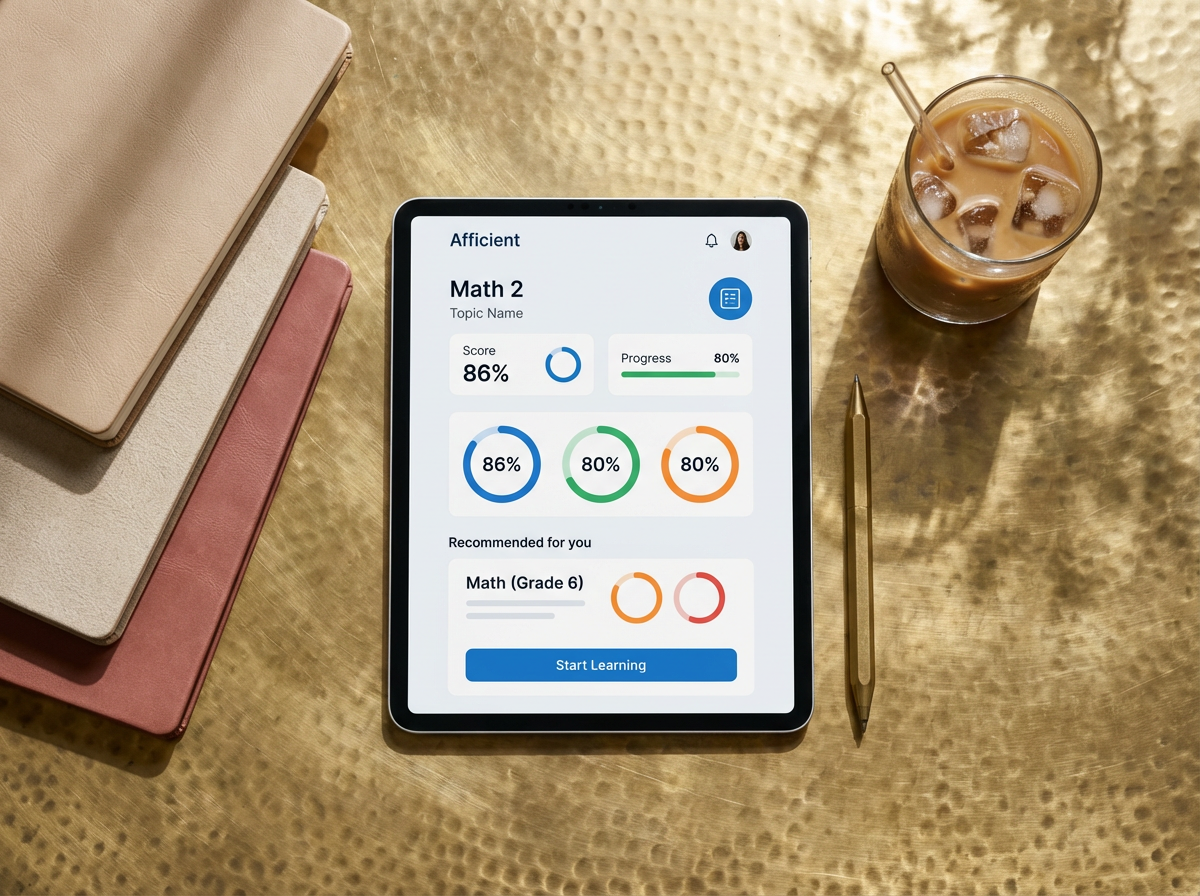
- Continuous progress monitoring with detailed analytics
- Self-paced learning environments that eliminate time pressure
Research from educational technology studies shows that well-designed AI systems can process thousands of data points per session, enabling precision that human tutors physically cannot match in terms of data analysis speed. However, this technological advantage operates within specific parameters that require careful consideration.
The Irreplaceable Value of Human Tutors
Human tutors bring essential qualities to elementary math education that current AI technology cannot fully replicate. Emotional intelligence stands as the primary differentiator – experienced tutors read subtle cues in student body language, detect frustration before it escalates, and provide encouragement tailored to individual personalities.
Educational research consistently demonstrates that human tutors excel in several critical areas. They build meaningful relationships that motivate students beyond academic performance. They explain abstract mathematical concepts through culturally relevant examples and analogies that resonate with individual students’ lived experiences. Most importantly, they adapt teaching strategies based on holistic understanding of each child’s cognitive development, learning style, and emotional state.
Traditional tutoring also provides structured social interaction that develops communication skills. Students learn to articulate mathematical reasoning, ask clarifying questions, and engage in collaborative problem-solving – competencies essential for long-term academic success beyond elementary math.
Performance Data: AI Systems vs Human Tutoring
Recent effectiveness studies reveal nuanced results that challenge simplistic comparisons. AI-powered adaptive learning platforms have demonstrated measurable acceleration in math skill acquisition in the education technology sector, with well-designed systems showing improved learning outcomes compared to traditional classroom instruction. These systems excel at drill-based practice and procedural fluency development.
Research examining AI tutoring platforms indicates particular effectiveness for students requiring extensive practice opportunities. The systems provide unlimited problem sets with instant feedback, allowing learners to master fundamental operations through repetition without requiring constant human supervision. Progress tracking capabilities enable parents and educators to monitor improvement with unprecedented detail, offering insights into specific skill mastery levels across dozens of mathematical concepts.
However, studies also reveal important limitations. Students relying exclusively on AI chatbots for homework assistance have shown decreased test performance in some contexts, suggesting that immediate answer provision without guided reasoning can undermine deeper learning. The most successful outcomes emerge when AI tools complement rather than completely replace human instruction.
Cost-Effectiveness and Accessibility Analysis
Financial considerations significantly influence educational decisions for American families. Traditional one-on-one human tutoring typically costs $50-150 per hour, creating substantial barriers for many households. AI adaptive learning platforms offer dramatically different economics, with monthly subscriptions ranging from $20-100 providing unlimited access.
Afficient’s pricing model reflects this accessibility advantage, enabling consistent daily practice at a fraction of traditional tutoring costs. For families requiring intensive support across multiple skill areas, the cost differential becomes particularly pronounced over academic years.
Time efficiency presents another practical advantage for AI systems. Students access learning platforms immediately without scheduling coordination or travel time. This convenience enables flexible learning schedules that accommodate extracurricular activities and family commitments – particularly valuable for working parents.
The Hybrid Model: Combining AI and Human Expertise
Educational best practices increasingly point toward integrated approaches that leverage both AI capabilities and human expertise. Leading platforms in the education technology sector recognize this reality by combining AI-powered adaptive learning with human support elements that can provide strategic guidance, answer conceptual questions, and offer motivational support.
This hybrid model addresses the complementary nature of AI and human strengths. AI systems handle high-volume practice, instant feedback, and detailed progress analytics. Human tutors focus on conceptual understanding, strategic thinking development, and emotional support – areas requiring empathy, creativity, and complex reasoning.
Research from educational institutions implementing hybrid models shows promising results. Students benefit from AI systems’ ability to provide unlimited practice opportunities while maintaining human connection for conceptual breakthroughs and confidence building. Parents receive comprehensive progress data from AI platforms while consulting with human experts for strategic educational planning.
Making the Right Choice for Your Child
The decision between AI adaptive learning, human tutoring, or hybrid approaches depends on multiple factors specific to each student’s needs and family circumstances. Consider these critical evaluation criteria:
Learning style assessment: Does your child thrive with independent practice and immediate feedback, or require extensive verbal explanation and social interaction? Students with strong self-regulation skills often excel with AI platforms, while those needing external motivation benefit more from human relationships.
Specific learning challenges: Students with diagnosed learning differences may require specialized human expertise that current AI systems cannot provide. Conversely, students simply needing more practice time often find AI platforms ideal for building procedural fluency.
Budget constraints: Families with limited educational budgets can access quality AI adaptive learning at accessible price points. However, children struggling with conceptual understanding may require human tutor investment despite higher costs.
Time flexibility requirements: Busy family schedules favor AI platforms’ 24/7 accessibility. Traditional tutoring demands coordination that proves challenging for some households.
The Evolving Educational Landscape
AI adaptive learning technology continues advancing rapidly, with platforms incorporating increasingly sophisticated assessment capabilities and personalized content generation. Education technology platforms exemplify this evolution, with leading solutions serving thousands of students and demonstrating measurable learning improvements through adaptive learning technology.
However, technological advancement does not eliminate human tutors’ value – rather, it redefines their role. Forward-thinking educators view AI as a powerful tool that handles routine practice and data collection, freeing human tutors to focus on higher-order thinking development, emotional support, and strategic educational guidance.
The question is not whether AI can completely replace human tutors for elementary math education, but how families can strategically deploy both resources to optimize learning outcomes. For many students, the answer involves AI platforms providing daily practice foundations while human tutors address conceptual gaps and maintain motivational engagement.
Families evaluating options should seek platforms offering demonstrated effectiveness through transparent performance data, appropriate human support integration, and alignment with their child’s specific learning needs. The most successful educational approaches recognize that elementary math learning encompasses not just skill acquisition, but confidence building, problem-solving mindset development, and lifelong learning attitude formation – goals requiring both technological efficiency and human wisdom.