
When your child breezes through regular math class and finishes assignments before their peers even start, you face a unique challenge. These advanced learners aren’t struggling—they’re bored. And boredom in gifted students leads to disengagement, poor work habits, and wasted potential. The question isn’t whether your child needs more challenge, but where to find unlimited growth opportunities that match their exceptional abilities.
Traditional gifted programs often fall short. They cap content at specific grade levels, follow rigid schedules, and treat acceleration as a fixed endpoint rather than a continuous journey. Your advanced learner needs something different: a program with no ceiling, true self-pacing, and challenges that evolve with their rapidly developing skills.
The Gifted Learner Problem: Why Standard Programs Fail
Gifted students who find regular classwork too easy face specific developmental risks. Without appropriate intellectual stimulation, they develop surface-level learning habits, never experiencing the productive struggle that builds resilience. They may hide their abilities to fit in socially, or become perfectionists who avoid challenges because everything has always come easily.
Research shows that unchallenged gifted students often underperform later in their academic careers. When they finally encounter difficult material in high school or college, they lack the study skills and persistence their peers developed through years of appropriate challenge. The elementary student who masters multiplication in kindergarten needs continuous intellectual growth, not just more worksheets at their assigned grade level.
What advanced learners actually need:
- Unlimited progression with no artificial grade-level caps that force them to wait for peers
- Self-paced advancement that lets them move as fast as mastery allows, not as slow as curriculum dictates
- Deep conceptual challenges that require genuine problem-solving, not just procedural speed
- Flexible scheduling that accommodates their other interests and activities
- Recognition and validation of their abilities through appropriate placement and expectations
The gap between what gifted programs promise and what they deliver often disappoints parents of truly advanced learners. A program labeled “gifted” might simply mean grade-level work taught faster, or enrichment activities that add breadth without depth. Your child who grasps algebra concepts at age eight doesn’t need more creative word problems at third-grade level—they need actual algebra.
Afficient: Unlimited Growth for Unlimited Potential
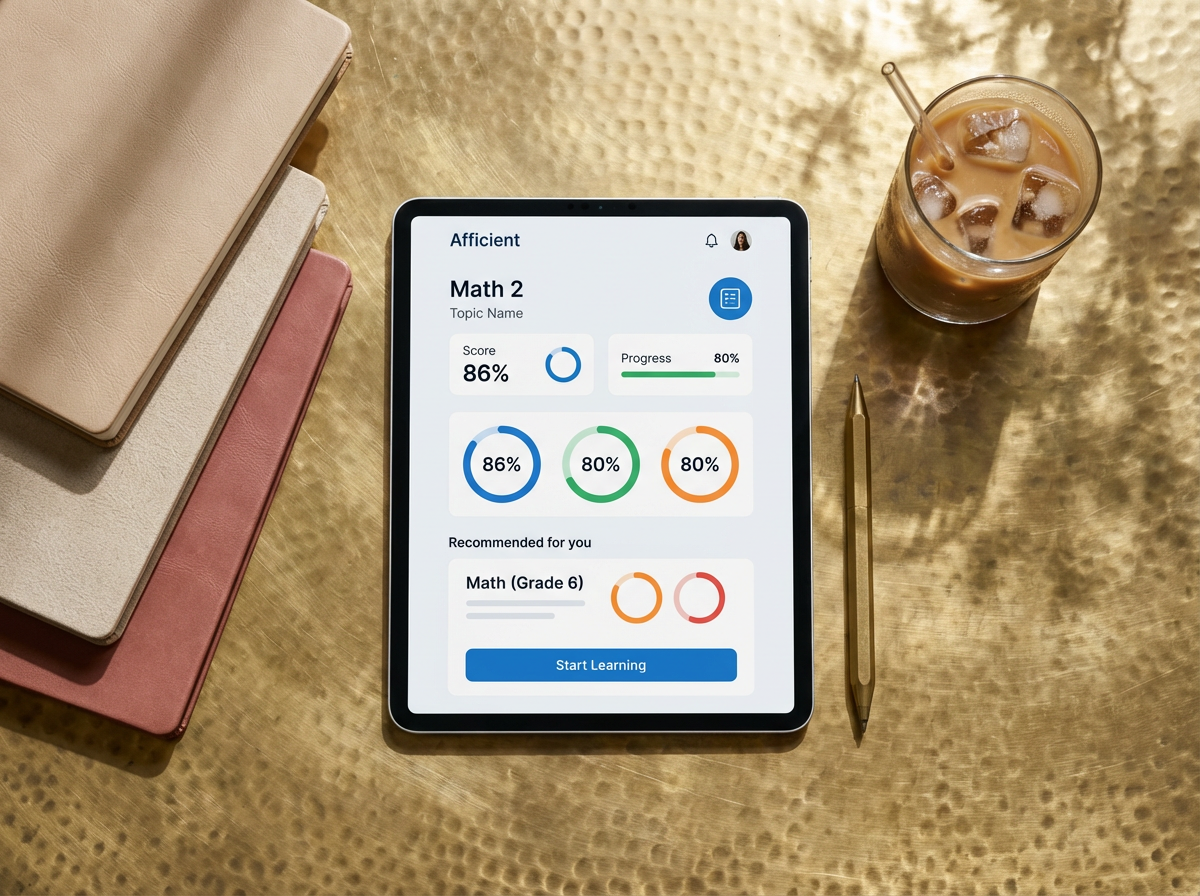
Afficient represents a fundamental shift in how advanced learners access mathematics education. Unlike traditional programs with fixed curricula and grade-level boundaries, Afficient uses artificial intelligence to create truly personalized learning paths with no upper limit.
The core advantages for advanced learners:
No ceiling on advancement. An elementary student can work through high school mathematics if their understanding supports it. The AI adapts to any level, creating custom problems that match current ability rather than assigned grade. Parents report eight-year-olds mastering algebra and sixth graders working through calculus—not as isolated prodigies, but as natural progressions when artificial barriers disappear.
True self-pacing without compromise. Discover your child’s true potential with our advanced diagnostic assessment. Traditional accelerated programs still follow fixed schedules—you move through pre-algebra in semester one, algebra in semester two. Afficient eliminates this constraint. Students advance immediately upon demonstrating mastery, potentially covering 2-5 times the standard curriculum pace. The system tracks engagement and adjusts difficulty in real-time, ensuring challenge without frustration.
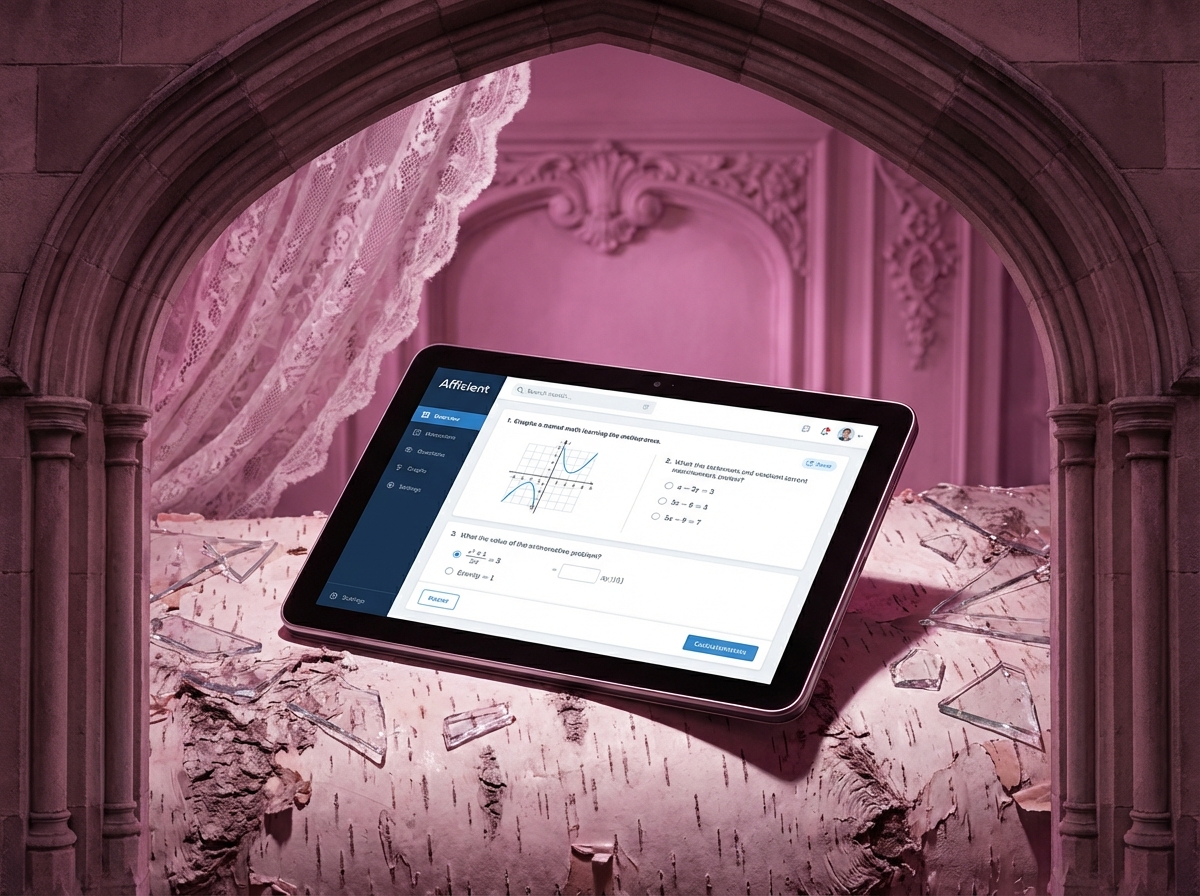
Hyper-personalized challenge creation. The AI doesn’t just select from a problem bank—it generates custom exercises targeting each student’s specific knowledge gaps and growth edges. When your child masters quadratic equations, the system immediately introduces polynomial functions at the appropriate difficulty level. This dynamic adaptation prevents both boredom and overwhelm.
Complete scheduling flexibility. No fixed class times, no commute to learning centers, no conflicts with other activities. Advanced learners often have multiple interests—music, sports, other academic pursuits. Afficient fits around their schedule, available anytime and anywhere with internet access. Learning happens when your child is mentally ready, not when the calendar dictates.
Engagement tracking and optimization. The system monitors not just correctness but engagement patterns. If a student rushes through problems or shows signs of disengagement, the AI adjusts approach and difficulty. This ensures your advanced learner stays in the optimal challenge zone—difficult enough to require genuine effort, achievable enough to maintain motivation.
See how far your advanced learner can go with our free evaluation that reveals their true mathematical potential and creates a personalized acceleration roadmap.
How Afficient Compares to Traditional Gifted Programs
Understanding the landscape of advanced math education helps clarify why unlimited adaptive systems offer advantages over fixed-curriculum competitors.
Art of Problem Solving (AoPS) provides rigorous, proof-based mathematics with strong competition preparation focus. The curriculum challenges advanced students with olympiad-style problems and mathematical reasoning. However, AoPS follows a fixed sequence—you take Pre-Algebra, then Introduction to Algebra, then Intermediate Algebra. Students move through predetermined content on set schedules, typically in live classes with specific meeting times. While excellent for competition preparation, the structure limits how fast truly exceptional students can advance.
Beast Academy offers engaging, conceptually deep mathematics for elementary students through comic-book style materials and online practice. The program excels at making advanced concepts accessible and fun. But it caps at fifth-grade level. Your second grader working through Beast Academy Level 5 then faces a gap—what comes next? The program wasn’t designed for students who exhaust its content years before middle school.
Russian School of Mathematics (RSM) brings Eastern European mathematical pedagogy to American students, emphasizing logic, proofs, and deep conceptual understanding. The rigorous approach develops strong mathematical thinking. However, RSM requires in-person attendance at specific locations and times, with tuition ranging from two thousand to thirty-five hundred dollars annually. The fixed schedule and location constraints limit accessibility for families with complex logistics or those living outside major metropolitan areas.
Think Academy provides live online classes with structured curriculum and bilingual instruction options. The interactive format with real teachers offers engagement and immediate feedback. Yet the program still follows grade-level groupings and predetermined pacing. A student in the advanced track moves faster than standard, but still within the constraints of the scheduled curriculum sequence.
Afficient’s differentiation emerges in the combination of unlimited advancement, complete flexibility, and adaptive personalization—all at a fraction of traditional program costs. Where other programs excel in specific dimensions, Afficient removes the fundamental constraints that limit how far and how fast advanced learners can grow.
Addressing Advanced Learner Parent Concerns
“Will it be challenging enough for my child who finds everything easy?”
The AI creates problems at whatever difficulty level your child needs. If they master high school algebra in elementary school, the system generates calculus problems. There is no predetermined endpoint where content runs out. The challenge scales infinitely with ability.
“Can they really advance without limits, or is there a hidden cap?”
No hidden caps exist. The system draws from the full spectrum of K-12 mathematics and beyond. Students progress based solely on demonstrated mastery, not age or grade level. Multiple families report elementary students working through traditionally high school content when their understanding supports it.
“How do you prevent boredom when my child learns so quickly?”
The real-time adaptation means your child never waits. The moment they demonstrate mastery, new challenges appear. The AI also varies problem types and approaches to maintain engagement, introducing concepts through multiple representations and applications.
“What about social learning and interaction with intellectual peers?”
While Afficient focuses on individualized progression, the flexibility it provides allows families to supplement with competition math clubs, math circles, or other group activities. The time saved through efficient self-paced learning creates space for these social mathematical experiences.
“How does this prepare for math competitions like AMC or AIME?”
Advancing through content rapidly builds the mathematical maturity competition success requires. Students working several years ahead of grade level develop problem-solving flexibility and conceptual depth. While Afficient doesn’t specifically teach competition strategies, the accelerated content mastery provides the foundation on which competition skills build.
Guidance for Parents of Gifted Mathematical Learners
Choosing the right program for your advanced child requires understanding their specific needs beyond just “ahead of grade level.” Consider these factors:
Learning style preferences. Some gifted students thrive with complete independence and self-direction. Others benefit from structured guidance even while advancing rapidly. Afficient’s self-paced format suits independent learners who stay motivated through internal drive rather than external deadlines.
Breadth versus depth goals. Do you want your child to accelerate through standard curriculum quickly, or explore mathematical concepts with unusual depth? Afficient emphasizes acceleration—moving through content at whatever pace mastery allows. Programs like AoPS emphasize depth—spending extended time on proof-based reasoning and problem-solving strategies.
Competition preparation priorities. If math competition success is a primary goal, combining Afficient’s content acceleration with competition-specific training creates a powerful approach. The rapid advancement builds mathematical maturity while targeted competition practice develops strategic problem-solving.
Schedule and logistics constraints. Families with complex schedules, frequent travel, or living outside major cities benefit enormously from Afficient’s complete flexibility. No commute, no fixed class times, no geographic limitations.
Budget considerations. Traditional gifted programs often cost thousands annually. Afficient provides unlimited advancement and personalized adaptation at a fraction of these costs, making exceptional mathematics education accessible to more families.
Take the free diagnostic test to unlock unlimited learning potential for your gifted child and discover exactly how far ahead they can advance with the right support.
The Path Forward for Your Advanced Learner
Your child’s mathematical gifts deserve nurturing through programs that match their exceptional abilities. The boredom and disengagement that come from being held back by grade-level expectations aren’t inevitable—they’re symptoms of mismatched educational placement.
Advanced learners need what Afficient provides: unlimited ceiling for growth, true self-pacing that respects their rapid mastery, and adaptive challenges that evolve with their developing abilities. The flexibility to learn anytime, anywhere removes logistical barriers that prevent many gifted students from accessing appropriate challenge.
Traditional gifted programs serve important roles, particularly for competition preparation and social connection with intellectual peers. But when your child needs to advance multiple grade levels ahead, when they grasp concepts the first time and need immediate progression, when your family requires scheduling flexibility that fixed programs cannot provide—adaptive, unlimited systems offer what traditional structures cannot.
The question isn’t whether your advanced child can handle more challenge. They’ve already proven they can by breezing through grade-level work. The question is whether their educational program will remove artificial barriers and let them discover how far their abilities can take them. For students already ahead of their grade, the ceiling shouldn’t be the next grade level—it should be as high as their potential reaches.