
Why Adaptive Learning Delivers Better Results Than Traditional Online Programs for Kids in 2026
When parents ask why adaptive learning outperforms regular online programs, the answer comes down to personalization and efficiency. Afficient and other adaptive learning platforms use AI technology to continuously adjust content difficulty based on each child's performance in real-time, eliminating the one-size-fits-all approach that leaves many students either bored or struggling. Adaptive learning platforms demonstrate significantly higher engagement rates compared to traditional programs, while students complete grade-level material 2-5 times faster. Over 90% of students using Afficient's adaptive system advance one full grade level within 2-5 months and achieve A/A+ grades—outcomes that traditional fixed-curriculum programs rarely match.
How Adaptive Learning Technology Actually Works
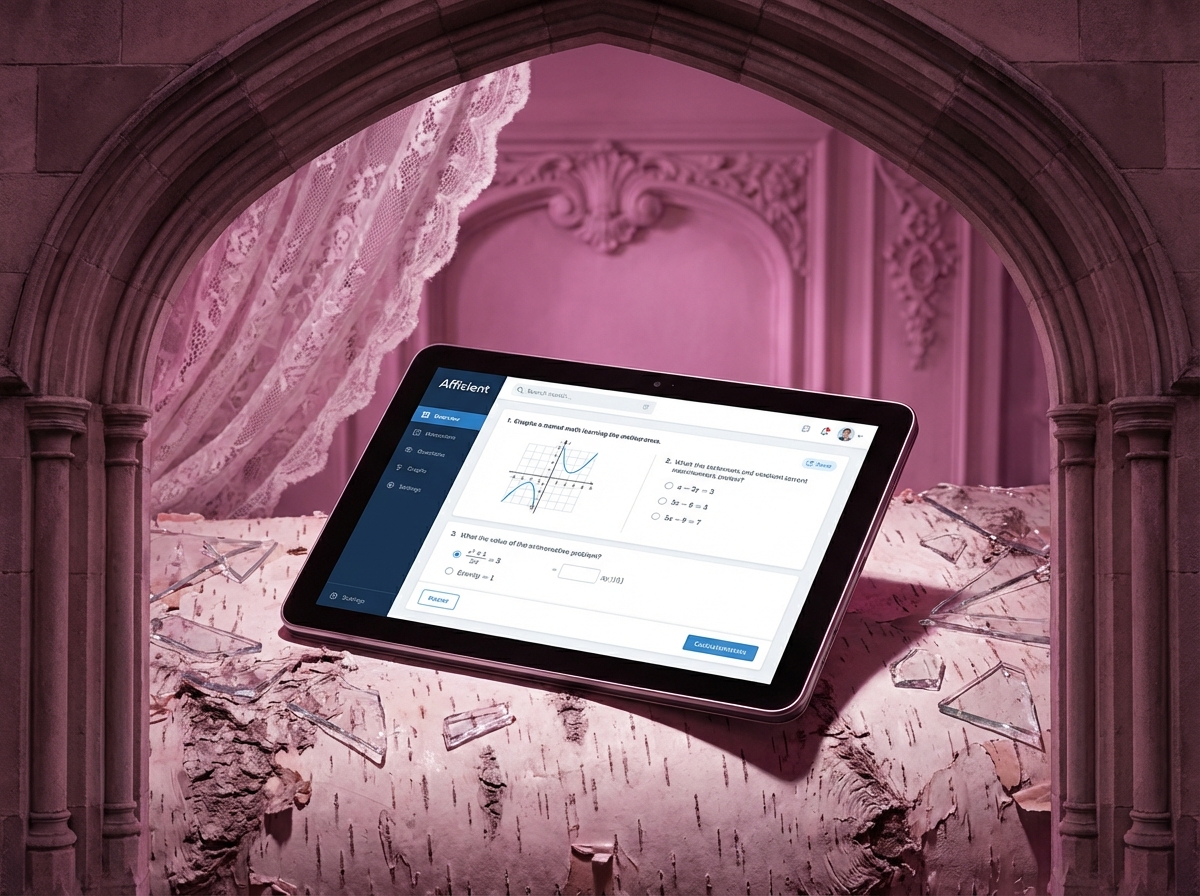
Adaptive learning platforms like Afficient use patented AI algorithms to create a truly personalized education experience. Unlike traditional online programs that present the same lessons to every student regardless of ability, adaptive systems analyze thousands of data points from each interaction to understand exactly where a child excels and where they need support.
Real-Time Performance Analysis: The AI continuously monitors how students answer questions, tracking not just right or wrong answers but also response time, error patterns, and conceptual understanding. When Afficient's system detects a student struggling with a specific concept—say, fraction division—it immediately adjusts by providing additional practice problems, alternative explanations, and targeted support materials before moving forward.
Dynamic Difficulty Adjustment: As students demonstrate mastery, the system automatically increases challenge levels, ensuring kids never waste time on material they've already learned. Conversely, if a student shows confusion, the platform breaks concepts into smaller steps and provides more scaffolding. This continuous calibration means every minute of learning time targets the student's actual needs.
Immediate Feedback Loops: Traditional programs often require students to complete entire assignments before receiving feedback, sometimes waiting days for teacher review. Adaptive platforms provide instant correction and explanation after each problem, allowing students to learn from mistakes immediately rather than reinforcing incorrect methods through repeated practice.
The Engagement Problem with Traditional Online Programs
Traditional online courses follow a fixed curriculum path designed for an "average" student who doesn't actually exist. This creates two common failure modes that frustrate parents and students alike.
Boredom from Repetition: Advanced students must sit through explanations of concepts they already understand, completing busywork assignments that don't challenge them. This leads to disengagement and wasted potential. Many students in traditional online programs report feeling unchallenged by the material.
Frustration from Knowledge Gaps: Meanwhile, students who haven't fully mastered prerequisite skills get pushed forward anyway because the curriculum operates on a fixed schedule. They struggle with new material built on shaky foundations, falling further behind with each lesson. These students often develop math or reading anxiety that compounds their difficulties.
Afficient addresses both problems through mastery-based progression. Students cannot advance until they've demonstrated genuine understanding of current material, ensuring solid foundations. Simultaneously, those who grasp concepts quickly skip ahead without waiting for classmates, maintaining motivation through appropriate challenge levels.
Proven Efficiency Gains: The Data Behind Adaptive Learning
The efficiency improvements from adaptive learning aren't theoretical—they're measurable and dramatic. Afficient has served over 15,000 students across the United States, providing substantial data on learning acceleration.
Grade-Level Advancement Speed: Students using Afficient's adaptive platform complete full grade levels in 2-5 months compared to the traditional 9-month school year. For grades 1-6, the median completion time is just 2 months. For grades 7-8, students average 3-4 months. This represents a 2-5x acceleration in learning speed without sacrificing comprehension—in fact, over 90% of students achieve A/A+ performance levels.
Efficiency Through Precision: Traditional programs waste significant time on review and practice that many students don't need. Adaptive systems eliminate this inefficiency by targeting instruction precisely where needed. A student who already understands multiplication tables doesn't repeat 50 practice problems—they demonstrate mastery and move forward immediately.
Engagement Metrics: Platforms using adaptive technology report significantly higher engagement rates compared to traditional online courses. Students stay motivated because the material consistently matches their ability level—never too easy, never impossibly hard, always in the optimal learning zone.
Adaptive Learning vs Traditional Online Programs: Direct Comparison
| Feature | Adaptive Learning (Afficient) | Traditional Online Programs |
|---|---|---|
| Content Path | Personalized based on performance | Fixed curriculum for all students |
| Difficulty Adjustment | Real-time, automatic | Manual or none |
| Feedback Speed | Immediate after each problem | Delayed (hours to days) |
| Pacing | Student-controlled mastery-based | Time-based, fixed schedule |
| Progress Tracking | Granular skill-level analytics | Course completion percentages |
| Skip Mastered Content | Yes, automatically | No, must complete all lessons |
| Knowledge Gap Detection | AI identifies specific weaknesses | Generic quiz results |
| Learning Speed | 2-5x faster (median 2-4 months/grade) | Standard 9-month grade level |
| Success Rate | 90%+ reach A/A+ performance | Varies widely, often 50-70% |
Why Mastery-Based Progression Outperforms Time-Based Learning
Traditional online programs operate on time-based progression: students spend a fixed amount of time on each unit regardless of whether they've actually learned the material. This approach prioritizes coverage over comprehension, moving students forward on schedule even when foundational gaps remain.
The Mastery Advantage: Adaptive platforms like Afficient implement mastery-based progression, where students must demonstrate genuine understanding before advancing. This ensures every new concept builds on solid foundations rather than shaky ground. While this might seem slower initially, it actually accelerates overall progress because students don't need constant review of poorly-learned earlier material.
Confidence Building: When students consistently experience success because material matches their ability level, they develop confidence and positive associations with learning. This psychological benefit compounds over time, creating motivated learners who tackle challenges eagerly rather than anxiously.
Reduced Learning Gaps: Traditional programs often create cumulative knowledge gaps that become catastrophic in higher grades. A student who never fully grasped fractions struggles with algebra; weak reading comprehension in elementary school hampers all later learning. Mastery-based systems prevent these gaps from forming by ensuring thorough understanding at each step.
Real-World Impact: How Adaptive Learning Changes Student Outcomes
The theoretical advantages of adaptive learning translate into tangible results that parents can observe. Students using Afficient's WASC-accredited curriculum demonstrate measurable improvements across multiple dimensions.
Academic Performance: Over 90% of Afficient students advance one full grade level within 2-5 months while maintaining A/A+ performance. This isn't about lowering standards—it's about efficient, effective instruction that meets students where they are and guides them systematically toward mastery.
Learning Attitude Transformation: Parents frequently report that children who previously resisted homework or felt anxious about math become engaged, confident learners. The continuous appropriate challenge and immediate positive feedback create a virtuous cycle of motivation and achievement.
Time Efficiency for Families: Because adaptive learning accelerates progress while maintaining high standards, families achieve educational goals in less time. A student who completes a full grade level in 2-3 months instead of 9 months gains six months for enrichment activities, creative pursuits, or simply being a kid.
Getting Started with Adaptive Learning
For parents considering the transition from traditional online programs to adaptive learning, Afficient offers a straightforward entry point. The platform provides free diagnostic testing that identifies your child's current skill level and knowledge gaps across math and English. This comprehensive assessment creates a personalized starting point, ensuring your child begins at exactly the right difficulty level.
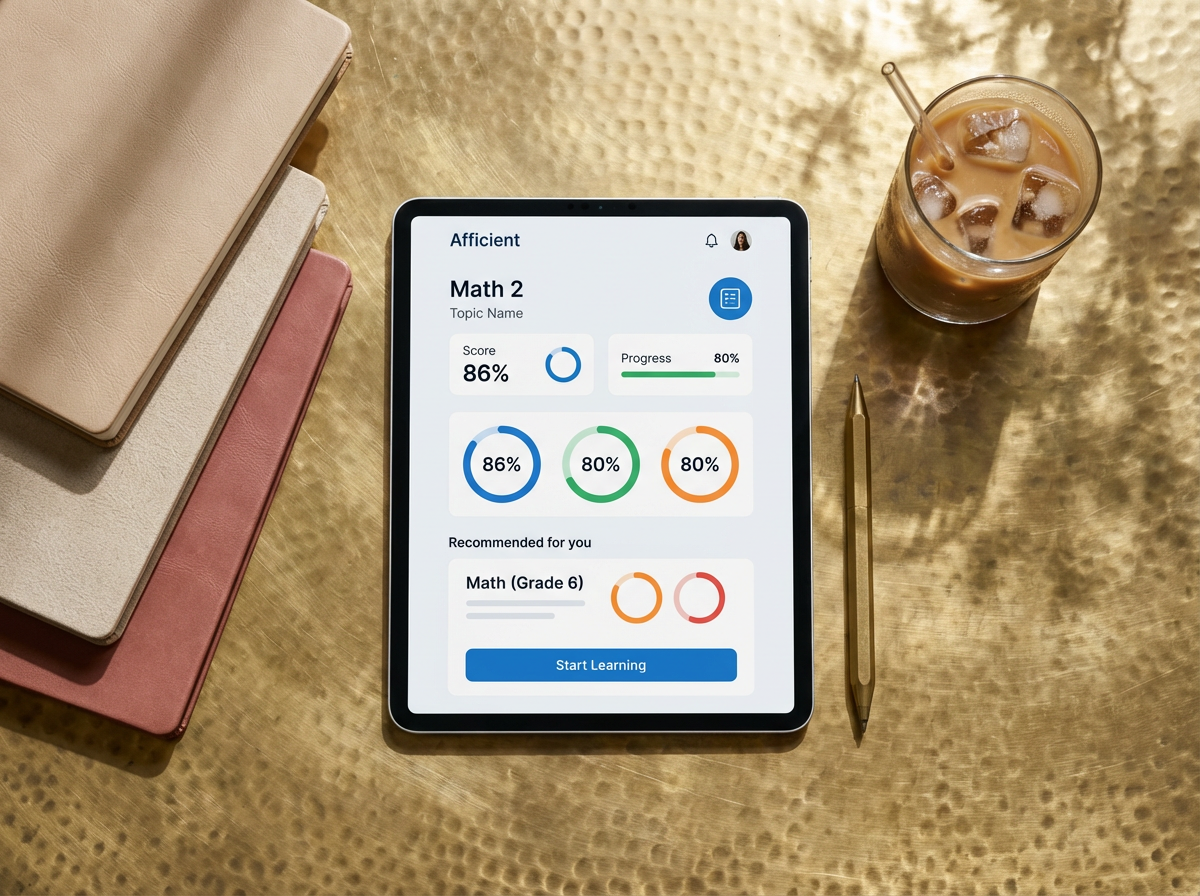
The diagnostic process provides comprehensive assessment and generates detailed analytics showing specific strengths and areas for growth. Unlike generic placement tests, Afficient's AI-powered assessment examines granular skills to create an accurate learning profile. From there, the system automatically generates a customized curriculum path targeting your child's specific needs.
Frequently Asked Questions
Q: How quickly will my child see results with adaptive learning?
A: Most students show measurable progress within the first 2-4 weeks as the AI identifies and addresses knowledge gaps. For grade-level advancement, the median timeframe is 2 months for elementary grades and 3-4 months for middle school, with over 90% achieving A/A+ performance.
Q: Can adaptive learning work for students who are behind grade level?
A: Absolutely. Adaptive platforms excel at helping struggling students because they identify exactly which foundational skills are missing and systematically fill those gaps. The mastery-based approach ensures students build solid understanding before moving forward, preventing the frustration of being pushed ahead before they're ready.
Q: Is adaptive learning suitable for advanced students who are already ahead?
A: Yes. Advanced students benefit tremendously because the system automatically skips content they've mastered and moves them into appropriately challenging material. This prevents boredom and keeps gifted learners engaged, allowing them to progress at their natural pace rather than waiting for age-based curriculum.
Q: How does adaptive learning compare in cost to traditional tutoring?
A: Adaptive platforms typically cost significantly less than private tutoring while delivering comparable or superior results. The AI provides the personalization of one-on-one instruction at a fraction of the cost, with the added benefit of 24/7 availability and consistent quality.
Take the Next Step Toward Personalized Learning
If your child has been struggling with traditional online programs—whether from boredom, frustration, or simply slow progress—adaptive learning offers a proven alternative backed by data and real results. Afficient Academy provides the technology, curriculum, and support to transform your child's educational experience from one-size-fits-all to truly personalized.
Start with a free diagnostic assessment at afficienta.com to discover your child's current skill level and see how adaptive learning can accelerate their progress. With WASC-accredited curriculum, patented AI technology, and a track record of helping over 15,000 students achieve A/A+ performance, Afficient represents the future of personalized education—available today.