
How to Challenge Your Child Academically Without the Stress: A Parent’s Guide to Balanced Excellence
I totally get it. You want your kid to get ahead, but you’re terrified of stressing them out. You lie awake at night wondering if you’re pushing too hard, if that extra math practice is helping or hurting, if your child will resent you for the pressure. The guilt is real, and so is the anxiety.
Here’s the truth that might surprise you: you’re not alone in this worry, and the fact that you’re concerned about balance already shows you’re a thoughtful, caring parent. The question isn’t whether to challenge your child academically—it’s how to do it in a way that builds their confidence and love of learning rather than crushing their spirit.
Why Your Worry Actually Matters
Academic burnout in children is absolutely real, and it’s more common than most parents realize. When kids are pushed beyond their capacity without proper support, they may develop anxiety, lose their natural curiosity, and even start to dislike learning. The signs include resistance to homework, physical complaints before school, declining grades despite more effort, and that heartbreaking moment when your once-curious child says “I’m just not smart enough.”
But here’s what research consistently shows: the problem isn’t challenge itself. Kids actually thrive on appropriate challenges. The issue is when challenge becomes chronic stress, when the difficulty level doesn’t match their readiness, or when they feel like they’re constantly failing despite their best efforts.
Your instinct to worry about this balance? That’s your parenting wisdom talking. Listen to it.
The Science Behind Sustainable Excellence
Here’s something that might ease your mind: burned-out kids actually learn slower, not faster. Chronic stress may affect children’s learning capacity and information retention.
On the flip side, engaged learners who feel appropriately challenged and supported may learn more effectively. It’s not magic; it’s neuroscience. When kids feel safe and engaged, their brains are primed for optimal learning.
Think about it this way: would you rather your child spend two hours grinding through practice problems while miserable, or 20 minutes of focused, efficient practice while they’re actually engaged? The research is clear—quality beats quantity every single time.
The Real Question: How Much Is Too Much?
This is what keeps parents up at night, right? You want concrete guidelines, not vague advice about “balance.” So here’s a practical framework:
For elementary-aged children, academic enrichment beyond school should typically be 15-30 minutes daily. Yes, that’s it. Their brains are still developing the capacity for sustained focus, and they learn enormous amounts through play, physical activity, and unstructured exploration.
For middle schoolers, 30-45 minutes of focused enrichment is appropriate. They can handle more cognitive load, but they still need time for social development, physical activity, and downtime.
The warning signs you’re overdoing it: – Your child regularly complains of headaches or stomachaches before practice time – They’ve stopped asking questions or showing curiosity about topics they used to love – Homework battles have become the norm rather than the exception – They’re sleeping less than recommended for their age – They’ve dropped activities they genuinely enjoyed to “make time” for academics – You’re doing more of the work than they are just to get it done
What Makes Afficient Different—And Why Kids Actually Ask to Practice
I know what you’re thinking: “Another program promising results without effort? Sure.” But hear me out, because this is genuinely different, and here’s why parents tell us their kids actually look forward to practice time.
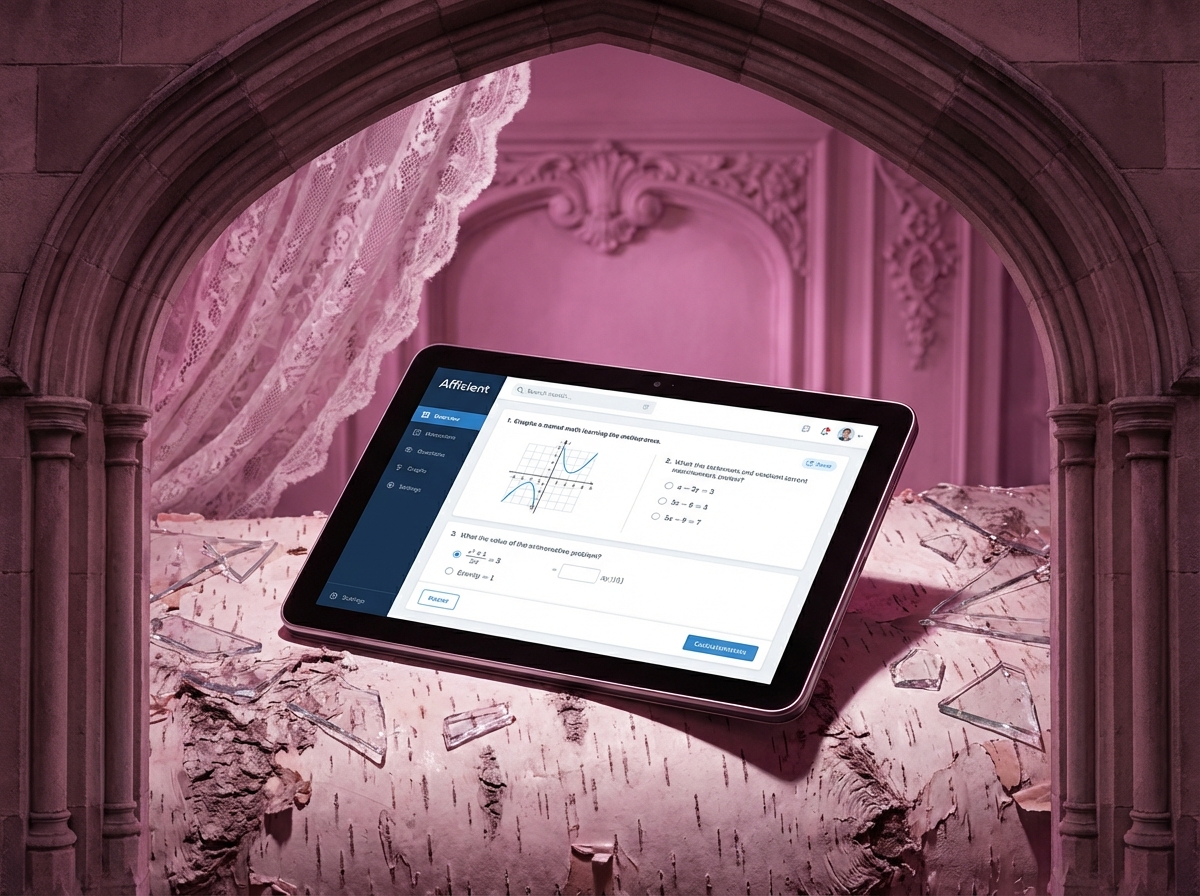
It’s only 20 minutes a day. Seriously, that’s it. Not two hours of grinding. Not endless worksheets. Just 20 focused minutes. Why? Because efficiency matters more than duration. Afficient’s AI identifies exactly what your child needs to work on—not random practice, not one-size-fits-all curriculum, but the precise skills that will move them forward fastest.
Your child controls the pace. There’s no external pressure, no teacher pushing them faster than they’re ready, no comparing them to other kids. The AI adapts in real-time to their responses. If they’re struggling, it adjusts. If they’re flying through material, it challenges them more. This means they’re always working in what educators call the “optimal challenge zone”—hard enough to grow, easy enough to succeed.
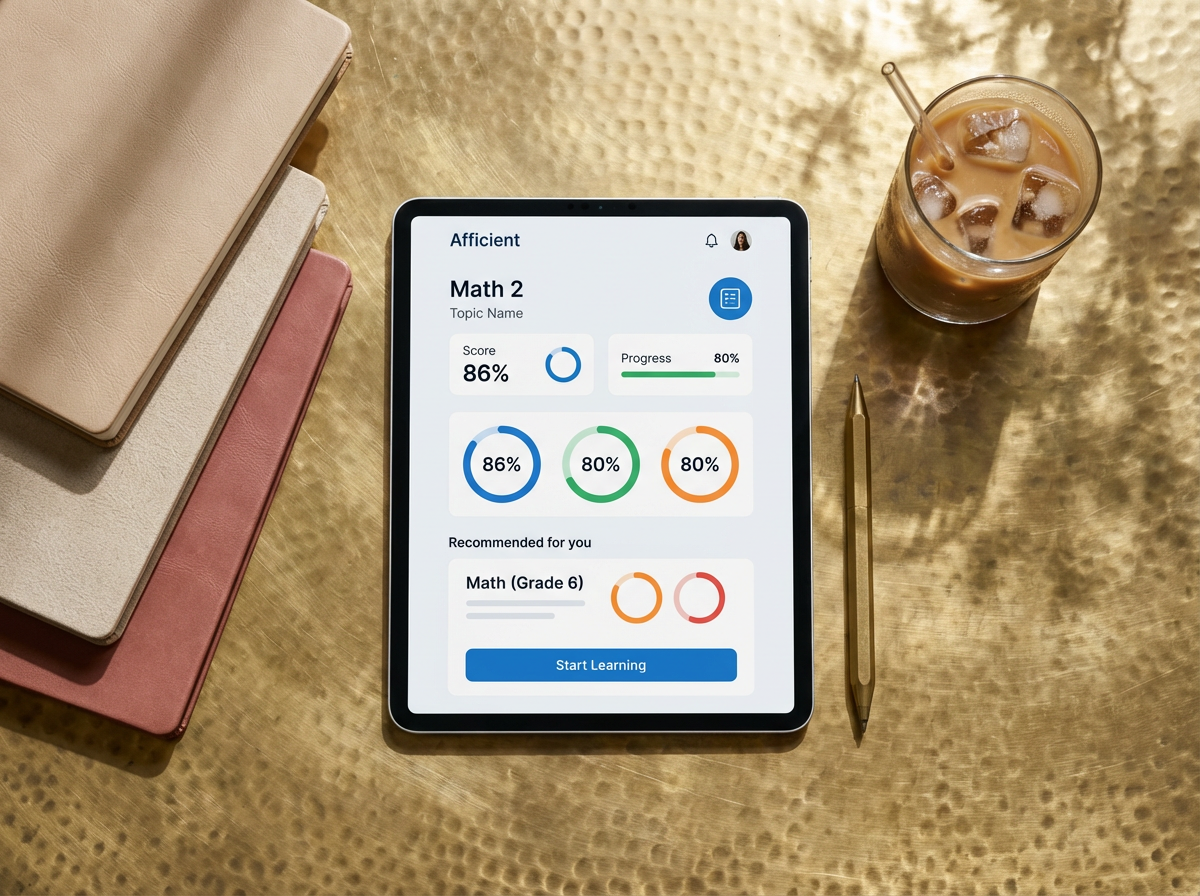
You can actually see if they’re struggling. The parent dashboard shows you not just what they’re learning, but how they’re feeling about it. Are they taking longer on certain topics? Are they making more errors than usual? You get early warning signs before stress becomes burnout, so you can adjust before there’s a problem.
The results speak for themselves—but not in the way you might expect. Afficient students show improved academic performance. But here’s what matters more: they maintain their love of learning. They develop genuine confidence. They see themselves as capable learners who can tackle hard things.
One parent told us: “My daughter used to cry over math homework. Now she asks if she can do her Afficient practice before dinner because she likes seeing herself get better. I never thought I’d see that.”
The Framework for Healthy Academic Challenge
So how do you actually implement this in your daily life? Here’s a practical approach that works:
Start with your child’s interests. Challenge doesn’t have to mean forcing them through material they hate. If they love dinosaurs, use that to teach reading, math, even writing. If they’re into video games, there are incredible ways to build problem-solving and strategic thinking skills. When kids are intrinsically motivated, they can handle much more challenge without stress.
Make success visible and frequent. Kids need to see themselves making progress. This is where traditional homework often fails—it’s just more of the same, with no clear sense of advancement. Get a free diagnostic assessment to see exactly where your child is and create a roadmap they can actually see themselves progressing along.
Celebrate effort, not just outcomes. When your child works hard on a challenging problem—even if they don’t get it right—that’s worth celebrating. This builds what researchers call a “growth mindset,” the belief that abilities can be developed through dedication and hard work. Kids with growth mindsets are more resilient, more willing to tackle challenges, and less likely to burn out.
Build in genuine downtime. This isn’t negotiable. Kids need unstructured play time, physical activity, social interaction, and yes, even boredom. These aren’t “extras” to be sacrificed for academics—they’re essential for healthy development and, ironically, for optimal learning.
Check in regularly about how they’re feeling. Not just “how was school?” but “what was the hardest thing you did today?” and “what made you feel proud?” These conversations help you gauge their stress level and adjust before problems develop.
Real Parent Scenarios: What This Actually Looks Like
Scenario 1: The Overachiever Who’s Burning Out
Sarah’s daughter Emma was getting straight A’s, but Sarah noticed she’d stopped reading for fun, something she used to love. Emma was spending 2-3 hours on homework nightly and seemed anxious all the time.
Sarah’s solution: She cut back on the extra workbooks and enrolled Emma in Afficient’s 20-minute daily program. Within a month, Emma had more free time, was reading for pleasure again, and her grades actually improved because she was less stressed and more focused during her practice time.
Scenario 2: The Struggling Student Who Needs More Challenge
Marcus’s son Jake was getting C’s and seemed unmotivated. Marcus assumed Jake needed to work harder, but when he really talked to Jake, he discovered the problem: Jake was bored. The work wasn’t challenging enough to engage him.
Marcus’s solution: Find out how your child can excel without stress with a diagnostic test that showed Jake was actually ready for more advanced material. With appropriately challenging work, Jake’s motivation returned, and so did his grades.
Scenario 3: The Anxious Perfectionist
Lisa’s daughter Mia would have meltdowns over any mistake, spending hours redoing work that was already good enough. Lisa worried that any academic challenge would make the anxiety worse.
Lisa’s solution: She focused on celebrating effort and progress rather than perfection. Afficient’s system helped because it showed Mia her improvement over time, not just right/wrong answers. Gradually, Mia learned that mistakes are part of learning, not catastrophes.
The Sustainable Excellence Approach
Here’s what sustainable academic excellence actually looks like:
It’s efficient, not exhausting. Twenty minutes of targeted, adaptive practice beats two hours of generic worksheets every single time. Your child learns more, retains more, and stays engaged.
It builds confidence through competence. Kids develop genuine self-esteem when they see themselves mastering challenging material. Not false praise, not participation trophies, but real achievement that they earned.
It preserves intrinsic motivation. When learning feels like something they’re doing to themselves, not something being done to them, kids maintain their natural curiosity and love of learning.
It’s adaptable to your child’s needs. Some days they’ll be ready for more challenge. Some days they need easier material to rebuild confidence. A good system adapts to where they are, not where a curriculum says they should be.
It leaves room for childhood. Your child should have time for friends, for play, for hobbies, for family dinners, for staring at clouds and daydreaming. These aren’t luxuries—they’re necessities for healthy development.
Your Action Plan: Starting Today
You don’t have to figure this all out alone. Here’s what you can do right now:
First, assess where your child actually is. Not where you think they should be, not where their classmates are, but where they genuinely are in their learning journey. Take the free diagnostic test to get an objective, comprehensive picture of your child’s current skills and optimal learning pace.
Second, have an honest conversation with your child. Ask them how they feel about school, about learning, about their current workload. You might be surprised by what you hear. Kids are often more aware of their stress levels than we give them credit for.
Third, commit to the 20-minute rule. Whether you use Afficient or another approach, focus on quality over quantity. Twenty minutes of focused, appropriately challenging practice is your target. If you’re spending more time than that on enrichment, ask yourself if it’s really helping or just creating stress.
Fourth, monitor the joy factor. If your child is consistently unhappy about learning, something needs to change. Period. Academic success at the cost of your child’s mental health and love of learning is not success at all.
The Bottom Line: You Don’t Have to Choose
Here’s the message I want you to take away from this: you don’t have to choose between your child’s academic excellence and their happiness. You don’t have to sacrifice their childhood for their future. You don’t have to push them to the breaking point to help them succeed.
The most successful students—the ones who go on to thrive in college and careers—aren’t the ones who were pushed hardest. They’re the ones who developed a genuine love of learning, who built real confidence through mastery, who learned that challenges are opportunities rather than threats.
That’s what sustainable excellence looks like. That’s what Afficient was designed to create. And that’s what 15,000+ families have discovered: Daily efficient, adaptive, appropriately challenging practice can significantly enhance learning effectiveness, while actually increasing kids’ love of learning.
Your child can excel academically without burning out. They can be challenged without being stressed. They can achieve at high levels while still being happy kids.
You just need the right approach—one that respects both their potential and their wellbeing. One that understands efficiency matters more than hours logged. One that adapts to your child rather than forcing your child to adapt to it.
Ready to find that balance? Take the free diagnostic test and see how 20 minutes a day can transform your child’s learning—without the stress, without the burnout, without sacrificing their childhood.
Because at the end of the day, you want your child to be both successful and happy. And with the right approach, they can absolutely be both.




Leave A Comment